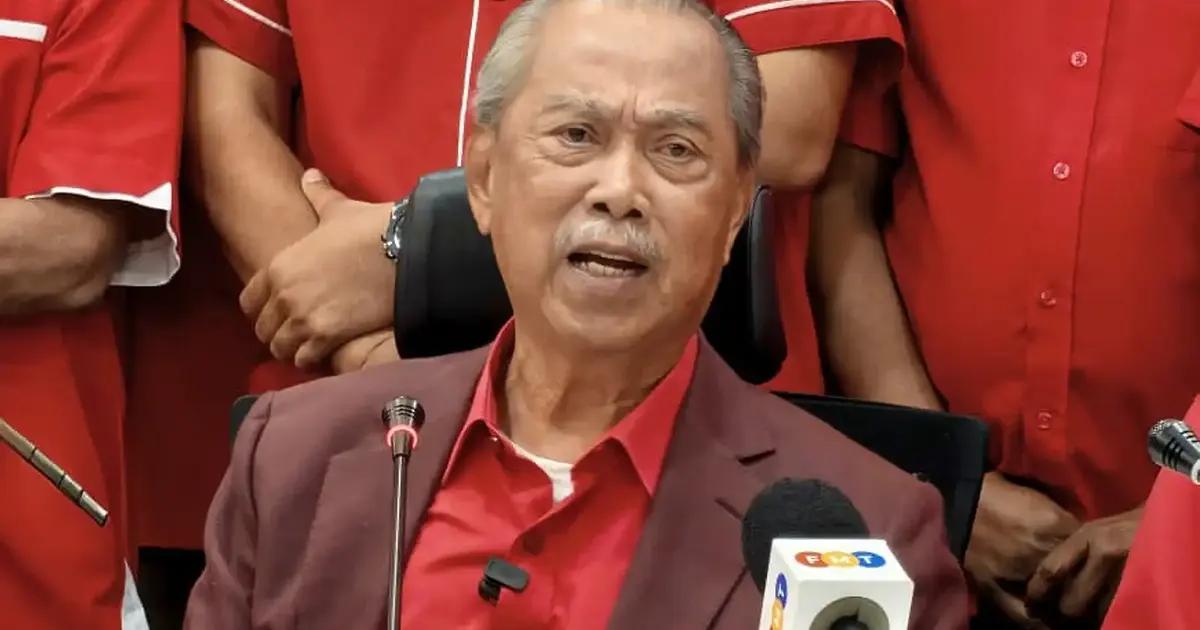
Bersatu is braced for an escalating confrontation with PAS, according to former prime minister Muhyiddin Yassin, who has indicated his party will pursue the Islamic party across every conceivable political arena. The declaration underscores deepening fractures within Malaysia's opposition landscape as coalition partners increasingly view each other as rivals rather than allies.
The timing of Muhyiddin's combative rhetoric reflects broader tensions within Perikatan Nasional, the coalition that once positioned itself as an alternative to the Pakatan Harapan-led government. What began as a strategic alliance has evolved into a complex arrangement marked by competing ambitions and territorial disputes, particularly in states where both Bersatu and PAS maintain substantial voter bases.
Muhyiddin's announcement that Perikatan Nasional will field candidates under its banner in the forthcoming Johor state election represents a significant strategic choice. Rather than allowing constituent parties to contest independently or negotiate seat arrangements, the coalition has opted for a unified front, suggesting confidence in the PN brand's appeal to voters across peninsular Malaysia's most economically developed state.
The decision carries particular weight given Johor's political significance. As Malaysia's southernmost peninsula state and a traditional stronghold of Umno-led coalitions, Johor has historically served as a bellwether for national political trends. Any consolidation of opposition forces here could reshape the dynamics of Malaysia's bipolar political competition and influence calculations ahead of future general elections.
Negeri Sembilan's inclusion in the electoral strategy adds another dimension to the emerging PN campaign. This smaller state, nestled between Kuala Lumpur and Johor, has experienced significant political volatility in recent years. Contesting under the Perikatan banner in both venues signals organisational maturity and suggests the coalition believes it can mobilise voters more effectively as a unified entity than as squabbling component parties.
The prospect of direct confrontation between Bersatu and PAS warrants careful examination in the Malaysian political context. Both parties draw support from overlapping constituencies, particularly among Bumiputera voters and in rural areas where religious conservatism commands significant influence. Their rivalry threatens to fragment the opposition vote in precisely those demographic segments where either party might otherwise accumulate decisive margins.
Muhyiddin's pugnacious stance reflects his personal political survival instincts as much as party strategy. Having navigated the treacherous waters of Malaysian politics through multiple coalitional arrangements, the former premier understands that projecting strength and independence remains essential to maintaining his authority within Bersatu. Backing down from PAS confrontation would be interpreted as weakness, potentially emboldening rivals within his own party structure.
The broader implications for Malaysian governance extend beyond immediate electoral calculations. A fragmented opposition, weakened by internal competition rather than strengthened by strategic coordination, potentially advantages the ruling coalition regardless of its composition. Voters seeking alternative leadership may find their options diluted across competing opposition blocs, each claiming legitimacy but lacking sufficient scale to mount consolidated challenges.
For regional observers monitoring Malaysian political developments, these manoeuvres illustrate the challenge facing any non-government coalition in sustaining unified opposition to entrenched ruling structures. The cycle of alliance formation, deterioration, and competitive antagonism that characterises Malaysian opposition politics suggests structural impediments to building durable alternative governments. Personalities, regional interests, and ideological differences repeatedly overwhelm efforts at coalition discipline.
The electoral contests in Johor and Negeri Sembilan will serve as crucial testing grounds for whether Perikatan Nasional can translate internal tension into effective electoral mobilisation or whether the acrimony will undermine voter confidence in the coalition's coherence. Success in either or both contests would validate Muhyiddin's confrontational approach and potentially establish a model for future PN strategy; failure would revive questions about the coalition's viability as a governing alternative.
Meanwhile, PAS faces its own strategic calculations regarding how aggressively to respond to Bersatu's challenge while maintaining its own political narrative. The Islamic party's base expects principled positions on religious and moral governance, yet electoral realism demands engagement with broader coalitional politics. This tension will shape PAS decisions about resource allocation and campaign intensity in these upcoming contests.
Muhyiddin's declaration also signals to Bersatu's grassroots membership and supporters that the party leadership remains confident and combative rather than defensive or seeking compromise. In Malaysian political culture, such messaging carries real consequences for party morale and volunteer engagement. Members prefer leaders who project strength and autonomy to those appearing subordinate to other coalition partners or constrained by coalition discipline.
As preparations intensify for Johor and Negeri Sembilan elections, Malaysian voters will witness whether opposition fragmentation results from genuine policy disagreements, personal antagonisms among leaders, or structural competition for limited political resources. The answer will substantially influence assessments of opposition viability and the broader trajectory of Malaysian democratic competition in coming years.

%22%2F%3E%3C%2Fpattern%3E%3C%2Fdefs%3E%3Crect%20width%3D%22100%25%22%20height%3D%22100%25%22%20fill%3D%22url(%23ph21o2sg)%22%2F%3E%3Crect%20width%3D%22100%25%22%20height%3D%22100%25%22%20fill%3D%22url(%23ph21o2sp)%22%2F%3E%3Ctext%20x%3D%2250%25%22%20y%3D%2250%25%22%20text-anchor%3D%22middle%22%20dominant-baseline%3D%22central%22%20fill%3D%22rgba(255%2C255%2C255%2C0.95)%22%20font-family%3D%22Georgia%2C%20'Times%20New%20Roman'%2C%20serif%22%20font-weight%3D%22700%22%20font-size%3D%22170%22%20letter-spacing%3D%22-0.02em%22%3EGabungan%3C%2Ftext%3E%3C%2Fsvg%3E)