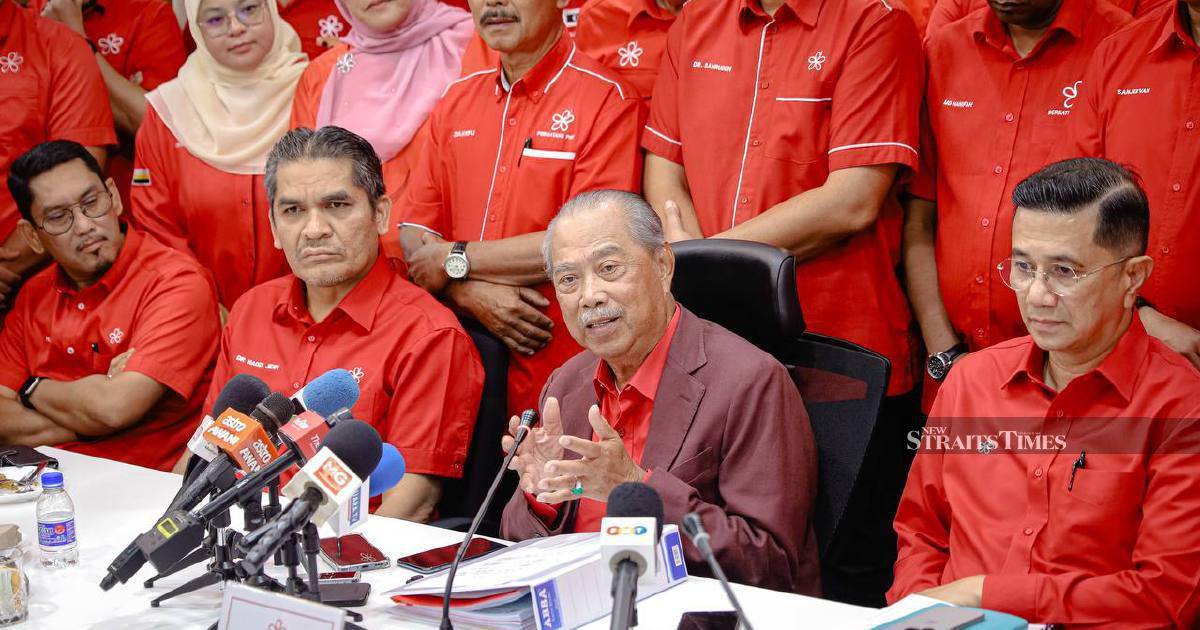
Parti Pribumi Bersatu Malaysia (Bersatu) has signalled its willingness to contest directly against Pas in Johor state elections if the two parties find themselves competing for the same constituencies, according to party president Tan Sri Muhyiddin Yassin. The statement underscores ongoing tensions within Malaysia's broader political coalition landscape and highlights the precarious nature of seat-sharing arrangements that have become increasingly difficult to maintain across the country.
Muhyiddin's comments come at a time of significant electoral fragmentation in Malaysian politics, particularly within the Malay-Muslim political ecosystem where both Bersatu and Pas operate. The potential clash between the two parties in Johor represents a critical flashpoint, as the southern state remains a politically significant arena with proven electoral volatility. Previous elections in Johor have demonstrated the state's capacity to shift allegiances rapidly, making it strategically important for all major political players.
The tension between Bersatu and Pas reflects deeper schisms within Malaysia's political coalition system. While both parties share conservative Malay and Islamic credentials, they have pursued increasingly divergent political trajectories and strategic partnerships. Bersatu, which anchors its position within the broader Perikatan Nasional framework alongside several other parties, has positioned itself differently from Pas's traditional approach to state-level politics in Johor and elsewhere.
Johor holds particular significance in Malaysian electoral calculus. The state has historically served as a bellwether for national political trends, and control of its state government carries substantial symbolic and practical importance. Multiple parties have invested considerable resources in building grassroots support throughout the state, making any electoral contest there inherently competitive and closely watched by political observers nationwide.
The prospect of Bersatu-Pas seat conflicts in Johor would represent a meaningful shift from the party coordination efforts that have characterised some previous electoral cycles. Political alliances in Malaysia have increasingly become subject to volatility as parties attempt to maximise their respective seat counts and ministerial appointments. This dynamic has repeatedly resulted in negotiations over seat allocation breaking down, leading to direct contests between nominally aligned parties.
Muhyiddin's preparedness statement carries implicit significance regarding Bersatu's confidence in its electoral machinery and ground organisation within Johor. The party has invested substantially in building state-level presence across Malaysia, and the president's willingness to contemplate direct competition suggests internal assessment that the party can sustain itself through contested elections. This positioning also reflects broader leadership messaging about party strength and viability.
The potential for Bersatu-Pas competition intersects with Malaysia's complex federal structure and the distinct political dynamics that operate at state level compared to national contests. Johor's political culture has demonstrated unique characteristics, with voters sometimes expressing different preferences in state and federal elections. Local issues, state-level personalities, and community relationships frequently influence outcomes more directly than national political narratives in state-focused campaigns.
Past Johor elections have shown that seat distribution remains contentious among multiple contenders. The state possesses sufficient constituencies that theoretically multiple parties could secure representation, yet allocation disputes persist. These tensions often become visible only weeks or months before scheduled polling, creating uncertainty for parties, candidates, and voters alike. Muhyiddin's advance signalling suggests Bersatu may be hedging against the possibility of broken negotiations with Pas.
From a Southeast Asian perspective, Malaysia's evolving coalition politics merit attention as models of multi-party competition and negotiation. The region contains several democracies navigating complex multi-ethnic and multi-religious societies where coalition stability remains perpetually challenging. Malaysia's experience in managing, or sometimes failing to manage, coalition agreements offers comparative lessons regarding political institutionalisation and the sustainability of electoral pacts.
The implications for Malaysian voters centre on electoral unpredictability and the role of seat negotiations in determining which parties ultimately contest which seats. When major political forces cannot agree on seat divisions, constituency-level outcomes become harder to predict, and voters face expanded choices. Conversely, fragmented contests between nominally aligned parties can dilute combined electoral influence, potentially benefiting rival coalitions through vote-splitting effects.
Bersatu's evolution since its formation has involved repeated repositioning relative to other Malay-Muslim political forces. These recalibrations have yielded mixed results, with the party sometimes gaining and sometimes losing ground in electoral terms. The party's current trajectory and relationship with coalition partners will substantially influence its viability in any future Johor contests, whether conducted alongside other parties or in direct competition.

%22%2F%3E%3C%2Fpattern%3E%3C%2Fdefs%3E%3Crect%20width%3D%22100%25%22%20height%3D%22100%25%22%20fill%3D%22url(%23ph21o2sg)%22%2F%3E%3Crect%20width%3D%22100%25%22%20height%3D%22100%25%22%20fill%3D%22url(%23ph21o2sp)%22%2F%3E%3Ctext%20x%3D%2250%25%22%20y%3D%2250%25%22%20text-anchor%3D%22middle%22%20dominant-baseline%3D%22central%22%20fill%3D%22rgba(255%2C255%2C255%2C0.95)%22%20font-family%3D%22Georgia%2C%20'Times%20New%20Roman'%2C%20serif%22%20font-weight%3D%22700%22%20font-size%3D%22170%22%20letter-spacing%3D%22-0.02em%22%3EGabungan%3C%2Ftext%3E%3C%2Fsvg%3E)