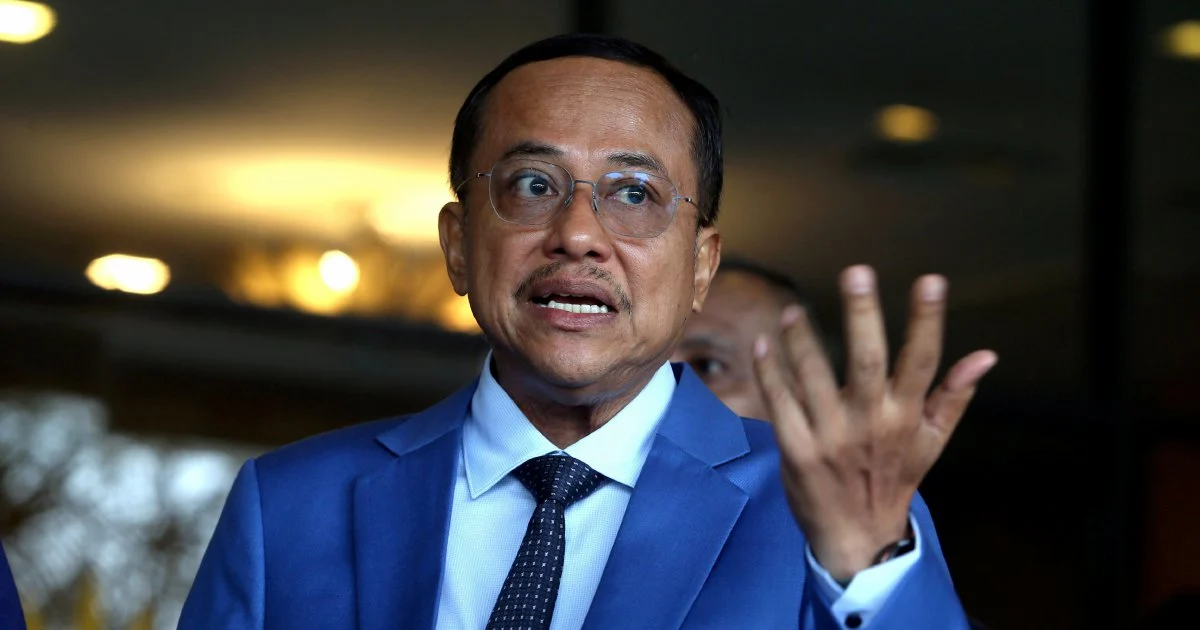
The internal troubles plaguing Perikatan Nasional have taken a more public turn with Bersatu's senior leadership openly questioning the competence of the coalition's chairman. Datuk Tun Faisal Ismail Aziz, serving as Bersatu's information chief, delivered a pointed rebuke of Datuk Seri Dr Ahmad Samsuri Mokhtar's stewardship of the PN alliance, arguing that the chairman has essentially abandoned his core responsibilities during a period of significant strain within the three-party coalition.
The criticism centres on what Bersatu perceives as a fundamental dereliction of duty. Rather than functioning as an impartial custodian of coalition interests, Samsuri appears to have allowed his identity as PAS president to overshadow his obligation to serve the broader PN framework. This blending of roles represents precisely the type of structural weakness that can undermine multi-party alliances, where coalition chairs must balance the interests of all member parties fairly. For Malaysian observers familiar with coalition dynamics, the distinction between wearing a party hat and a coalition hat is not merely ceremonial—it carries real implications for how decisions are made and disputes are resolved.
The Bersatu attack reflects deeper anxieties about power distribution and decision-making within PN. Since its formation, the coalition has struggled with questions about whether it functions as a genuine partnership of equals or whether it serves primarily as a vehicle for PAS's ambitions. Bersatu's complaint suggests the latter interpretation has gained currency within the party's leadership. If the coalition chairman cannot or will not act with independence from partisan loyalties, the entire architecture of PN governance becomes questionable.
For Malaysian political observers, such public disputes within opposition coalitions carry particular significance. PN emerged as an alternative to the previous Pakatan Harapan arrangement, promising a different ideological orientation and political approach. However, visible fractures such as those now appearing between Bersatu and PAS risk undermining the coalition's credibility as a cohesive electoral and governing force. The failure of coalition leadership to manage internal tensions threatens the broader viability of the alliance.
The timing of this criticism matters considerably. Coalition crises rarely emerge from single incidents; rather, they reflect accumulated frustrations and unresolved structural problems. Bersatu's decision to air grievances publicly suggests that behind-the-scenes efforts to resolve disputes have failed. This escalation indicates that private conversations between party leaders have not produced satisfactory outcomes, forcing the issue into the public domain where reputational costs mount for all involved.
Samsuri's role as PN chairman places him in an exceptionally challenging position. He must simultaneously advance PAS's interests while maintaining fairness toward Bersatu and any other coalition partners. The accusation that he has forgotten his primary obligation points to a governance failure that extends beyond personality conflicts. Either Samsuri lacks the authority to exercise independent judgment as coalition chairman, or he has chosen party loyalty over coalition stewardship. Neither scenario reflects well on PN's institutional health.
For regional observers tracking Malaysian politics, the significance of this dispute cannot be overstated. Coalition dynamics directly influence electoral outcomes and government formation. A weakened PN translates to altered calculations across the political spectrum, potentially affecting coalition viability in federal and state elections. The current Madani government under Pakatan Harapan will likely view PN's internal weakness as an opportunity to consolidate support, while regional partners such as UMNO may recalibrate their political strategies accordingly.
The broader Southeast Asian context adds another dimension. Malaysia's experience with coalition politics provides lessons—both positive and cautionary—for other democracies in the region managing multi-party alliances. When coalition chairs prioritise their own party's narrow interests over collective decision-making, the resulting dysfunction can cascade through entire political systems. PN's current troubles illustrate how institutional design matters when assembling ideologically diverse partners.
Bersatu's choice to deploy Faisal as its spokesperson on this matter carries strategic weight. As information chief, Faisal's statements are official party positions rather than individual commentary. This formalises the critique and signals that Bersatu's leadership has collectively endorsed the assessment of Samsuri's shortcomings. The deliberateness of this approach suggests Bersatu may be preparing for further escalation if Samsuri does not demonstrate substantive change in his coalition chairmanship.
The resolution of this dispute will shape PN's trajectory significantly. Should Samsuri respond constructively by demonstrating renewed commitment to balanced coalition leadership, tensions may ease. Conversely, if this represents an irreversible breakdown in trust between major coalition components, PN could face structural collapse. For Malaysian political analysts, the next weeks will prove crucial in determining whether PN can survive internal turbulence or whether the alliance is entering terminal decline.

%22%2F%3E%3C%2Fpattern%3E%3C%2Fdefs%3E%3Crect%20width%3D%22100%25%22%20height%3D%22100%25%22%20fill%3D%22url(%23ph21o2sg)%22%2F%3E%3Crect%20width%3D%22100%25%22%20height%3D%22100%25%22%20fill%3D%22url(%23ph21o2sp)%22%2F%3E%3Ctext%20x%3D%2250%25%22%20y%3D%2250%25%22%20text-anchor%3D%22middle%22%20dominant-baseline%3D%22central%22%20fill%3D%22rgba(255%2C255%2C255%2C0.95)%22%20font-family%3D%22Georgia%2C%20'Times%20New%20Roman'%2C%20serif%22%20font-weight%3D%22700%22%20font-size%3D%22170%22%20letter-spacing%3D%22-0.02em%22%3EGabungan%3C%2Ftext%3E%3C%2Fsvg%3E)