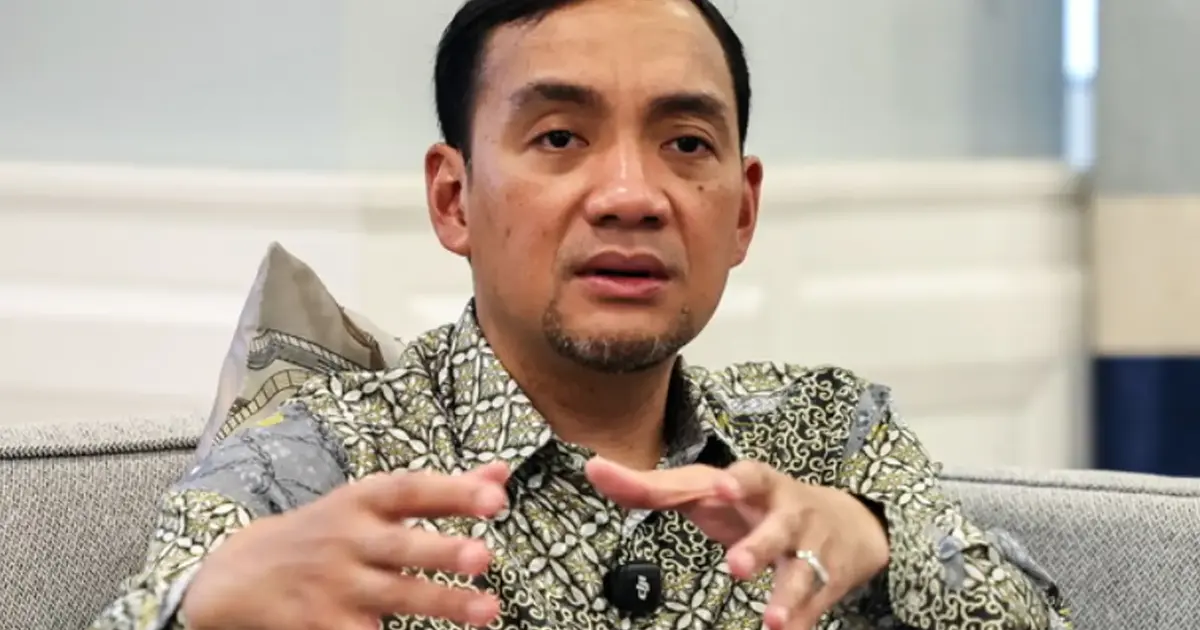
In a candid assessment of political ambition and institutional reality, Johor Menteri Besar Onn Hafiz has underscored that high public profiles and partisan popularity cannot deliver high office, asserting instead that the ultimate gateway to leading a state remains sovereign approval. His remarks represent a sharp intervention in conversations about succession planning and political advancement, particularly among younger figures within Malaysia's federal and state systems who may harbour leadership aspirations.
Onn Hafiz's statement carries particular weight given Johor's position as one of Malaysia's wealthiest and most influential states, and the Menteri Besar's role as custodian of responsibilities that extend well beyond ceremonial functions. The office sits at the intersection of elected representation and constitutional monarchy, making the interplay between popular support and royal sanction a persistent tension in Malaysian governance. His words serve as a reminder that the formal architecture of the country's political system—despite its democratic elements—privileges institutional channels and the prerogatives of sultans in ways that can diverge sharply from opinion polls or electoral momentum.
The timing of Onn Hafiz's comments suggests awareness of shifting dynamics within Johor's political landscape, where various factions within and between the ruling coalition have begun positioning their preferred candidates for future roles. Being described as a "poster boy" often implies youthful appeal, media savvy, and strong grassroots or urban support—assets that typically translate into electoral strength and internal party clout. Yet the Menteri Besar's admonition implicitly acknowledges that these advantages, while valuable, do not constitute a sufficient or even necessary condition for assuming the top office in a state government.
Royal consent in this context extends beyond ceremonial rubber-stamping. The Johor Sultan retains genuine discretionary power in evaluating candidates, consulting with political parties, and ultimately deciding who receives the formal appointment to lead the state executive. This constitutional authority reflects Malaysia's system of constitutional monarchy, where rulers in each state possess meaningful prerogatives distinct from the ceremonial roles of monarchs in purely parliamentary republics. The Sultan's judgment may encompass assessments of administrative competence, integrity, ability to manage diverse coalitions, and alignment with the institution's broader interests and the state's long-term welfare.
For ambitious politicians aiming at the Menteri Besar position, Onn Hafiz's intervention creates an implicit hierarchy of requirements. High-profile status and popularity must be coupled with cultivation of relationships within the ruling party structure, demonstrated governance capability, and—critically—compatibility with royal expectations and preferences. This multi-layered gatekeeping structure means that internal party competition, while important, represents only one phase in a longer selection process. A figure who commands substantial party support but falls short on other dimensions may still be passed over.
The Malaysian political system has historically produced instances where such tensions surface openly. Party leaders and grassroots activists sometimes back candidates who ultimately do not receive royal approval, creating friction and questions about the legitimacy of final outcomes. Conversely, candidates favoured by palace institutions but lacking strong party credentials have occasionally struggled to consolidate power once appointed. The most durable arrangements typically emerge when a consensus forms across party, administrative, and royal spheres around a particular individual.
For Johor specifically, the state's significance to national politics magnifies the stakes of these leadership transitions. Johor consistently delivers substantial numbers of federal parliamentarians and has served as a training ground for senior national figures. The composition of its state government therefore influences not merely local administration but broader coalition dynamics at the federal level. This reality means that royal selection processes in Johor draw scrutiny from national power brokers who recognize the implications for federal stability and influence.
Onn Hafiz's message may also function as a moderating influence on internal party expectations, particularly if multiple candidates are currently positioning themselves for advancement. By emphasizing the decisive role of royal consent, he implicitly counsels against excessive internecine competition and suggests that sustained factional conflict might prove counterproductive if it alienates the Sultan or creates impressions of instability. His words effectively set parameters for how ambition should be pursued—through competence and institutional relationships rather than exclusively through party or populist maneuvers.
The broader context includes ongoing discussions across Malaysian states about succession planning and leadership renewal. As older generation politicians gradually exit public life, questions naturally arise about who will assume key positions. The tension between democratic principles and monarchical prerogatives has become more salient precisely because it affects the trajectories of numerous figures within ruling coalitions. Onn Hafiz's intervention contributes to broader clarification of how these institutions actually operate, moving beyond theoretical descriptions toward pragmatic acknowledgment of the actual distribution of decision-making power.
For Southeast Asian observers, Malaysia's system represents a distinctive model that persists despite regional trends toward purely Westminster-style parliamentary democracy. The continued vitality of royal institutional roles in selecting senior executives demonstrates how multiple competing power sources—political parties, bureaucratic structures, and constitutional monarchies—can coexist and constrain one another. Understanding this reality proves essential for anyone seeking to comprehend Malaysian politics or predict trajectories of political advancement within the federation's states.
Ultimately, Onn Hafiz's cautionary words to aspiring politicians amount to a restatement of institutional fundamentals that ambitious figures ignore at their peril. Success in achieving the Menteri Besar office requires not merely building a political brand or commanding support within a party apparatus, but securing the confidence of constitutional institutions whose discretionary power cannot be circumvented through popularity contests or factional victory. This remains a distinctive feature of Malaysian governance with implications for how political careers develop and how state governments form across the federation.

%22%2F%3E%3C%2Fpattern%3E%3C%2Fdefs%3E%3Crect%20width%3D%22100%25%22%20height%3D%22100%25%22%20fill%3D%22url(%23ph21o2sg)%22%2F%3E%3Crect%20width%3D%22100%25%22%20height%3D%22100%25%22%20fill%3D%22url(%23ph21o2sp)%22%2F%3E%3Ctext%20x%3D%2250%25%22%20y%3D%2250%25%22%20text-anchor%3D%22middle%22%20dominant-baseline%3D%22central%22%20fill%3D%22rgba(255%2C255%2C255%2C0.95)%22%20font-family%3D%22Georgia%2C%20'Times%20New%20Roman'%2C%20serif%22%20font-weight%3D%22700%22%20font-size%3D%22170%22%20letter-spacing%3D%22-0.02em%22%3EGabungan%3C%2Ftext%3E%3C%2Fsvg%3E)