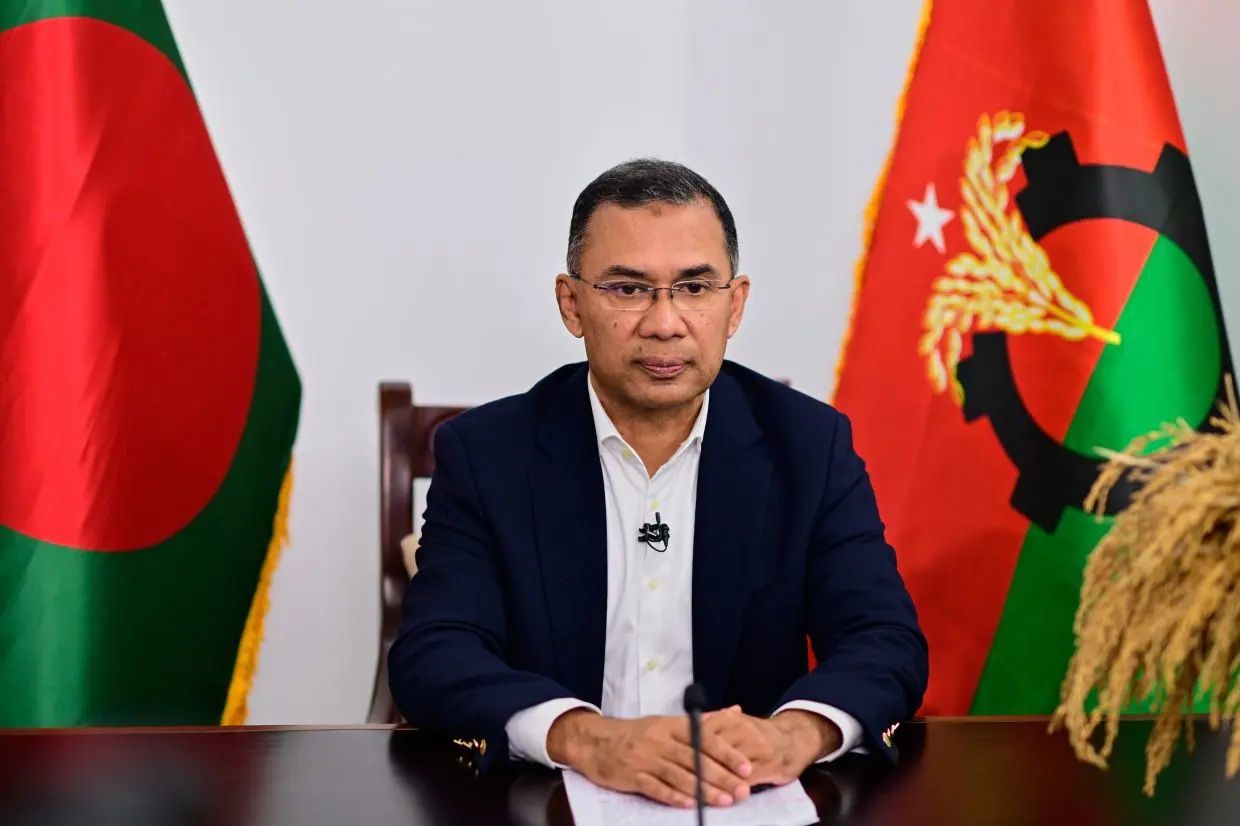
Bangladesh Prime Minister Tarique Rahman is embarking on his maiden international trip since taking office, with visits to Malaysia followed by China, according to an announcement from Dhaka's foreign ministry on Saturday. The decision to begin his diplomatic engagements outside the subcontinent rather than with neighbouring India—the traditional first port of call for Bangladeshi leaders—signals a deliberate recalibration of the country's regional positioning during a period of significant political transition. Rahman will spend Sunday in Malaysia before proceeding to Beijing on Monday, with both visits designed to advance Bangladesh's economic and infrastructure interests.
The Malaysian leg of the tour carries particular weight given the substantial presence of Bangladeshi workers throughout the country. Malaysia hosts approximately 800,000 Bangladeshi migrant workers, who comprise more than one-third of the nation's total foreign workforce. This demographic reality makes Malaysia a crucial economic partner, with millions of workers remitting earnings back home and serving as a vital bridge between the two countries. For Rahman, visiting Malaysia first provides an opportunity to reinforce ties with a state that depends significantly on Bangladeshi labour, while simultaneously demonstrating to his domestic constituency that his administration is prioritising economic relationships that generate wealth and employment.
The Beijing portion of the visit assumes even greater strategic importance, with trade negotiations and infrastructure development forming the centrepiece of discussions. Chinese officials and Bangladeshi counterparts are expected to discuss potential Chinese involvement in the Teesta project, a long-stalled initiative that would see the rejuvenation of one of Bangladesh's most critical river systems through comprehensive dredging operations, embankment reinforcement, and irrigation infrastructure development. The Teesta represents not merely a local engineering challenge but a fundamental resource management project with implications for agricultural productivity, water security, and regional cooperation across South Asia.
Rahman's deliberate diplomatic sequencing reflects the complex geopolitical landscape that has emerged following the dramatic political upheaval of 2024. The uprising that toppled Sheikh Hasina's government fundamentally altered Bangladesh's external relations, particularly with India, which had developed deep ties with Hasina's administration over decades. The new PM faces the delicate task of recalibrating these relationships while establishing his own diplomatic footing. His choice to visit Malaysia and China before engaging with India sends a clear message that Bangladesh intends to diversify its partnerships and exercise greater agency in charting its own course.
Indo-Bangladesh relations have deteriorated substantially since Hasina's ouster and the installation of the interim administration that eventually facilitated Rahman's electoral victory in February. The former prime minister remains in hiding within Indian territory, having fled the country during the revolution, and the new Bangladeshi government has repeatedly called for her extradition. This festering issue continues to poison bilateral ties, representing a fundamental point of contention that complicates efforts at rapprochement. The extradition question transcends normal diplomatic friction; it touches upon sovereignty, justice, and the legitimacy of Bangladesh's new political order.
Border tensions have further strained the relationship, with India systematically pushing individuals it classifies as undocumented migrants across the frontier into Bangladesh. This practice has created humanitarian and security challenges for Bangladesh while deepening public resentment toward India. For a new government seeking to establish credibility and demonstrate competence, such border pressures represent both a vulnerability and a rallying point for nationalist sentiment. Rahman's government must manage these pressures while avoiding the trap of allowing anti-India sentiment to dominate foreign policy deliberations.
The broader geopolitical context involves the enduring competition between India and China for regional influence across South Asia. India has historically viewed China's expanding presence in the region with considerable concern, particularly in smaller neighbouring states like Bangladesh. By cultivating relationships with both Malaysia and China early in his tenure, Rahman is signalling that Bangladesh intends to maintain strategic autonomy and will not allow itself to become a proxy in great power competition. This approach resonates with contemporary South Asian dynamics, where smaller nations increasingly seek to balance relationships with larger powers rather than align exclusively with one.
From Beijing's perspective, Bangladesh offers strategic opportunities that extend beyond the Teesta project. The country occupies a significant position along potential regional trade corridors and connectivity initiatives. Chinese investment in Bangladesh's infrastructure could yield mutual benefits—China gains access to markets and geostrategic position, while Bangladesh acquires capital and technical expertise for development. This mutually beneficial framework provides the foundation for deepening economic partnerships that can generate prosperity independent of India-centric arrangements.
The timing of Rahman's visit also reflects the consolidation of his political position following the February elections. These early foreign visits serve multiple domestic purposes beyond their immediate bilateral objectives. They demonstrate to the Bangladeshi public that their new government possesses the diplomatic standing to engage major regional powers on substantive issues. They also signal to international audiences that Bangladesh has achieved political stability after months of uncertainty and interim administration. For foreign investors and development partners, such visits provide reassurance that Bangladesh is returning to normalcy and remains open for business.
The foreign ministry has characterized these visits as a significant diplomatic initiative designed to fortify Bangladesh's economic partnerships during a period of substantial transition. This framing acknowledges that the country's political reconfiguration creates both opportunities and risks. By moving swiftly to deepen ties with Malaysia and China, Rahman's government is attempting to lock in partnerships that can provide economic benefits and political support during what remains a delicate consolidation period. The success of these initiatives will partly determine whether Bangladesh can translate its political transition into sustained economic advancement.

%22%2F%3E%3C%2Fpattern%3E%3C%2Fdefs%3E%3Crect%20width%3D%22100%25%22%20height%3D%22100%25%22%20fill%3D%22url(%23ph3f0o3g)%22%2F%3E%3Crect%20width%3D%22100%25%22%20height%3D%22100%25%22%20fill%3D%22url(%23ph3f0o3p)%22%2F%3E%3Ctext%20x%3D%2250%25%22%20y%3D%2250%25%22%20text-anchor%3D%22middle%22%20dominant-baseline%3D%22central%22%20fill%3D%22rgba(255%2C255%2C255%2C0.95)%22%20font-family%3D%22Georgia%2C%20'Times%20New%20Roman'%2C%20serif%22%20font-weight%3D%22700%22%20font-size%3D%22170%22%20letter-spacing%3D%22-0.02em%22%3EMalaysia%3C%2Ftext%3E%3C%2Fsvg%3E)