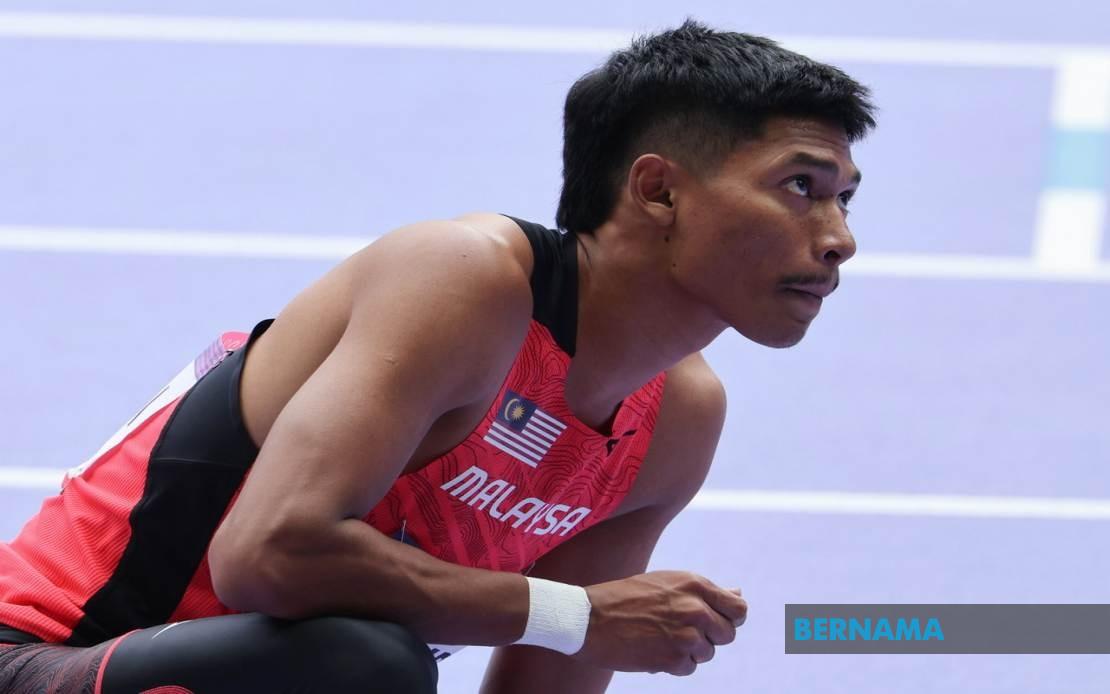
Muhammad Azeem Mohd Fahmi, Malaysia's fastest sprinter, has made clear his intention to base himself in the country following the completion of his studies at Auburn University in the United States. The 22-year-old national 100-metre record holder, who holds the Malaysian standard of 10.09 seconds, is prioritising time with his family after four years of studying abroad, signalling a shift towards consolidating his professional athletics career on home soil rather than pursuing opportunities in the United States.
Speaking to reporters in Kuala Lumpur, Azeem outlined a measured approach to his future, emphasizing the emotional toll of extended separation from loved ones. His decision reflects a growing trend among Malaysian athletes who, after overseas education or training stints, choose to develop their careers domestically with local infrastructure and family support systems. For Azeem, this represents not a retreat but a strategic repositioning—one that acknowledges the fundamental role his immediate support network has played in his emergence as Southeast Asia's most competitive sprinter.
The athlete's training structure demonstrates a pragmatic hybrid approach that leverages international expertise while maintaining local accountability. He will continue following a programme designed by Ken Harnden, his American coach, ensuring continuity with the coaching methodology that has shaped his recent progress. However, day-to-day supervision will shift to Muhammad Amir Izwan Tan Abdullah, a local coach who can provide the hands-on guidance and immediate feedback necessary for consistent performance development. This arrangement allows Azeem to benefit from Harnden's strategic insights without requiring permanent residence in the United States.
Azeem's reluctance to return overseas at this juncture carries implications for Malaysian athletics infrastructure. His choice suggests confidence that the domestic coaching ecosystem can adequately support elite sprinters aiming for regional and international competition. The involvement of a capable local coach signals that Malaysia has developed coaching talent capable of managing world-class athletes, reducing the traditional dependency on foreign expertise for high-performance athletics programmes. This transition model could serve as a template for other Malaysian athletes navigating the balance between international training and domestic-based careers.
Beyond immediate athletics, Azeem has signalled ambitions to pursue postgraduate education, indicating an awareness of long-term career sustainability beyond competitive sport. His intention to undertake a master's degree reflects the increasing expectation that elite athletes should develop intellectual credentials alongside physical achievement. However, he has pragmatically sequenced this ambition, committing to several months of intensive focus on athletics performance before resuming academic pursuits. This prioritisation underscores his understanding that the window for breaking through at elite international level in sprinting is finite and demands undivided attention.
The timing of Azeem's decision carries significance for Malaysian athletics on the global stage. As a sprinter holding the national record, his performances at regional competitions such as the Southeast Asian Games and potential participation in international meets will influence perceptions of Malaysian track and field capabilities. His commitment to training intensively from a Malaysian base suggests confidence in qualifying for and competing at major international events, whether continental championships or Olympic trials. The visibility gained through such competitions contributes to the sport's profile domestically and can generate momentum for talent development programmes.
Family dynamics have clearly influenced Azeem's calculus in ways that extend beyond nostalgia or personal comfort. Extended periods abroad during formative athletic years can strain family bonds, and his acknowledgment of this reflects a mature perspective on the interdependence between personal well-being and athletic performance. Psychological research consistently demonstrates that athletes separated from support networks experience elevated stress and compromised focus. By returning to Malaysia, Azeem likely aims to stabilise his emotional foundation, potentially enhancing consistency and resilience in competition.
The operational logistics of Azeem's arrangement with Ken Harnden—remote coaching by an American specialist while training locally—exemplify how global connectivity has transformed professional athletics. Previously, athletes seeking top-tier coaching often faced binary choices: relocate or forgo the expertise. Modern telecommunications, video analysis technology, and data monitoring systems enable coaches to guide athletes across continents effectively. For Malaysian athletes, this development reduces the geographical barriers that once necessitated extended overseas residence for competitive advancement.
Looking forward, Azeem's presence in Malaysia may catalyse broader conversations about athlete retention and domestic sports infrastructure investment. When elite performers choose to base themselves locally, they implicitly validate the quality of available facilities, coaching, and support systems. Their visibility within the country can inspire younger athletes and justify continued funding for track and field programmes. Conversely, if Azeem experiences constraints in his Malaysian training environment that impede his progression, it could highlight deficiencies in domestic athletics infrastructure requiring policy attention.
The sprinter's commitment to combining athletics with further education also reflects evolved expectations for elite Malaysian athletes. Rather than viewing sports and academics as competing trajectories, Azeem intends to manage both sequentially, planning to complete an intensive athletic phase before pursuing a master's degree. This approach acknowledges that competitive sport careers typically have defined durations, necessitating credentials and skills that extend professional viability beyond peak athletic years. His forward-thinking perspective suggests a generation of Malaysian athletes increasingly conscious of post-sport professional requirements.
Ultimately, Azeem's decision represents a consolidation phase in his athletic development. Having completed foundational training in the United States and established himself as Malaysia's premier sprinter, he is now channelling focus towards breaking through at regional and international levels. His return signals confidence in Malaysia's capacity to support such ambitions while prioritising the family relationships that provide psychological stability. As he pursues the next phase of his career from Malaysian soil, his trajectory will offer valuable insights into the country's ability to develop and retain world-class track athletes.

%22%2F%3E%3C%2Fpattern%3E%3C%2Fdefs%3E%3Crect%20width%3D%22100%25%22%20height%3D%22100%25%22%20fill%3D%22url(%23ph32kpdg)%22%2F%3E%3Crect%20width%3D%22100%25%22%20height%3D%22100%25%22%20fill%3D%22url(%23ph32kpdp)%22%2F%3E%3Ctext%20x%3D%2250%25%22%20y%3D%2250%25%22%20text-anchor%3D%22middle%22%20dominant-baseline%3D%22central%22%20fill%3D%22rgba(255%2C255%2C255%2C0.95)%22%20font-family%3D%22Georgia%2C%20'Times%20New%20Roman'%2C%20serif%22%20font-weight%3D%22700%22%20font-size%3D%22170%22%20letter-spacing%3D%22-0.02em%22%3EMalaysia%3C%2Ftext%3E%3C%2Fsvg%3E)