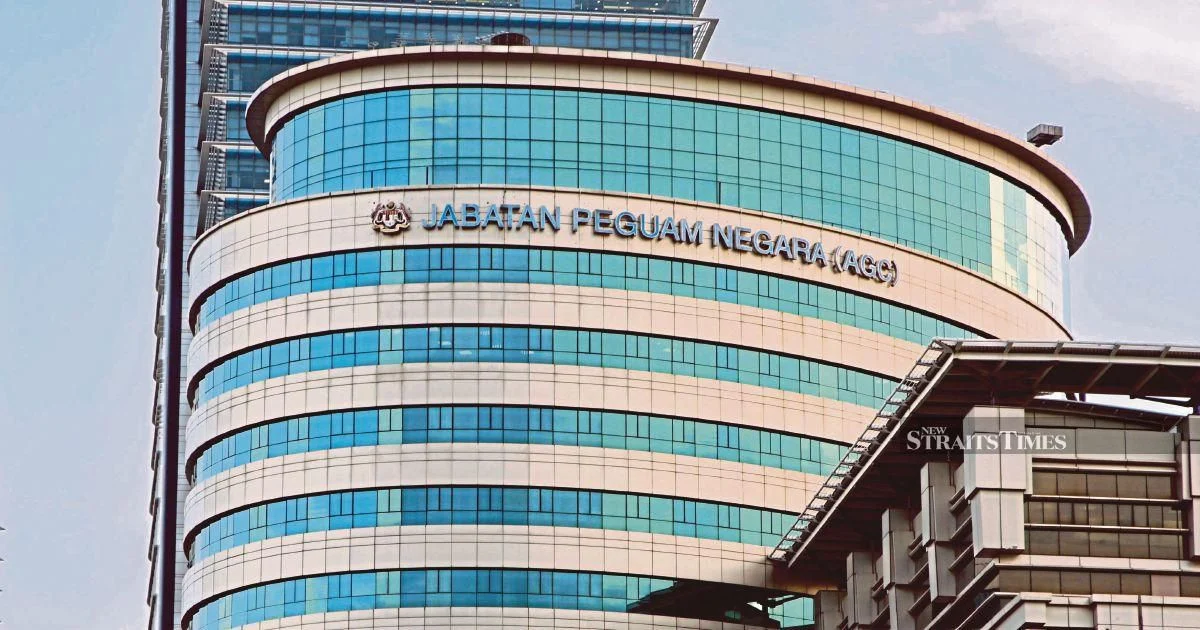
The Attorney-General's Chambers has mounted a vigorous defence of its use of charge withdrawals and compound settlements in high-profile corruption investigations, rejecting suggestions that such mechanisms constitute a loophole or shortcut to avoiding prosecution. In a clarification addressing mounting public concern, the A-GC stressed that both instruments are anchored firmly in statutory law and subject to stringent checks and balances, rather than functioning as automatic leniency for those under investigation.
The defence comes amid growing scrutiny of cases where government authorities have shelved charges against prominent figures accused of serious financial crimes. Critics have increasingly questioned whether settlement arrangements and charge withdrawals are being deployed to resolve politically sensitive prosecutions without full court proceedings, raising doubts about the independence and rigour of Malaysia's anti-corruption enforcement machinery.
Compound settlements, formally known as composition procedures, allow authorities to resolve certain criminal matters without trial by agreeing to a financial settlement with the accused. This mechanism exists in law to provide flexibility in case management and to recover public funds, but its use in corruption cases has sparked debate about whether offenders are purchasing their way out of accountability. The A-GC's position is that such agreements are never entered into lightly and cannot bypass fundamental legal safeguards.
Similarly, the withdrawal of criminal charges is a prosecutorial power that exists in most common law jurisdictions, including Malaysia. While this discretion is necessary for ensuring justice and efficiency in the criminal system, the withdrawal mechanism has drawn scrutiny when applied to high-stakes corruption cases, particularly when withdrawn charges might otherwise have proceeded to trial with a reasonable prospect of conviction. The A-GC insists that withdrawals follow established legal principles and do not represent an abuse of prosecutorial power.
According to the Attorney-General's position, both procedures operate under multiple layers of oversight designed to prevent arbitrary decision-making. Statutory requirements, institutional review processes, and hierarchical approval chains all function to ensure that these mechanisms are deployed only when legally justified and in the broader interest of justice. The A-GC emphasised that withdrawals and compounds cannot be approved on a whim and that each case undergoes thorough vetting before any such action is taken.
The explanation also underscores that compound settlements and charge withdrawals are distinct from acquittals or convictions. They represent alternative case outcomes that do not carry the same formal determination of guilt or innocence as a court judgment. However, this distinction is precisely what troubles observers, particularly when used in cases involving allegations of grand corruption or abuse of high office, where public expectations typically include formal adjudication in open court.
For Malaysian readers, this clarification speaks to broader concerns about the credibility and transparency of the anti-corruption system. The country has faced international scrutiny over its handling of major financial crimes, and public confidence in enforcement agencies depends heavily on the perception that serious cases are pursued rigorously through the courts rather than resolved through behind-the-scenes settlements. The use of compounds and charge withdrawals, while legally permissible, inevitably raises questions about whether such options are appropriate for matters involving alleged corruption by public officials or large-scale financial wrongdoing.
Regionally, Malaysia's approach to corruption prosecution carries implications for how Southeast Asian economies balance prosecutorial discretion with public accountability. Neighbouring jurisdictions face similar tensions between maintaining efficient criminal justice systems and ensuring that high-profile cases receive robust courtroom scrutiny. The way Malaysia manages these pressures influences investor confidence and the perception of institutional strength across the region.
The A-GC's insistence on the legal robustness of its procedures does not necessarily address public perception, however. The opacity surrounding decisions to withdraw charges or approve compounds means that citizens and civil society groups often lack sufficient information to assess whether these mechanisms are being used appropriately. Even if all statutory requirements are met, greater transparency in the decision-making process would likely strengthen public confidence that corruption enforcement is not being compromised.
Moving forward, the challenge for the Attorney-General's Chambers lies not only in ensuring that its legal authority is exercised properly but also in demonstrating that it is being exercised in ways that serve the public interest and reinforce rather than undermine the rule of law. This may require the institution to consider whether increased disclosure about the reasoning behind charge withdrawals and compound approvals could enhance accountability without compromising legitimate prosecutorial interests.
The debate over compounds and charge withdrawals also reflects a deeper tension within Malaysia's justice system between pragmatism and principle. While procedural flexibility has genuine value in managing caseloads and reaching proportionate outcomes, there is legitimate public concern that such flexibility can become a mechanism for avoiding rather than delivering justice in cases where public officials stand accused of enriching themselves at the state's expense.


%22%2F%3E%3C%2Fpattern%3E%3C%2Fdefs%3E%3Crect%20width%3D%22100%25%22%20height%3D%22100%25%22%20fill%3D%22url(%23phjfo8g)%22%2F%3E%3Crect%20width%3D%22100%25%22%20height%3D%22100%25%22%20fill%3D%22url(%23phjfo8p)%22%2F%3E%3Ctext%20x%3D%2250%25%22%20y%3D%2250%25%22%20text-anchor%3D%22middle%22%20dominant-baseline%3D%22central%22%20fill%3D%22rgba(255%2C255%2C255%2C0.95)%22%20font-family%3D%22Georgia%2C%20'Times%20New%20Roman'%2C%20serif%22%20font-weight%3D%22700%22%20font-size%3D%22320%22%20letter-spacing%3D%22-0.02em%22%3EMiri%3C%2Ftext%3E%3C%2Fsvg%3E)