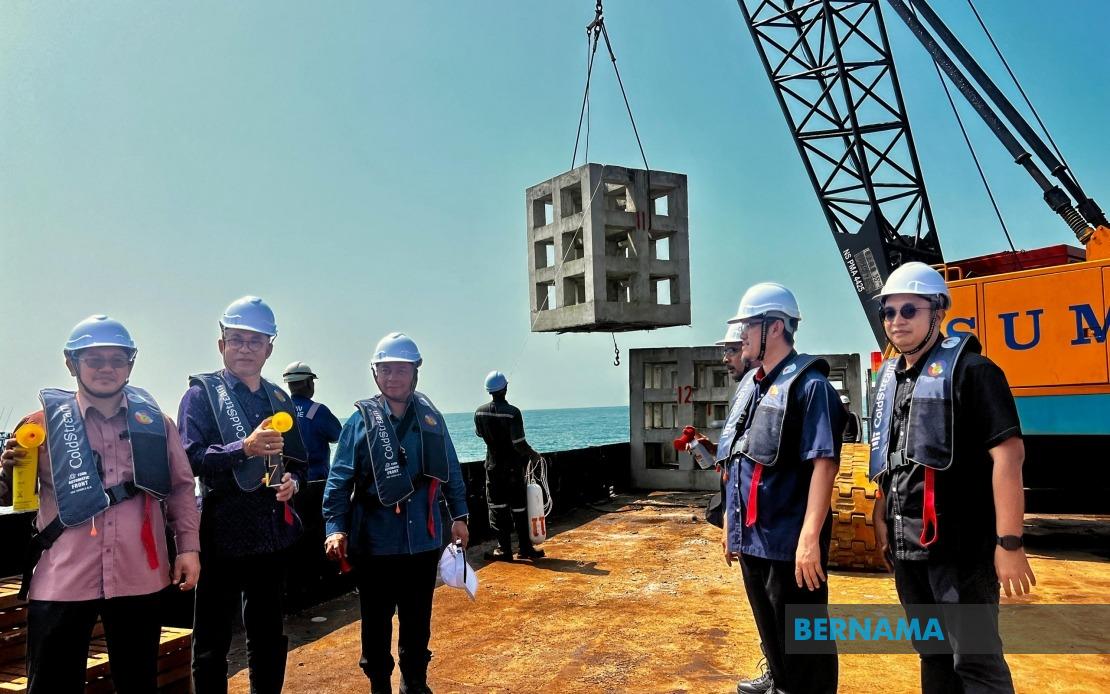
Malaysia's Kelantan state has intensified efforts to safeguard its inshore fishing communities through a strategic marine conservation initiative. The Kelantan Fisheries Department has deployed 30 artificial reef structures in coastal waters off Tok Bali Jetty, positioned approximately 4.6 nautical miles from shore, in a programme funded by Sultan Muhammad V. The deployment represents a significant step in protecting small-scale fishers from competition with large industrial vessels while simultaneously rehabilitating fish stocks that have declined due to decades of intensive harvesting.
Kelantan Fisheries Department director Ismail Ibrahim outlined the multifaceted benefits of the reef programme during the deployment ceremony. Beyond their primary function as artificial habitats, these structures serve a critical protective role by physically deterring large fishing boats from entering shallow coastal waters. The complex geometry of the deployed reefs causes commercial fishing gear—trawl nets and other equipment—to become entangled, creating a natural boundary that discourages encroachment without requiring enforcement vessels or confrontations. This engineering approach elegantly addresses a persistent tension in Southeast Asian fisheries: the conflict between capital-intensive industrial fishing operations and subsistence-oriented coastal communities who lack the resources to compete with mechanised fleets.
The ecological dimension of the programme focuses on restoring fish reproduction cycles that have been disrupted by overfishing. When mature fish migrate to the reef areas to spawn and nurture juvenile populations, the resulting increase in fish availability near shore directly benefits artisanal fishers operating small boats and traditional gear. Ismail emphasised that enhanced catches translate into improved food security for rural communities and more stable income for families dependent on fishing. This outcome aligns with broader Malaysian and regional commitments to sustainable fisheries management and poverty reduction in coastal areas, where fishing communities often face limited economic alternatives.
The scope of Kelantan's commitment to reef deployment extends well beyond the current 30 structures. Since 2007, the state fisheries department has installed approximately 400 artificial reefs across four distinct marine zones within Kelantan waters. The department has scheduled an additional 72 reef units for staged deployment throughout the current year, reflecting sustained institutional support and budgetary allocation to the conservation programme. This incremental expansion strategy allows the department to monitor ecological outcomes from existing installations before scaling up, ensuring that investments produce measurable benefits rather than becoming expensive but ineffective structures.
The timeline for observable impact demands patience from stakeholders. Department officials acknowledge that reef structures typically require at least six months before demonstrable improvements in fish populations become apparent, with outcomes depending on localised environmental conditions and the gradual development of the ecosystem around the installations. This reality check is important for policymakers and fishing communities to understand, as enthusiasm for rapid results can lead to premature programme abandonment if expectations are not carefully managed. The variability in timeframes also reflects the complexity of marine ecology, where water temperature, nutrient availability, and larval drift patterns all influence the success of artificial reef initiatives.
Maintenance and adaptive management form equally important components of the long-term success of Kelantan's reef programme. The fisheries department conducts regular monitoring and periodic cleaning operations to remove ropes, discarded fishing nets, and other debris that accumulate on reef structures. This maintenance prevents the reefs from becoming littered with ghost gear—abandoned fishing equipment that continues to trap and kill marine organisms long after being lost. By actively managing these installations, Kelantan Fisheries Department demonstrates a more sophisticated approach to conservation than simply deploying structures and hoping for the best, a common shortcoming in reef programmes throughout the region.
The Sultan of Kelantan's personal financial contribution to the reef deployment programme carries significance beyond mere economic support. Royal patronage of fisheries conservation lends institutional legitimacy and demonstrates commitment from the state's highest authority, potentially encouraging community participation and voluntary compliance with regulations protecting the reef areas. In the Malaysian context, where traditional respect for royal institutions remains culturally embedded, such patronage can facilitate smoother implementation of conservation measures by framing them as matters of state pride and responsibility rather than merely bureaucratic mandates.
The Kelantan initiative addresses longstanding asymmetries in Malaysia's fisheries sector that reflect broader regional patterns. Industrial fishing interests, backed by capital and technology, have historically overwhelmed the negotiating capacity of small-scale fishers who lack political organisation and economic leverage. By creating physical infrastructure that makes industrial operations economically unviable in specific zones, Kelantan's reef programme bypasses the need for contentious policy debates about fleet licensing, vessel restrictions, or fishing ground allocation. The reefs essentially democratise access by neutralising the technological advantage that large boats possess in open waters.
For Malaysian policymakers observing Kelantan's approach, the artificial reef model offers lessons applicable to other coastal states facing similar fisheries pressures. Peninsular Malaysia's east coast states, in particular, contain significant artisanal fishing populations vulnerable to displacement by industrial fleets. The relatively modest per-unit cost of reef construction—typically several thousand ringgit per structure—makes large-scale deployment financially feasible compared to other conservation interventions. Additionally, reef programmes generate visible, tangible infrastructure that communities can rally around, fostering local stewardship and reducing enforcement burdens.
The broader Southeast Asian context underscores the urgency of initiatives like Kelantan's reef programme. Regional fish stocks have declined precipitously due to overcapacity in fishing fleets and inadequate management across maritime boundaries. As neighbouring countries pursue increasingly aggressive fishing strategies, including expansion into marginal areas, coastal states must implement robust conservation measures to maintain biological productivity. Artificial reefs represent one component of a comprehensive approach that should also include marine protected areas, licensing reform, and transnational cooperation on shared fish stocks.
Looking forward, the success of Kelantan's reef programme will depend on sustained political commitment, adequate funding for maintenance and monitoring, and integration with complementary management strategies. The department's stated intention to expand reef deployments suggests confidence in the approach, but ongoing evaluation will be essential to identify and troubleshoot any unforeseen ecological impacts or operational challenges. If successful, this programme could establish a model for replication across Malaysian coastal states and contribute meaningfully to the long-term viability of artisanal fishing communities increasingly marginalised in a globalised seafood economy.

