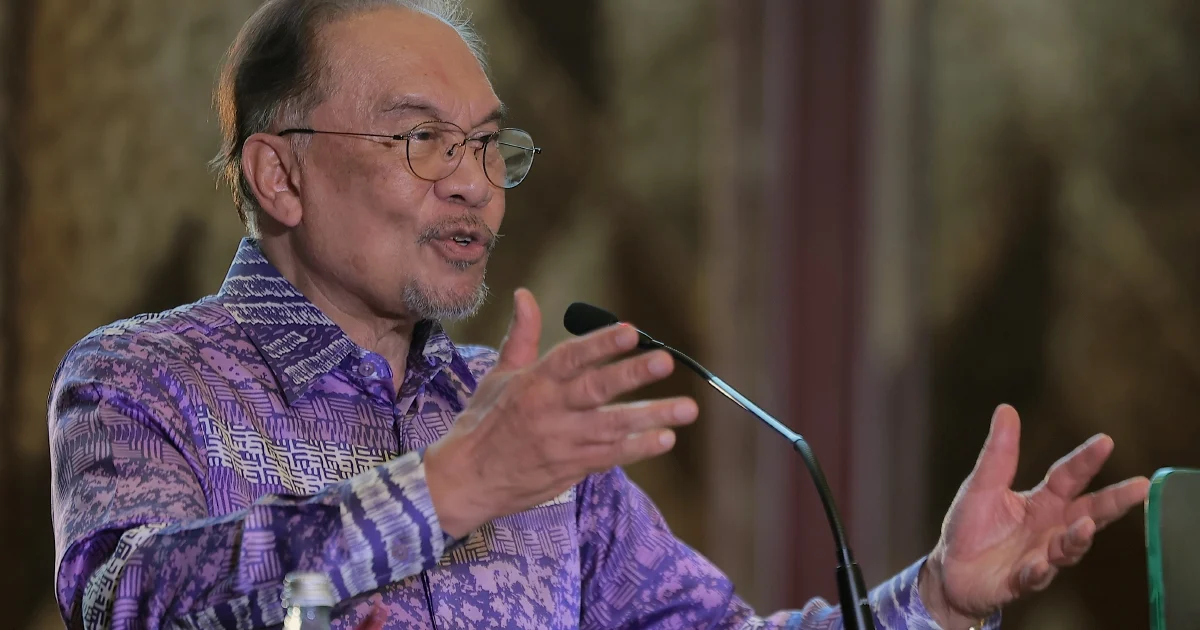
Prime Minister Datuk Seri Anwar Ibrahim is set to travel to Kazan for a two-day working visit commencing June 17, during which he will engage with high-level Russian officials including Rais of the Republic of Tatarstan Rustam Minnikhanov, according to the Malaysian envoy. The visit represents a significant diplomatic undertaking aimed at strengthening bilateral relations between Malaysia and Russia, whilst simultaneously advancing the broader strategic partnership between Asean and the Russian Federation.
The scheduled meeting between Anwar and Minnikhanov carries particular diplomatic weight given Tatarstan's strategic importance as Russia's largest Muslim-majority region and a major economic hub within the Russian Federation. As the capital of Tatarstan, Kazan has emerged as a centre for interfaith dialogue and multicultural cooperation, making it an appropriate venue for discussions between Malaysian and Russian leadership. The choice of location underscores both nations' commitment to fostering understanding and collaboration beyond traditional government-to-government channels.
Malaysia's engagement with Russia at the highest levels reflects the country's broader foreign policy orientation of maintaining balanced relationships with major powers regardless of geopolitical tensions elsewhere. The visit comes amid evolving regional dynamics and Malaysia's emphasis on regional stability and economic cooperation across the Asian continent. By positioning itself as a bridge between East and West, Malaysia continues to leverage its unique diplomatic standing within Asean and the broader international community.
The anticipated discussions during the Kazan visit are expected to encompass multiple dimensions of bilateral cooperation, ranging from trade and investment to cultural and educational exchanges. Both nations share interests in expanding economic partnerships, and the visit provides an opportunity to identify new avenues for collaboration that could benefit businesses and investors from both countries. Enhanced economic ties with Russia could prove particularly valuable for Malaysian companies seeking to diversify their international portfolios.
Beyond the bilateral agenda, the visit carries significance for Asean's strategic positioning. As Asean chair or in coordination with the association's collective interests, Malaysia can leverage this high-level engagement to advance the bloc's collective approach towards Russia. This becomes increasingly important as Asean seeks to maintain its centrality in regional architecture whilst engaging constructively with all major powers, including Russia, which maintains significant interests in Asia-Pacific affairs.
The diplomatic engagement also reflects the growing importance of Asean-Russia relations in contemporary geopolitics. Russia has consistently sought to strengthen ties with Southeast Asian nations, recognizing the region's economic dynamism and strategic significance. Through Malaysia's initiative, Asean can continue building robust channels of communication with Moscow, facilitating dialogue on regional security issues, economic cooperation, and cultural exchange.
Minnikhanov's role as the leader of Tatarstan adds another layer of complexity and opportunity to these discussions. As one of Russia's most influential regional leaders, Minnikhanov can facilitate conversations about sub-national cooperation between Tatarstan and Malaysian states or territories. Such regional-level partnerships can complement national-level agreements and create additional opportunities for people-to-people exchanges and business connections.
The timing of the visit also merits consideration within the context of Malaysia's current international engagements and commitments. As a prominent member of Asean and a player in various regional and global forums, Malaysia's diplomatic initiatives carry weight that extends beyond the bilateral relationship. The Kazan visit demonstrates the country's proactive approach to maintaining and expanding international partnerships across diverse regions and cultures.
Cultural and educational dimensions are likely to feature prominently in discussions, given the historical ties between Malaysia and Russia in fields such as higher education and scientific cooperation. The visit could potentially yield agreements on student exchanges, research collaborations, and cultural programmes that strengthen people-to-people connections between the two nations. Such initiatives often prove more enduring than political or economic agreements alone.
From Malaysia's perspective, the visit also serves to reinforce the country's independent foreign policy trajectory. By maintaining robust engagement with Russia whilst simultaneously engaging with Western nations and other powers, Malaysia demonstrates its commitment to non-alignment and strategic autonomy in international affairs. This approach has traditionally been central to Malaysia's diplomatic identity and continues to resonate with the country's vision of playing a balanced role in a multipolar world.
The discussions in Kazan are also expected to touch upon regional security challenges, counterterrorism cooperation, and maritime security issues that affect both the Indian Ocean and Pacific regions. Russia's extensive experience in these domains and its strategic interests in Asian waters make it a relevant partner for Malaysia as the country grapples with various security challenges in its maritime environment.
Looking forward, the outcomes of Anwar's Kazan visit could establish momentum for deeper Asean-Russia engagement, potentially leading to enhanced cooperation mechanisms and dialogue platforms. Such developments would contribute to a more inclusive and balanced regional order that incorporates multiple perspectives and interests. The visit underscores Malaysia's commitment to being an active participant in shaping regional dynamics whilst maintaining constructive relationships with all stakeholders.

%22%2F%3E%3C%2Fpattern%3E%3C%2Fdefs%3E%3Crect%20width%3D%22100%25%22%20height%3D%22100%25%22%20fill%3D%22url(%23ph21o2sg)%22%2F%3E%3Crect%20width%3D%22100%25%22%20height%3D%22100%25%22%20fill%3D%22url(%23ph21o2sp)%22%2F%3E%3Ctext%20x%3D%2250%25%22%20y%3D%2250%25%22%20text-anchor%3D%22middle%22%20dominant-baseline%3D%22central%22%20fill%3D%22rgba(255%2C255%2C255%2C0.95)%22%20font-family%3D%22Georgia%2C%20'Times%20New%20Roman'%2C%20serif%22%20font-weight%3D%22700%22%20font-size%3D%22170%22%20letter-spacing%3D%22-0.02em%22%3EGabungan%3C%2Ftext%3E%3C%2Fsvg%3E)