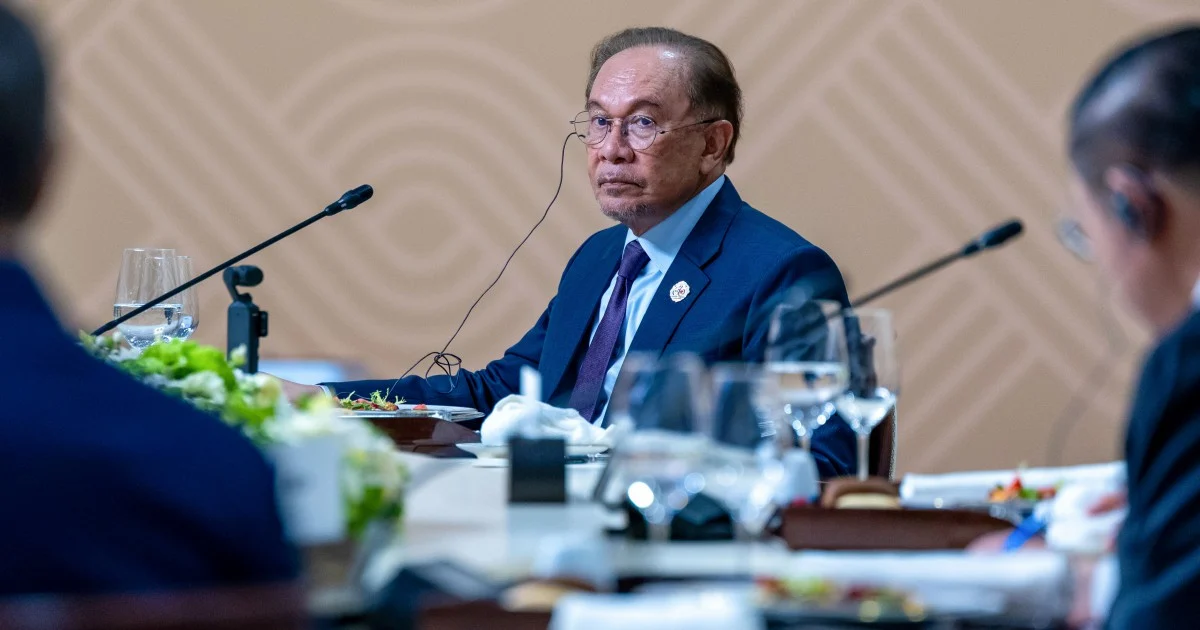
Prime Minister Datuk Seri Anwar Ibrahim has raised concerns about the treatment of developing nations by European countries, cautioning that persistent unfair dealings could compel these nations to pursue partnerships elsewhere. His remarks reflect growing tensions between the Global South and established European powers over economic and strategic relationships, a dynamic that carries significant implications for Malaysia and other ASEAN members seeking balanced international engagement.
Anwar's comments emerge against the backdrop of a dispute involving Norway, a key European economy. The specific nature of the defence-related disagreement underscores how developed nations' policies can create friction with the developing world, particularly when transactions or initiatives are restricted or challenged without sufficient consideration for the economic and strategic interests of smaller nations. Such disputes, though often framed in technical or regulatory terms, frequently mask underlying power imbalances in international relations.
The Malaysian Prime Minister's intervention signals Kuala Lumpur's willingness to articulate the frustrations of the broader developing world community. Malaysia, as a nation that has successfully navigated between major powers and built diverse partnerships, understands the value of strategic alternatives. Anwar's warning reflects a pragmatic position: developing countries have options, and they will exercise them if treated as subordinate players rather than equal partners in the global system.
This messaging carries weight within ASEAN and among Non-Aligned Movement nations that have long sought to maintain equidistant relationships with multiple global powers. Europe's emphasis on standards, regulations, and governance frameworks—while often well-intentioned—can appear exclusionary to nations operating under different economic models or developmental priorities. When European countries enforce restrictions or conditions perceived as punitive or asymmetrical, they risk alienating potential partners and driving them toward alternative sources of investment, technology, and security arrangements.
The reference to Norway is particularly significant given that country's reputation as a progressive, economically advanced nation. If disputes arise even with such nations, it suggests that disagreements stem not from developmental gaps but from differing strategic calculations or policy approaches. This nuance matters for understanding Anwar's argument: he is not suggesting that developing countries resent Europe's wealth or development status, but rather that they object to being treated as passive recipients of European demands rather than as active agents with legitimate interests.
For Malaysia specifically, such warnings reflect the balancing act the country must perform in international affairs. Malaysia has substantial trade and investment relationships with European countries but also maintains deep ties with China, India, the Middle East, and other Asian powers. If European policies become increasingly restrictive or conditional in ways that disadvantage Malaysian interests, the government has indicated it will not hesitate to strengthen partnerships elsewhere. This is not a threat but a statement of rational self-interest.
The broader context involves the ongoing struggle between the Global North and Global South over issues including climate financing, technology transfer, intellectual property rules, and military procurement. Developing nations argue they are being asked to meet standards and accept restrictions that the now-developed countries never faced during their own industrialization. Anwar's intervention positions Malaysia and like-minded nations as asserting their agency within this framework, refusing to be passive rule-takers in a system they did not design.
The implications extend to ASEAN's strategic autonomy agenda. The ten-nation bloc has consistently emphasized its desire to engage with multiple powers—whether Europe, China, the United States, or India—without subordinating itself to any single patron. Anwar's remarks reinforce this position, signaling to European capitals that ASEAN nations expect reciprocal respect and mutually beneficial arrangements rather than one-sided compliance with European preferences. This is particularly relevant as Europe seeks to increase its strategic footprint in the Indo-Pacific region.
Alternative partnerships for developing nations increasingly include arrangements with China, India, Russia, and other non-Western powers, as well as intra-South cooperation mechanisms. The emergence of organizations like BRICS and the ASEAN Plus frameworks provides developing nations with institutional spaces to advance collective interests without Western dominance. When Europe fails to offer partnership on acceptable terms, these alternatives become more attractive, potentially reducing European influence in crucial regions.
Anwar's warning also addresses domestic audiences in Malaysia and across the developing world. By articulating these frustrations publicly, the Prime Minister reinforces his government's commitment to protecting national interests and refusing subservient positioning in international affairs. This stance resonates with Malaysian public sentiment, which generally supports a foreign policy rooted in national interest rather than automatic alignment with any single bloc.
The practical effect of such warnings is often to prompt recalibration among European policymakers who recognize that heavy-handed approaches can backfire. Thoughtful European leaders understand that maintaining influence in Asia-Pacific requires building genuine partnerships based on mutual benefit. Anwar's intervention serves as a gentle reminder of this reality while opening space for more constructive dialogue.
Moving forward, Malaysia and other developing nations appear determined to increase their bargaining power by maintaining multiple options and refusing to accept unfavorable terms simply because they come from wealthier, more established countries. This represents a maturation of Global South politics, where nations increasingly recognize and exercise their collective leverage in shaping the international order.

%22%2F%3E%3C%2Fpattern%3E%3C%2Fdefs%3E%3Crect%20width%3D%22100%25%22%20height%3D%22100%25%22%20fill%3D%22url(%23ph21o2sg)%22%2F%3E%3Crect%20width%3D%22100%25%22%20height%3D%22100%25%22%20fill%3D%22url(%23ph21o2sp)%22%2F%3E%3Ctext%20x%3D%2250%25%22%20y%3D%2250%25%22%20text-anchor%3D%22middle%22%20dominant-baseline%3D%22central%22%20fill%3D%22rgba(255%2C255%2C255%2C0.95)%22%20font-family%3D%22Georgia%2C%20'Times%20New%20Roman'%2C%20serif%22%20font-weight%3D%22700%22%20font-size%3D%22170%22%20letter-spacing%3D%22-0.02em%22%3EGabungan%3C%2Ftext%3E%3C%2Fsvg%3E)