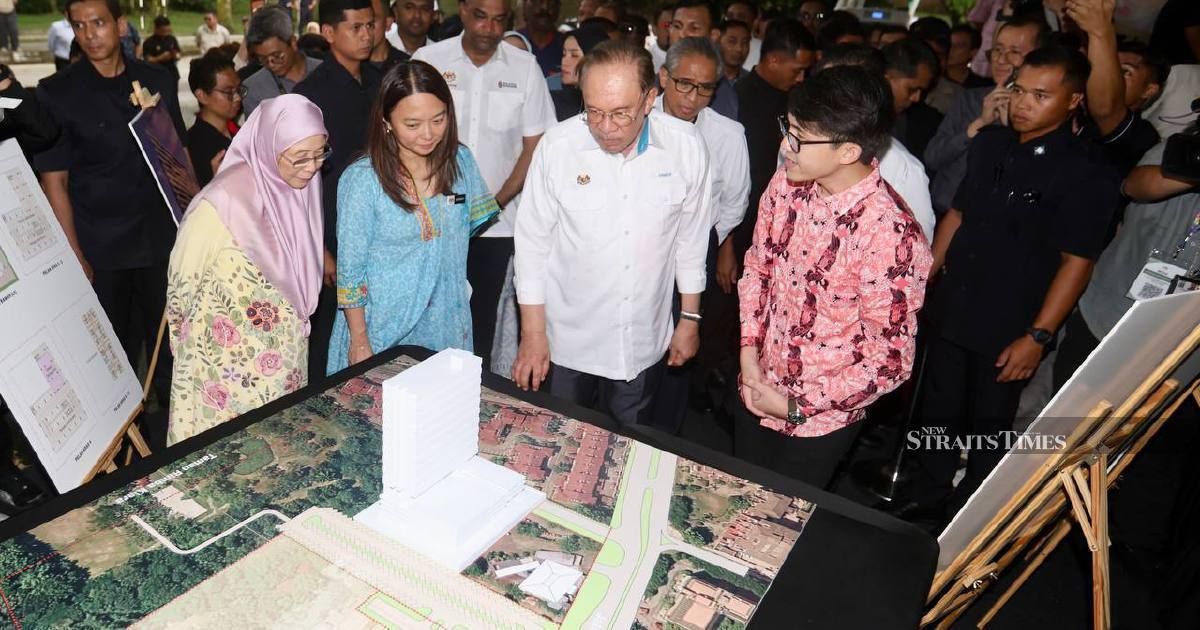
Prime Minister Datuk Seri Anwar Ibrahim has moved to counter suggestions that vulnerable urban communities have been neglected under his administration, insisting instead that his government maintains a steadfast commitment to protecting the interests of the urban poor as they work towards improved living standards.
The assertion comes as the government advances the Bukit Kiara project, which officials characterise as a tangible demonstration of the administration's resolve to balance commercial development with genuine consideration for residents in lower-income brackets. This development initiative has become emblematic of the government's broader approach to urban renewal—one that proponents argue does not require sacrificing the welfare of economically disadvantaged populations.
The Prime Minister's intervention reflects growing sensitivity within government circles regarding perceptions that urban regeneration efforts may inadvertently displace or marginalise poorer residents. Development pressures across Malaysia's major urban centres have consistently raised concerns about gentrification and housing affordability, particularly in Kuala Lumpur and its surrounding areas where land values have escalated dramatically over the past decade.
Bystanding issues of social equity in development have become increasingly prominent in Malaysian political discourse, with various stakeholders questioning whether growth-focused policies adequately protect vulnerable populations. Anwar's public reassurance appears designed to address these concerns head-on, presenting the Bukit Kiara initiative as evidence that the government can pursue modernisation without abandoning its social responsibilities.
The Bukit Kiara project represents the government's attempt to reconcile competing pressures: the need for economic development and urban revitalisation on one hand, and the imperative to ensure that existing residents—particularly those with limited financial resources—are not rendered homeless or displaced by rising rents and property values. Such balancing acts have proven contentious in Southeast Asian cities, where rapid development frequently creates tensions between property investors and ordinary residents.
For urban poor communities across Malaysia, the symbolic importance of projects like Bukit Kiara extends beyond the immediate development itself. These initiatives signal government priorities and communicate whether policymakers view low-income residents as stakeholders deserving protection or merely obstacles to commercial progress. The messaging around such projects thus carries significant weight in shaping public confidence in government intentions.
The Prime Minister's framing emphasises that advancement and social inclusion need not be mutually exclusive objectives. By highlighting this particular project, the administration appears to be establishing a template for future urban development—one where infrastructure improvements and economic growth proceed alongside protections for vulnerable populations. This approach, if substantiated through concrete implementation mechanisms, could influence how other regional governments approach similar development challenges.
Malaysia's urban poor population faces distinct challenges that extend beyond housing insecurity. Access to basic services, employment opportunities, healthcare, and educational facilities all feature prominently in discussions about urban welfare. Development projects thus carry implications that ripple across multiple dimensions of residents' lives. A project genuinely committed to inclusion would need to address these interconnected concerns rather than focusing narrowly on property issues.
The timing of Anwar's statement coincides with broader concerns about Malaysia's development trajectory in the post-pandemic era. As the country seeks to reposition itself economically and recover from pandemic-related setbacks, questions about equitable growth have gained prominence. The government's positioning on urban poor welfare will likely influence public perception of its overall development philosophy and commitment to inclusive growth.
International development discourse increasingly emphasises that sustainability and social equity must anchor urban transformation. Malaysia, as a middle-income country with aspirations toward developed status, faces scrutiny regarding whether its development model adequately addresses inequality. How the government handles projects like Bukit Kiara will contribute to its international reputation as either a cautionary tale of unequal growth or a model of balanced development.
The urban poor themselves remain the ultimate judges of whether government commitments translate into genuine improvement in their circumstances. Beyond rhetorical assurances, substantive outcomes measured through housing security, income stability, and access to essential services will determine whether the Bukit Kiara project and similar initiatives deliver meaningful benefits or merely represent symbolic gestures. The coming months will be instructive as these projects move from planning stages into implementation, revealing the gap between stated intentions and actual resource allocation.

%22%2F%3E%3C%2Fpattern%3E%3C%2Fdefs%3E%3Crect%20width%3D%22100%25%22%20height%3D%22100%25%22%20fill%3D%22url(%23ph21o2sg)%22%2F%3E%3Crect%20width%3D%22100%25%22%20height%3D%22100%25%22%20fill%3D%22url(%23ph21o2sp)%22%2F%3E%3Ctext%20x%3D%2250%25%22%20y%3D%2250%25%22%20text-anchor%3D%22middle%22%20dominant-baseline%3D%22central%22%20fill%3D%22rgba(255%2C255%2C255%2C0.95)%22%20font-family%3D%22Georgia%2C%20'Times%20New%20Roman'%2C%20serif%22%20font-weight%3D%22700%22%20font-size%3D%22170%22%20letter-spacing%3D%22-0.02em%22%3EGabungan%3C%2Ftext%3E%3C%2Fsvg%3E)