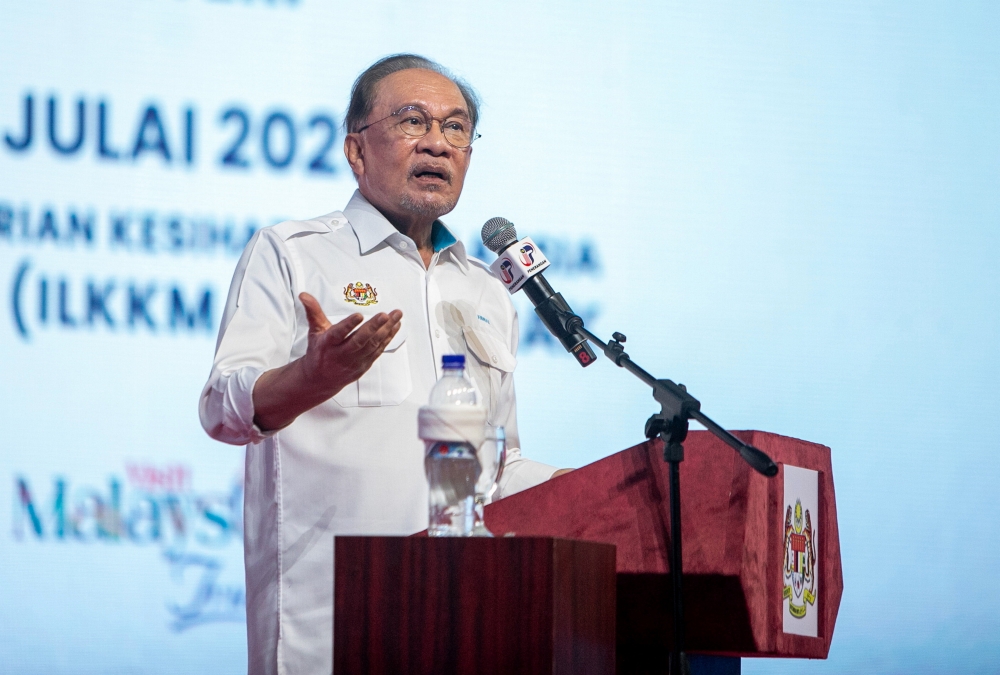
Prime Minister Datuk Seri Anwar Ibrahim has mounted a robust defence of the government's approach to fuel pricing, arguing that current policy serves essential national interests even as critics question its long-term sustainability. Speaking in Kajang, Anwar framed the government's position as a matter of balancing immediate social protection with responsible fiscal management, positioning subsidised fuel as part of a broader social contract with Malaysian citizens.
The timing of Anwar's remarks reflects ongoing tensions within Malaysia's policy-making circles regarding the role of fuel subsidies in the national budget. Fuel subsidies represent one of the government's most significant recurring expenditures, consuming billions of ringgit annually that might otherwise be directed toward infrastructure, healthcare, or education. By defending this spending publicly, Anwar has signalled that the administration views fuel affordability as politically and socially non-negotiable, despite the fiscal constraints facing the nation.
Central to Anwar's argument is a fundamental economic question: who ultimately bears the cost of removing subsidies? The Prime Minister emphasised that any abrupt withdrawal of fuel support would inevitably translate into higher costs for ordinary Malaysians, from transport fares to goods prices. This cascading effect would ripple through the entire economy, potentially eroding purchasing power among lower and middle-income households who already face considerable cost-of-living pressures. By framing the subsidy debate in terms of direct household impact, Anwar has reframed what appears on budget sheets as an abstract question of fiscal policy into a tangible concern affecting everyday Malaysians.
However, Anwar's defence also incorporated a cautionary note about the alternative to maintaining subsidies: accumulating national debt. The Prime Minister warned that if Malaysia abandons fuel support without implementing parallel revenue-generating measures or economic restructuring, the government would be forced to borrow extensively to cover the resulting fiscal gap. This concern resonates particularly in Southeast Asia, where several nations have experienced the consequences of unsustainable debt accumulation, including reduced policy flexibility and vulnerability to external shocks.
Malaysia's debt-to-GDP ratio has become an increasingly sensitive topic in recent years, with various stakeholders expressing concern about long-term fiscal sustainability. The government has committed to bringing this ratio down as part of its broader economic reform agenda, yet simultaneously faces pressure to maintain spending on popular programmes. Fuel subsidies sit at the intersection of these competing priorities, making them a perennial flashpoint in budget discussions. Anwar's framing suggests the government is attempting to navigate this tension by arguing that subsidy maintenance, while costly, represents the less damaging option compared to the debt accumulation that might follow their removal.
The political dimension of fuel pricing cannot be overlooked. In Malaysia's democratic system, fuel prices carry significant electoral weight. Previous governments have faced considerable public backlash following fuel price hikes, and several studies suggest that subsidy removal remains deeply unpopular among voters across income levels. By defending the current subsidy regime, Anwar is acknowledging this political reality whilst attempting to reposition the government's stance as one grounded in rational economic calculation rather than mere electoral calculation.
Yet Anwar's position also reflects a pragmatic assessment of Malaysia's development stage and social needs. Unlike some developed economies that have successfully reduced fuel subsidies through alternative welfare mechanisms, Malaysia's social safety net remains incomplete. Removing fuel subsidies without establishing comprehensive replacement programmes—such as expanded public transport, targeted cash transfers, or reduced taxation for lower-income groups—would create genuine hardship for vulnerable populations who depend on affordable fuel for work and daily necessities.
The international context adds another layer to this debate. Global fuel prices have demonstrated significant volatility, particularly following geopolitical disruptions and supply chain challenges. For a nation that imports substantial quantities of refined petroleum, this volatility makes long-term planning around fuel costs inherently difficult. Maintaining some level of subsidy insulates the domestic economy from these external shocks, providing a degree of economic stability that policymakers value, particularly given Malaysia's exposure to global commodity market fluctuations.
Looking forward, Anwar's comments suggest the government is unlikely to pursue dramatic subsidy reductions in the near term. Instead, the administration appears committed to exploring alternative approaches to fiscal consolidation, potentially including revenue enhancement measures, efficiency improvements in state enterprises, and targeted subsidy reforms rather than wholesale removal. This incremental approach reflects the political constraints governing fuel policy in Malaysia and acknowledges the genuine economic hardships that sudden policy shifts could impose on ordinary citizens struggling with elevated living costs across multiple categories.
The broader question underlying this debate concerns Malaysia's economic trajectory and the sustainability of current policy frameworks. As Southeast Asia's second-largest economy, Malaysia must balance short-term social stability with long-term fiscal health. Anwar's defence of fuel subsidies represents one response to this dilemma, but whether this approach proves sustainable over the medium to long term remains uncertain. The Prime Minister's emphasis on debt concerns suggests the government recognises the urgency of achieving fiscal balance, even as immediate political and social realities constrain the policy options available to achieve that goal.

