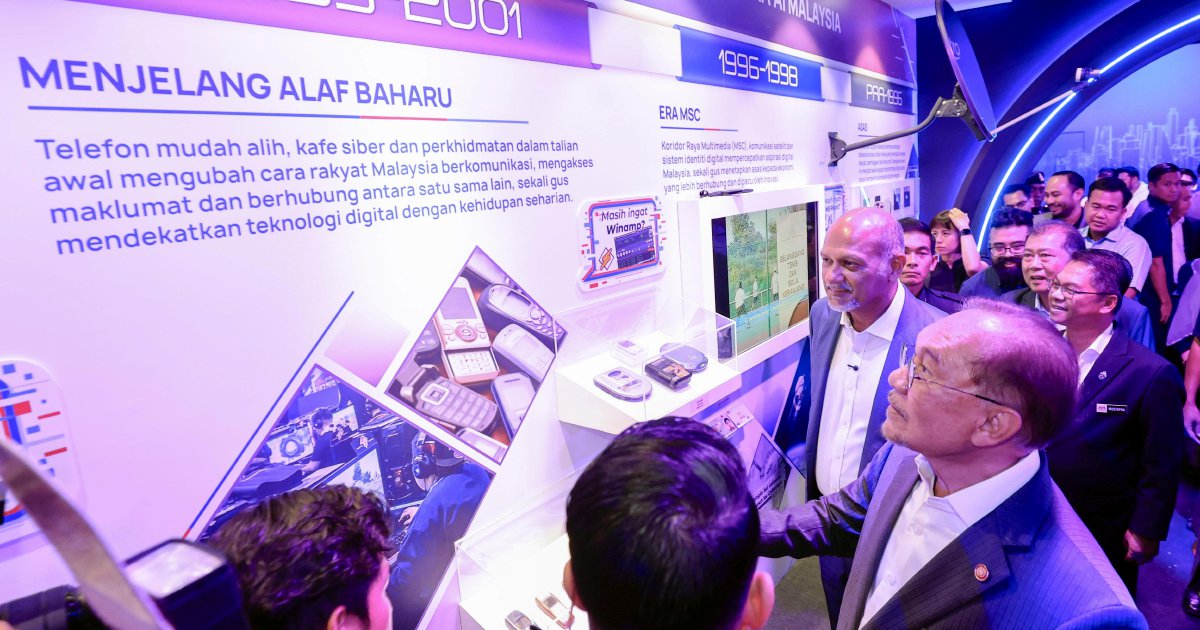
Prime Minister Datuk Seri Anwar Ibrahim has raised a critical concern about the potential social consequences of Malaysia's accelerating pivot toward becoming an artificial intelligence-driven economy. Speaking in Cyberjaya, the digital hub that symbolizes the nation's technological aspirations, Anwar underscored that the country's commitment to AI development must remain tethered to a broader commitment to equity and social inclusion. His remarks reflect growing anxiety across Southeast Asia that rapid technological advancement, while promising economic gains, risks leaving entire segments of the population stranded without the skills, resources, or infrastructure to participate in the digital economy.
The warning carries particular weight coming from Malaysia's top leadership, signaling that concerns about technology-driven inequality are not peripheral to the national development agenda but central to it. As Malaysia pursues increasingly ambitious targets to position itself as a regional AI powerhouse, the government faces a genuine tension between the speed required to attract investment and talent, and the deliberate, inclusive approach needed to ensure technology benefits are widely distributed. This balancing act is complicated by Malaysia's existing wealth disparities, regional disparities, and varying levels of digital literacy across urban and rural populations.
Anwar's intervention suggests policymakers recognize that technological advancement divorced from social consideration could exacerbate already significant gaps in Malaysia. Communities lacking reliable broadband connectivity, adequate digital education, or affordable access to AI-enabled services risk falling further behind in a knowledge economy increasingly mediated through artificial intelligence. The risk extends beyond mere economic disadvantage; unequal access to AI-driven opportunities could reshape social mobility prospects for an entire generation, particularly in rural areas and among lower-income households where the digital divide remains pronounced.
The challenge Anwar implicitly identifies is structural. Malaysia's existing ecosystem already privileges technology adoption in major urban centers like the Klang Valley and George Town, while smaller cities and rural areas struggle with infrastructure constraints. As businesses increasingly adopt AI for productivity and decision-making, workers without access to AI training or AI-assisted tools face diminishing competitiveness in the labor market. This creates a reinforcing cycle where technological advantages concentrate among those already advantaged, potentially creating a new class of tech-literate elites while wider populations find themselves gradually less relevant to the modern economy.
The Prime Minister's caution also reflects international experience. Countries that have experienced rapid technological transitions, from South Korea's digital revolution to China's AI expansion, have witnessed temporary but significant disruption to labor markets and social cohesion. While these nations ultimately benefited from technological leadership, the transition periods produced winners and losers, and the social costs sometimes persisted for years. Malaysia, observing these patterns, has an opportunity to learn and to deliberately construct policies that mitigate such risks rather than simply managing them after inequality deepens.
Addressing this challenge requires coordinated action across multiple government domains. Education systems must evolve to prepare students for an AI-integrated workplace while avoiding over-specialization that leaves non-technology workers obsolete. Infrastructure investment must prioritize underserved regions to ensure digital connectivity reaches beyond metropolitan corridors. Workforce retraining programs must be adequately funded and accessible, allowing workers displaced by automation to transition into new roles. Telecommunications policy must ensure broadband access becomes genuinely affordable for lower-income households, not just technically available.
Malaysia's position as a middle-income nation attempting to reach high-income status creates particular urgency around this question. The nation needs AI adoption to drive productivity gains and attract high-value investment, yet cannot afford to sacrifice the social cohesion that has historically underpinned its stability. The demographic window for developing a tech-skilled workforce is narrowing as population growth slows, making it essential that talent development becomes more inclusive rather than more selective. Losing potential AI developers, engineers, and innovators from rural areas or disadvantaged communities represents a waste of human capital Malaysia cannot afford.
The implications extend regionally as well. If Malaysia successfully implements inclusive AI development that prevents technological inequality from exacerbating social divisions, it could provide a model for other Southeast Asian nations grappling with similar pressures. Conversely, if Malaysia's AI push produces stark inequality, it could fuel social tensions that complicate both development and regional stability. The region's stability and prosperity depend partly on preventing technology from becoming a new fault line of inequality.
Anwar's statement, while not accompanied by detailed policy announcements in the available reporting, represents an important rhetorical commitment to balancing technological ambition with social responsibility. Whether this translates into concrete policy measures—from curriculum reforms to infrastructure spending prioritization to labor market supports—will determine whether Malaysia's AI transition serves as an inclusive opportunity or an exclusive windfall.

