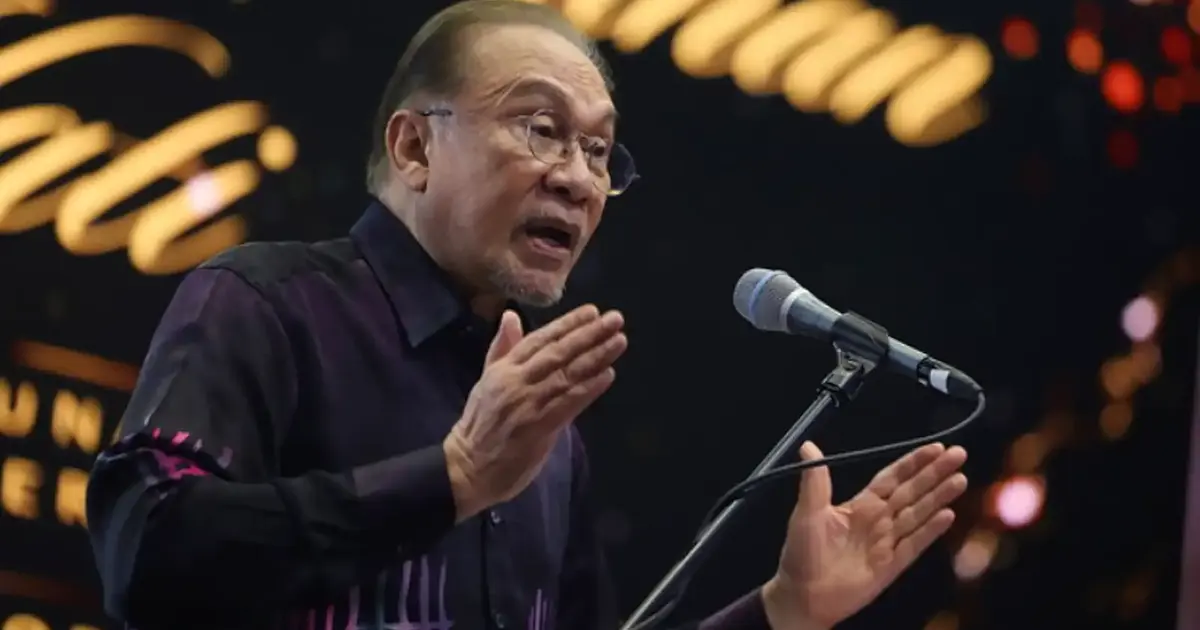
Prime Minister Anwar Ibrahim has made a direct appeal to Malaysians to look beyond inflammatory messaging emanating from certain political quarters, reaffirming the nation's commitment to pluralism and social cohesion. Speaking on the importance of rising above divisive rhetoric, Anwar highlighted how Malaysia's ethnic and cultural diversity has historically functioned as a fundamental source of national strength rather than weakness.
The prime minister's remarks come at a time of sustained political contestation across the Malaysian landscape, with various factions employing hardline messaging to mobilize electoral bases. Anwar's intervention signals concern within government circles about the corrosive effects of polarizing political discourse on national unity and democratic institutions. His position underscores the distinction between robust political competition and the weaponization of communal tensions for electoral gain—a boundary that Anwar appears determined to defend.
Malaysia's track record as a multiethnic nation has long rested on delicate constitutional arrangements and implicit social compacts negotiated at independence and refined through subsequent decades. The Federal Constitution itself enshrines protections for multiple communities while establishing the institutional frameworks through which diverse groups negotiate representation and resource allocation. Anwar's invocation of diversity as a strength taps into this historical consciousness, positioning pluralism not as a constraint upon national progress but as a precondition for it.
The economic dimensions of this argument merit particular attention for Malaysian readers. Diversity in markets, perspectives, and talent pools has contributed substantially to Malaysia's development trajectory. Singapore's transformation into a global financial hub, though driven by different political structures, demonstrates the commercial advantages that cosmopolitan societies can generate. Malaysia's own success in manufacturing, technology, and services sectors has relied partly on the cross-cultural competence and networks that ethnic diversity naturally produces. Divisive politics threatens to undermine these competitive advantages by fragmenting social trust and inhibiting the cooperation that knowledge-intensive economies require.
From a Southeast Asian perspective, Anwar's message carries additional weight. The region has witnessed the destabilizing consequences of communal polarization in Myanmar, Thailand, and the Philippines. Malaysia's relative stability over decades, despite periodic tensions, reflects institutional arrangements and political leadership that consistently privileged compromise over confrontation. Anwar's call to reject hate peddling implicitly positions Malaysia as a counterweight to worrisome regional trends toward ethnonationalism and religious majoritarianism.
The demographic reality underlying Anwar's position deserves examination. Malays and Bumiputeras constitute the majority population, while Chinese and Indian Malaysians together represent substantial minorities whose integration into the national project has required ongoing negotiation. Recent migration flows have added further complexity, with growing populations of migrant workers and expatriates. Rather than viewing this diversity as problematic, Anwar frames it as generative—a wellspring of resilience and adaptability that serves long-term national interests.
Certain political leaders have, in recent years, employed religious and ethnic messaging to consolidate support among their core constituencies. Anwar's pushback suggests recognition that such tactics, while electorally expedient in the short term, corrode the social foundations upon which democratic governance and economic prosperity ultimately depend. His intervention attempts to establish an alternative political idiom—one that acknowledges distinct community interests without dissolving them into zero-sum ethnic or religious competition.
The implications for policymaking across sectors are significant. Education, housing, employment, and media policy all become contests when viewed through a lens of communal competition. Conversely, when framed around shared prosperity and institutional inclusion, these same policy domains become opportunities for building cohesion while addressing legitimate group concerns. Anwar's framing invites such reorientation toward collaborative problem-solving.
Yet the prime minister's exhortation also highlights the limits of leadership rhetoric alone in containing polarization. Political narratives operate within structural contexts shaped by electoral incentives, media fragmentation, and historical grievances. Rejecting hate peddling requires not merely moral appeals but institutional practices—in political parties, civil society organizations, educational institutions, and media outlets—that actively cultivate constructive engagement across communal lines. Anwar's words thus constitute one necessary but insufficient component of a broader project of democratic renewal.
Moving forward, the test of Anwar's position will lie in whether his government and allied political forces embed pluralist commitments into concrete policies and organizational practices. Messaging about ethnic harmony, however eloquent, carries limited weight if not accompanied by tangible efforts to ensure equitable opportunity, fair representation, and respectful treatment across all communities. The challenge before Malaysian leadership involves translating rhetorical commitments to diversity into institutional arrangements that make inclusive outcomes self-sustaining rather than perpetually contingent upon individual leaders' goodwill.