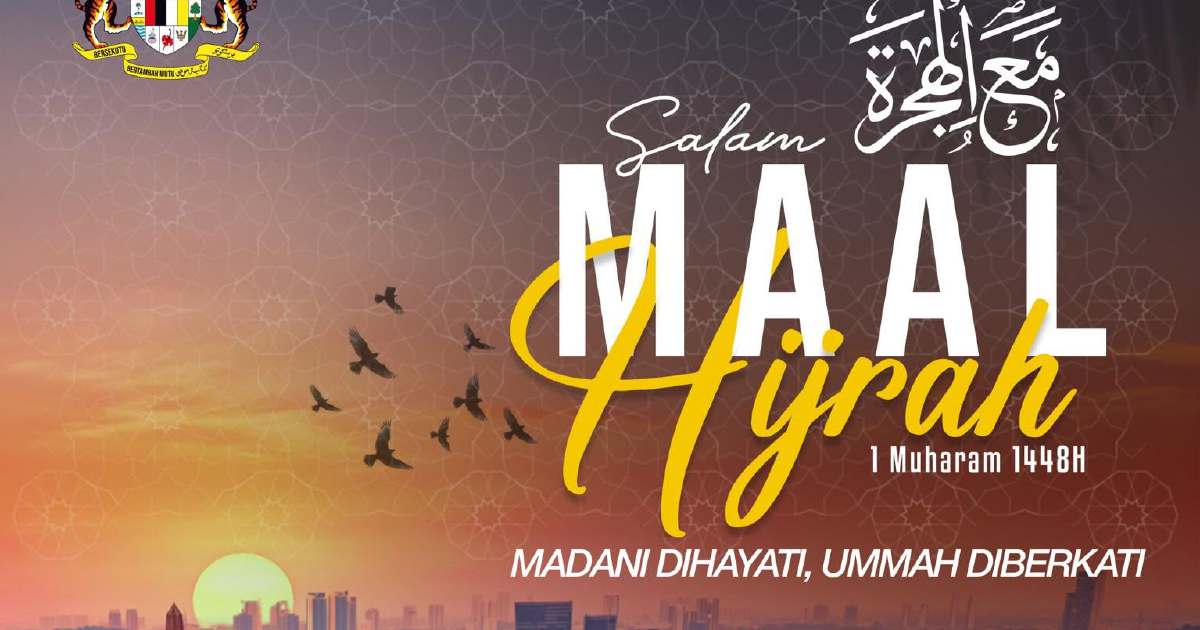
Prime Minister Datuk Seri Anwar Ibrahim has made a fresh appeal to the Malaysian public to adopt the philosophical and spiritual framework of Hijrah, positioning it as a foundational concept that encompasses truth, prosperity and security. The call represents the premier's attempt to frame contemporary governance around Islamic and Malaysian civilisational values, suggesting that these principles remain relevant to addressing modern challenges facing the nation.
Hijrah, traditionally understood in Islamic teaching as the migration of Prophet Muhammad from Mecca to Medina in 622 CE, carries broader metaphorical meaning in contemporary discourse. Beyond its historical religious significance, the concept has evolved to represent personal and collective transformation, renewal and moral recalibration. Anwar's invocation of this framework suggests an intention to mobilise the population around a shared narrative of purposeful change and societal improvement rather than merely institutional reform.
The emphasis on truth within the Hijrah framework directly addresses longstanding concerns about governance, accountability and institutional integrity in Malaysia. Throughout the country's recent political turbulence and institutional challenges, questions about transparency and honest administration have dominated public discourse. By grounding his message in truth, Anwar appears to be responding to citizen demands for greater openness in government operations and decision-making processes, positioning truthfulness as both a moral imperative and a practical prerequisite for effective administration.
Prosperity constitutes the second pillar of Anwar's articulated vision, reflecting the persistent economic concerns that dominate Malaysian household priorities. The nation continues navigating post-pandemic economic recovery, inflation pressures, employment uncertainties and rising cost of living across sectors. By invoking prosperity as a central Hijrah value, the Prime Minister signals that economic advancement remains intertwined with ethical governance and spiritual orientation. This framing suggests that material wellbeing cannot be divorced from moral conduct, presenting economic policy not merely as technical management but as an expression of shared communal values.
Security, the third element cited, encompasses both physical safety and the broader sense of social cohesion that Malaysia requires. The nation remains ethnically and religiously diverse, making communal harmony and inter-community understanding essential to stability. Security in Anwar's formulation likely extends beyond conventional law and order to encompass psychological reassurance, institutional reliability and national confidence in the future. This holistic interpretation reflects the multifaceted nature of security concerns in contemporary Malaysia, from street-level safety to macroeconomic stability to regional geopolitical positioning.
Anwar's deployment of Hijrah symbolism carries significant political resonance within Malaysia's context. The concept resonates strongly with Muslim-majority populations while remaining sufficiently philosophical to accommodate diverse interpretations. By choosing this framework rather than strictly secular nationalist or explicitly Islamic governance language, the Prime Minister navigates the delicate balance required in a pluralistic society where Islamic values hold profound significance for the majority while minorities seek assurance of equal treatment and respect.
The timing of this call also merits consideration. Malaysia faces persistent challenges including political fractionalisation, inter-party disputes and public scepticism regarding political institutions. Invoking transformative spiritual and moral language represents an attempt to transcend partisan divisions and appeal to higher principles that theoretically unite Malaysians across political boundaries. Whether such appeals effectively mobilise populations or instead remain at the level of rhetorical positioning remains subject to debate among political analysts.
The practical implementation of Hijrah principles in governance presents considerable complexity. Translating abstract values of truth, prosperity and security into concrete policy measures requires clear operational definitions and measurable outcomes. Citizens and observers will likely assess whether government actions genuinely reflect these espoused principles or whether they constitute aspirational language disconnected from administrative practice. This gap between rhetorical commitment and institutional reality frequently determines public reception of such appeals.
For Malaysian businesses and the investment community, an administration explicitly committed to truth and security frameworks may signal improved predictability and reduced corruption risks. Prosperity framed through moral governance suggests that economic policy will incorporate ethical considerations rather than facilitating exploitative practices. These signals carry implications for domestic entrepreneurship, foreign investment flows and Malaysia's regional economic positioning in competition with Southeast Asian neighbours.
The Hijrah framework also positions Malaysia within broader Islamic governance conversations occurring across Muslim-majority nations. By articulating governance through civilisational values rather than imported Western models, Anwar contributes to ongoing regional discussions about development pathways that incorporate indigenous and religious traditions. This approach distinguishes Malaysia's governance discourse from purely technocratic or secular frameworks that have dominated post-independence Malaysian politics.
Internal party dynamics within Anwar's coalition government may also be influenced by this messaging. Different coalition partners and factions maintain varying interpretations of how Islamic values should inform governance. A Hijrah-centred approach sufficiently flexible to accommodate multiple readings may serve as unifying language that prevents coalition fracture, particularly important given the precarious parliamentary mathematics that characterise current Malaysian governance.
The success of Anwar's Hijrah appeal will ultimately depend on sustained demonstration that these principles genuinely guide decision-making across government institutions. Public cynicism regarding political promises remains substantial in Malaysia, shaped by decades of unfulfilled commitments. Only through consistent application of truth in communication, demonstrable improvements in economic opportunities and enhanced security outcomes can the administration transform aspirational language into lived institutional reality that commands citizen confidence and generates the transformative momentum the Hijrah framework purports to invoke.

%22%2F%3E%3C%2Fpattern%3E%3C%2Fdefs%3E%3Crect%20width%3D%22100%25%22%20height%3D%22100%25%22%20fill%3D%22url(%23ph21o2sg)%22%2F%3E%3Crect%20width%3D%22100%25%22%20height%3D%22100%25%22%20fill%3D%22url(%23ph21o2sp)%22%2F%3E%3Ctext%20x%3D%2250%25%22%20y%3D%2250%25%22%20text-anchor%3D%22middle%22%20dominant-baseline%3D%22central%22%20fill%3D%22rgba(255%2C255%2C255%2C0.95)%22%20font-family%3D%22Georgia%2C%20'Times%20New%20Roman'%2C%20serif%22%20font-weight%3D%22700%22%20font-size%3D%22170%22%20letter-spacing%3D%22-0.02em%22%3EGabungan%3C%2Ftext%3E%3C%2Fsvg%3E)