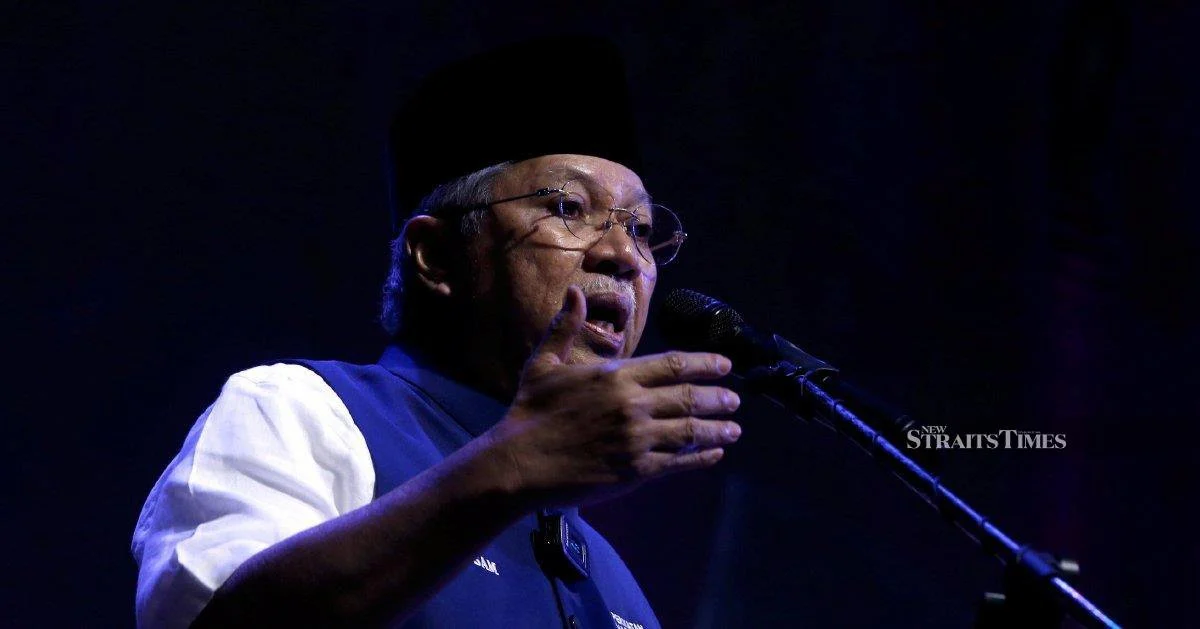
The leadership of Bersatu is being pressed to maintain composure as the Perikatan Nasional coalition navigates a period of heightened internal friction, with calls for measured responses to mounting tensions between member parties. The directive reflects growing concern among senior figures that hasty or inflammatory statements could further destabilise an already fragile political arrangement that has struggled to maintain cohesion throughout its tenure.
Perikatan Nasional, which has served as the foundation of Malaysia's federal government, has experienced repeated episodes of discord since its formation. The coalition comprises several distinct political entities with competing interests, regional power bases, and ideological priorities, making consensus on key issues persistently challenging. These structural weaknesses have periodically erupted into public disputes, threatening the stability of the ruling arrangement and potentially affecting the government's capacity to implement its legislative agenda.
Bersatu, as a significant component of the coalition, occupies a strategically important position within the broader political alliance. The party's actions and statements carry disproportionate weight in shaping perceptions of coalition unity and credibility. When individual components of the coalition move without careful coordination, the resulting public contradictions can undermine confidence in the government and create opportunities for opposition parties to exploit apparent divisions.
The current phase of tensions reflects persistent difficulties in managing the diverse interests within Perikatan Nasional. Different member parties have distinct voter bases, geographical strongholds, and policy priorities that do not always align. What benefits one component may disadvantage another, creating friction over ministerial portfolios, policy direction, and resource allocation. These structural tensions have proven remarkably resistant to resolution through conventional coalition management mechanisms.
The advisory to exercise restraint carries implicit warnings about the consequences of uncoordinated public positions. When coalition partners speak at cross-purposes or engage in tit-for-tat recriminations through the media, public trust erodes and the impression of governmental dysfunction deepens. In the Malaysian context, where electoral outcomes frequently hinge on perceptions of competence and stability, such damage can have significant electoral consequences. Opposition parties benefit considerably from coalition infighting, as it directs public attention away from government achievements and toward internal chaos.
Bersatu's position within Perikatan Nasional has been particularly complex, given the party's emergence from internal divisions within United Malays National Organisation (UMNO) and its subsequent evolution into an independent political force. The party operates within a coalition where its interests do not always harmonise with those of other members, particularly regarding representation in government and policy priorities affecting its core constituencies. Navigating these tensions while maintaining party cohesion presents an ongoing leadership challenge.
The broader context includes Malaysia's delicate political equilibrium, where federal government stability depends substantially on maintaining sufficient coalition discipline to secure parliamentary majorities. In recent years, several government coalitions have collapsed when member parties withdrew their support or when internal divisions became so severe that cohesive governance became impossible. The reminder to Bersatu to avoid premature statements implicitly acknowledges awareness of how quickly coalitional mathematics can shift when visible tensions escalate.
Premature or provocative public statements by coalition members often lock positions that might otherwise remain flexible during behind-the-scenes negotiations. Once leaders make declarations through the media, they create political costs for backing down or compromising, as retreat appears to signal weakness. This dynamic has historically made coalition management increasingly difficult as tensions mount, as public statements become harder to walk back and negotiating space contracts.
The timing of this advisory also reflects electoral considerations. As Malaysia approaches various electoral cycles at state and federal levels, coalition stability assumes heightened importance. A visibly fractious coalition risks losing support from swing voters who prioritise governmental competence and stability. Conversely, a coalition that projects unity and cohesion, even while managing internal disagreements, can better weather criticism and maintain electoral viability.
For Bersatu specifically, the injunction to remain measured offers strategic advantages. By avoiding escalatory rhetoric, the party preserves its ability to negotiate effectively within coalition forums while maintaining leverage over other members. Bersatu's willingness to exercise restraint when others might not can position the party as a stabilising force, potentially enhancing its bargaining power on issues that matter to its leadership and membership. This requires considerable discipline, particularly when party interests are directly at stake.
The advisory underscores a fundamental challenge facing coalition governments across democratic systems: balancing the need for public accountability and party autonomy with the requirements of maintaining sufficient cohesion to govern effectively. For Bersatu and other Perikatan Nasional members, this balance remains perpetually precarious. The most successful coalition partners typically develop mechanisms for resolving disputes internally before disagreements become public spectacles, though achieving such discipline consistently has proven difficult for Malaysia's political coalitions.
As Perikatan Nasional continues navigating current tensions, the repeated calls for restraint indicate that senior figures view the situation as serious enough to warrant explicit intervention. Whether such admonitions will succeed in moderating public positioning and maintaining coalition functionality will likely determine whether Perikatan Nasional can preserve sufficient stability to govern effectively through forthcoming electoral cycles.

%22%2F%3E%3C%2Fpattern%3E%3C%2Fdefs%3E%3Crect%20width%3D%22100%25%22%20height%3D%22100%25%22%20fill%3D%22url(%23ph21o2sg)%22%2F%3E%3Crect%20width%3D%22100%25%22%20height%3D%22100%25%22%20fill%3D%22url(%23ph21o2sp)%22%2F%3E%3Ctext%20x%3D%2250%25%22%20y%3D%2250%25%22%20text-anchor%3D%22middle%22%20dominant-baseline%3D%22central%22%20fill%3D%22rgba(255%2C255%2C255%2C0.95)%22%20font-family%3D%22Georgia%2C%20'Times%20New%20Roman'%2C%20serif%22%20font-weight%3D%22700%22%20font-size%3D%22170%22%20letter-spacing%3D%22-0.02em%22%3EGabungan%3C%2Ftext%3E%3C%2Fsvg%3E)