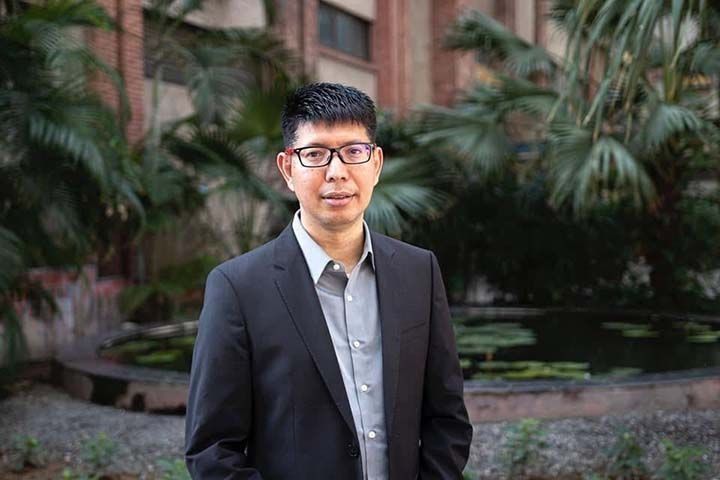
Min Zin, an American scholar and executive director of the Institute for Strategy and Policy (ISP) – Myanmar, was arrested in the Chinese city of Kunming on June 3 while travelling to participate in an academic workshop, according to a statement from the think tank he established. China's foreign ministry has accused him of espionage and endangering national security, though both his institute and the United States government have rejected these allegations as groundless.
The timing of the detention raised eyebrows given that it occurred just weeks before Myanmar's military junta leader Min Aung Hlaing was scheduled for a significant state visit to China. The arrest underscores the delicate geopolitical positioning surrounding Myanmar, where China maintains substantial strategic and economic interests. As one of the country's largest trading partners and a longstanding military supporter, Beijing's actions toward those studying Myanmar affairs carry particular significance for understanding the bilateral relationship and broader regional dynamics.
The US State Department moved swiftly to engage with Chinese authorities, confirming that American consular officers had visited Min Zin and that the department was providing appropriate consular assistance. A State Department spokesperson categorically rejected the espionage accusations, signalling Washington's concern over the detention. This diplomatic response reflects broader American interest in safeguarding academic freedom and protecting citizens abroad, even as US-China relations remain strained across multiple domains.
Min Zin's background illustrates his deep connection to Myanmar's political struggles. As a former student activist who participated in Myanmar's pro-democracy movement in 1988, he brought firsthand experience of the country's tumultuous political history to his scholarly work. After studying political science at the University of California, Berkeley, he applied his expertise to establishing a research institution dedicated to analysing Myanmar's complex challenges.
The Institute for Strategy and Policy – Myanmar began as a domestic operation but relocated abroad following the February 2021 military coup that ousted Aung San Suu Kyi's elected government. This strategic relocation proved necessary as Myanmar descended into armed conflict, with pro-democracy forces and ethnic armed organisations mounting an increasingly coordinated resistance against the military junta. The think tank's focus on documenting and analysing these developments made it an important source of independent research on Myanmar's political crisis and the humanitarian catastrophe unfolding there.
ISP-Myanmar's research agenda reflects the multifaceted dimensions of Myanmar's contemporary challenges. The institute has produced substantial work examining the ongoing armed conflict, prospects for political transition, the country's deteriorating economic situation, and the intricate web of trade relations and bilateral dealings with China. Given Myanmar's geographic proximity to China and the military's historical dependence on Chinese military aid and economic support, understanding Sino-Myanmar relations has become central to comprehending Myanmar's political future.
The detention carries troubling implications for academic freedom in the region. International scholars studying sensitive geopolitical issues face an increasingly constrained operating environment, particularly when their research touches on matters Beijing considers strategically important. The ISP-Myanmar statement emphasised that academic and research organisations must be able to conduct their work without intimidation, highlighting concerns that the detention could have a chilling effect on independent scholarship about Myanmar and China's role in the country.
China's response to the detention reflects its standard position on such cases. The foreign ministry maintained that Min Zin was suspected of espionage activities and that the matter would be handled according to Chinese law. This formulation provides little detail and leaves unclear what specific actions or communications prompted the arrest, though his scholarly work analysing Sino-Myanmar relations and the military junta's governance undoubtedly falls within areas China views with sensitivity.
For Malaysian and broader Southeast Asian observers, this episode illuminates the precarious position of independent researchers examining geopolitically significant topics. Myanmar's crisis affects the entire region through refugee flows, security implications, and the broader question of how China exercises influence over its smaller neighbours. Scholars attempting to document and analyse these dynamics face potential legal jeopardy when their work is perceived as critical or inconvenient to powerful states.
The case also reflects wider tensions between academic inquiry and state security concerns. China has increasingly asserted its prerogatives to prosecute foreigners and foreign-connected individuals on espionage charges, sometimes with limited transparency or adherence to international legal norms. The vagueness surrounding specific allegations against Min Zin exemplifies this pattern, leaving the international community uncertain about the precise nature of the accusations.
Min Zin's detention occurred against the backdrop of Myanmar's deepening humanitarian and security crisis. The military's 2021 coup triggered a popular uprising that evolved into armed rebellion, with newly formed resistance groups joining established ethnic armies in challenging junta rule. Throughout this period, independent analysts like those at ISP-Myanmar have provided critical documentation of events, casualty figures, and political developments that international media and governments depend upon for understanding the conflict.
The incident underscores how geopolitical competition and strategic partnerships can intersect with academic freedom. China's relationship with Myanmar's military provides Beijing with significant leverage over events in Myanmar, and efforts to monitor or constrain scholarship analysing this relationship must be understood within that context. For the academic community across Southeast Asia and beyond, the case raises uncomfortable questions about the costs of studying politically sensitive issues in an era of rising great power competition.
%22%2F%3E%3C%2Fpattern%3E%3C%2Fdefs%3E%3Crect%20width%3D%22100%25%22%20height%3D%22100%25%22%20fill%3D%22url(%23ph29y08g)%22%2F%3E%3Crect%20width%3D%22100%25%22%20height%3D%22100%25%22%20fill%3D%22url(%23ph29y08p)%22%2F%3E%3Ctext%20x%3D%2250%25%22%20y%3D%2250%25%22%20text-anchor%3D%22middle%22%20dominant-baseline%3D%22central%22%20fill%3D%22rgba(255%2C255%2C255%2C0.95)%22%20font-family%3D%22Georgia%2C%20'Times%20New%20Roman'%2C%20serif%22%20font-weight%3D%22700%22%20font-size%3D%22151%22%20letter-spacing%3D%22-0.02em%22%3EMalaysian%3C%2Ftext%3E%3C%2Fsvg%3E)
%22%2F%3E%3C%2Fpattern%3E%3C%2Fdefs%3E%3Crect%20width%3D%22100%25%22%20height%3D%22100%25%22%20fill%3D%22url(%23ph4nq77g)%22%2F%3E%3Crect%20width%3D%22100%25%22%20height%3D%22100%25%22%20fill%3D%22url(%23ph4nq77p)%22%2F%3E%3Ctext%20x%3D%2250%25%22%20y%3D%2250%25%22%20text-anchor%3D%22middle%22%20dominant-baseline%3D%22central%22%20fill%3D%22rgba(255%2C255%2C255%2C0.95)%22%20font-family%3D%22Georgia%2C%20'Times%20New%20Roman'%2C%20serif%22%20font-weight%3D%22700%22%20font-size%3D%22320%22%20letter-spacing%3D%22-0.02em%22%3EKPKT%3C%2Ftext%3E%3C%2Fsvg%3E)