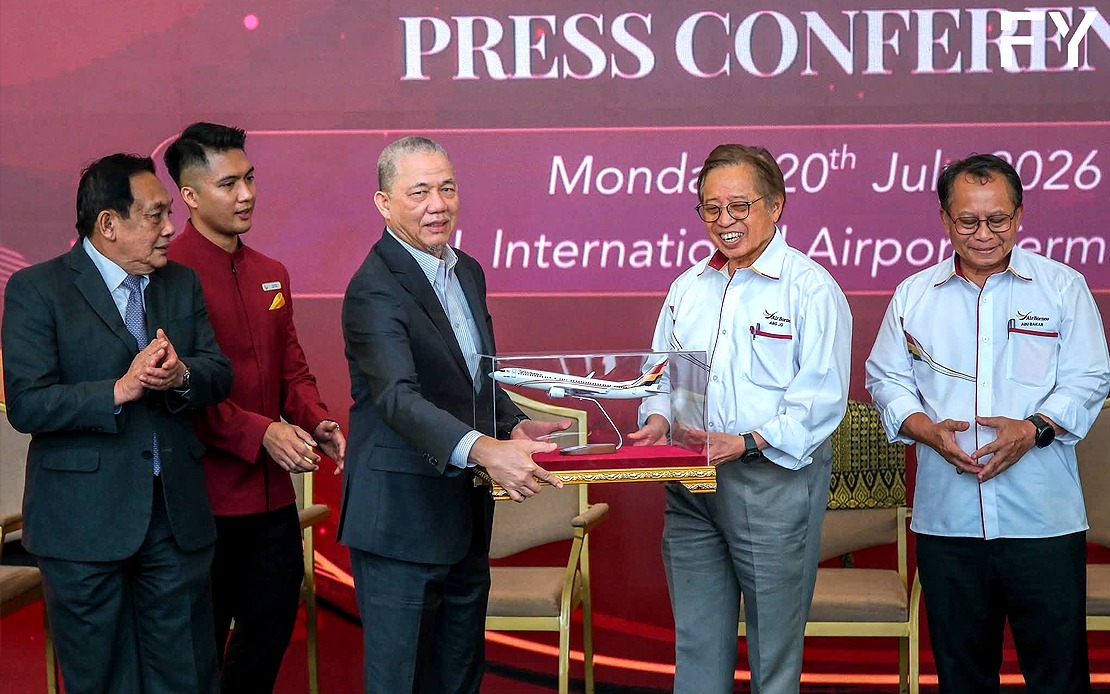
Sarawak's newly established state-owned airline, AirBorneo, has commenced operations with its first commercial flight, marking a significant moment in the state's economic strategy and addressing years of complaints from residents about expensive air travel. The inaugural service from Kuching to Kuala Lumpur International Airport Terminal 1 departed on July 20, carrying Sarawak Premier Tan Sri Abang Johari Tun Openg and a delegation of state ministers, establishing what officials view as a watershed development for the state's transport infrastructure and tourism prospects.
Deputy Prime Minister Datuk Seri Fadillah Yusof has positioned AirBorneo as a solution to the persistent challenge of inflated airfares that have deterred travel and commerce within Sarawak and between the state and Peninsular Malaysia. His stated vision encompasses delivering air services that are not merely less expensive, but also more transparent in pricing structures and genuinely responsive to passenger requirements, all while maintaining competitive standards of safety and comfort. This approach reflects growing pressure across Southeast Asia for regional carriers to balance affordability with operational excellence, a tension that has affected both established and emerging airlines throughout the corridor.
The timing of AirBorneo's launch carries symbolic weight for Sarawak, arriving just two days before the state's annual Sarawak Day celebration on July 22. Officials characterise the commencement of services as emblematic of the state's capacity for self-determination and economic independence. Abang Johari has framed the venture not merely as a commercial enterprise, but as a strategic investment designed to fortify Sarawak's long-term economic trajectory. This messaging appeals to local pride and emphasises that the state possesses the institutional capability to implement major infrastructure projects without dependence on federal or foreign ownership structures.
The establishment of a state-controlled carrier represents part of a broader effort to strengthen the competitive position of Sarawak's economy within Malaysia and across the region. Enhanced air connectivity facilitated by a domestically oriented airline is expected to generate spillover benefits across multiple sectors. Tourism operators anticipate improved access for both domestic and international visitors, while logistics providers and importers may benefit from more efficient transportation links. Trade relationships between Sarawak and other Malaysian states, as well as neighbouring regions, could intensify if operational costs decline and flight frequencies increase to match demand.
AirBorneo's focus on maintaining air service accessibility in rural and remote areas addresses a long-standing equity concern particular to Sarawak's geography. Much of the state's population is dispersed across vast distances, with certain communities accessible only by air when river transport proves impractical. Commercial airlines serving limited passenger volumes in these locations often operate at losses or charge premium fares to compensate. A state-owned operator answerable to the Sarawak government has greater latitude to subsidise essential services to underserved communities, ensuring connectivity regardless of strict commercial viability calculations that would deter private carriers.
Fadillah's messaging emphasises that AirBorneo embodies Sarawak's aspiration to exercise greater autonomous control over its air transport infrastructure and regulatory environment. This reflects a broader pattern across Malaysia and Southeast Asia, where state and regional governments increasingly view transport networks as levers of economic policy and political autonomy. Unlike privatised or foreign-controlled carriers, a state-owned airline can align route planning, pricing, and investment decisions with explicitly stated political objectives and regional development priorities rather than shareholder returns alone.
The competitive landscape for regional air services in Malaysian airspace has shifted considerably over recent years, with established carriers like Malaysia Airlines, AirAsia, and Malindo Air operating alongside smaller competitors. AirBorneo's entry introduces a new player with explicit backing from the Sarawak state government and potential preferential treatment regarding landing rights, slot allocations, and ground services. The extent to which the carrier can compete effectively on pricing while maintaining operational sustainability remains an open question, particularly given elevated fuel costs and labour expenses that affect all operators in the region.
Rural connectivity represents perhaps the most defensible rationale for AirBorneo's existence, as private carriers have consistently demonstrated reluctance to serve thin routes without subsidies or high fares. Sarawak's interior communities depend on air links for medical evacuation, government services, education access, and goods supply. A carrier committed to maintaining these routes addresses a market failure where purely commercial calculations would restrict service. This mandate mirrors successful precedents in other nations, where regional airlines operate with government support to sustain essential connectivity.
The airline's launch occurs within a broader context of rising transport costs affecting competitiveness and livelihood across Southeast Asia. Malaysia's interconnected domestic economy requires efficient movement of goods and personnel across the peninsula and to Sabah and Sarawak. High airfares relative to disposable incomes in less developed regions create structural barriers to labour mobility, tourism development, and business formation. By targeting affordability and transparency, AirBorneo positions itself as responsive to these economic pressures, though executing this vision sustainably will require careful management of operational efficiency and cost controls.
Fadillah's characterisation of AirBorneo as a "catalyst for progress and prosperity" reflects aspirations extending beyond simple fare reduction. The airline's presence and future growth are intended to attract investment in related sectors, stimulate tourism marketing, and improve Sarawak's competitive positioning for trade partnerships. As Southeast Asian nations compete for regional air hub status and travel market share, state-level initiatives like AirBorneo contribute to a decentralised competition that may ultimately benefit consumers through expanded choice and more attentive service offerings tailored to local needs and preferences.

