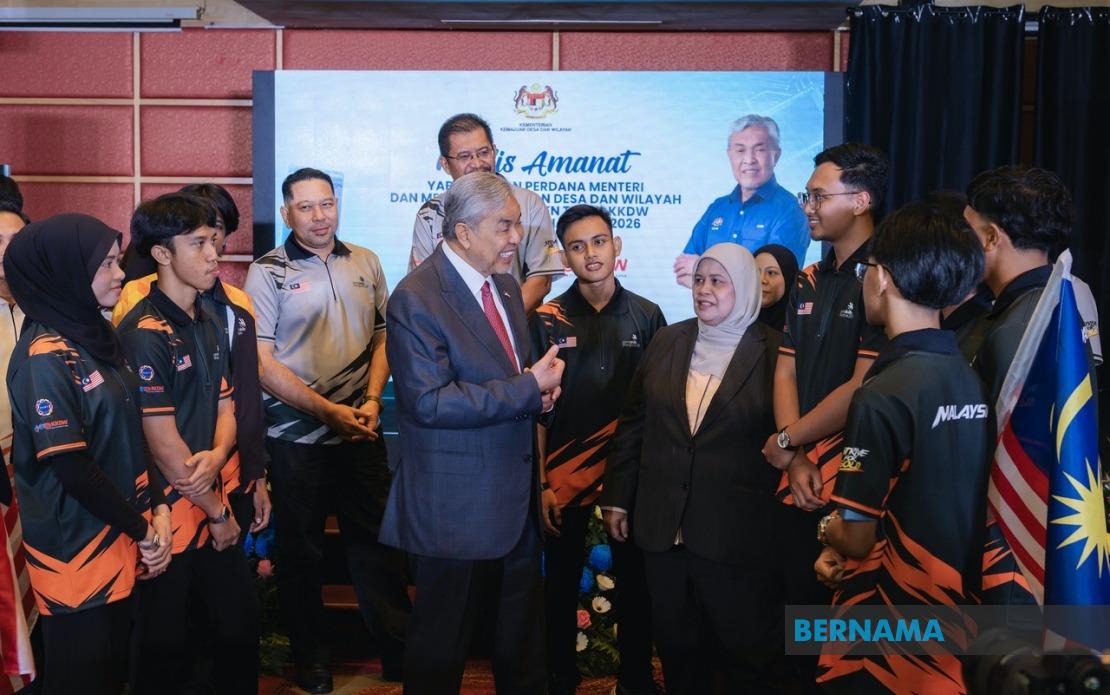
Deputy Prime Minister Datuk Seri Dr Ahmad Zahid Hamidi has made an ambitious pledge to personally finance umrah pilgrimages for any Malaysian technical and vocational trainee who wins gold at the WorldSkills Competition 2026, scheduled to take place in Shanghai, China from September 22 to 27. The sponsorship will extend not only to the medal-winning competitors themselves but also to their parents, making it a family recognition of their achievement on the global stage. Ahmad Zahid, who concurrently holds the Rural and Regional Development portfolio, unveiled this commitment while addressing the TVET@KKDW contingent preparing for the competition, positioning the gesture as a personal token of appreciation for excellence in vocational skills.
The initiative reflects a broader government strategy to elevate Malaysia's standing in international vocational and technical training competitions. WorldSkills is widely regarded as the foremost global platform for demonstrating competency across diverse skilled trades, and Malaysian success at the event carries significant implications for the nation's positioning as a talent producer in the region. By tying prestigious religious rewards to competitive achievement, Ahmad Zahid's pledge connects spiritual and professional aspirations in a way designed to motivate participants and raise the profile of vocational education among Malaysian youth who might otherwise view these pathways as secondary to traditional academic routes.
The Malaysian contingent heading to Shanghai comprises nine competitors representing nine distinct skill categories under the KKDW structure. Nadratulliyana Ab Malek will compete in Fashion Technology, while Haziq Syahmi Nazri takes on the demanding field of Automobile Painting. The roster also includes specialists in Electronics through Amirul Sharif Sharifudin, Cyber Security represented by Mohammad Ezaly Iman Ramli, and Rail Vehicle Technology featuring Wan Hamiz Ozai Wan Hamidzi. Completing the delegation are Khairul Idham Bahari in Cabinetmaking, Muhamad Nashrul Zulkifli in Digital Construction, Muhammad Haziq Lailla Zamri in Electrical Installations, and Muhammad Huzairy Mohamad Thes in Mechanical Engineering CAD.
This selection underscores Malaysia's attempt to field competitive entries across both traditional and emerging technical domains. The inclusion of cyber security and digital construction reflects recognition that future skills demand extends beyond conventional trades into technology-intensive sectors. These nine competitors represent the crystallisation of months or years of training within TVET institutions aligned with the Ministry of Rural and Regional Development, which has been tasked with strengthening vocational pathways as part of broader economic development strategy.
Ahmad Zahid's financial commitment carries practical significance for participants whose family circumstances might otherwise limit their ability to undertake the sacred pilgrimage. For many Malaysian Muslims, umrah represents a deeply meaningful spiritual journey, and the removal of financial barriers removes a significant practical obstacle. The pledge also serves as powerful motivation during the competition itself; knowing that success translates directly to a religiously significant reward may provide psychological advantage for competitors managing the intense pressures of international competition.
The Deputy Rural and Regional Development Minister Datuk Rubiah Wang's presence at the announcement indicates institutional backing for the initiative. This dual-level support suggests the sponsorship carries broader departmental endorsement rather than representing purely individual generosity, though Ahmad Zahid explicitly stated the funds would come from his personal resources. Such clarity about funding sources is important for governance transparency and demonstrates that the commitment does not represent unauthorised use of public money.
WorldSkills competitions have historically proven valuable for Malaysian participants in terms of international exposure and skill validation. Success at these global forums has frequently led to enhanced career prospects, stronger employer recognition of credentials, and sometimes opportunities for international employment or further study. Gold medals at WorldSkills Shanghai 2026 would cement Malaysia's technical workforce quality and potentially attract international investment in sectors where Malaysian expertise becomes demonstrably world-class.
The timing of this pledge matters significantly within Malaysia's broader skills development narrative. The nation has been working to address perceived shortages in technical talent and to combat negative perceptions of vocational training as a less desirable alternative to university education. Government initiatives attempting to reshape these perceptions benefit from visible recognition and tangible rewards for excellence in vocational fields. Ahmad Zahid's announcement provides exactly that kind of high-profile, appealing incentive that makes technical pathways more attractive to young Malaysians weighing their career options.
From a Southeast Asian perspective, Malaysia's investment in competitive vocational excellence at WorldSkills positions it within broader regional efforts to develop skilled workforces in increasingly technology-dependent economies. Countries across ASEAN recognise that vocational and technical expertise will be crucial for manufacturing advancement, infrastructure development, and the maintenance of competitiveness amid technological disruption. Malaysian success at WorldSkills 2026 would contribute to regional narratives about the quality and capability of Southeast Asian technical talent.
The nine-person delegation represents the culmination of careful selection processes designed to identify Malaysia's most promising technical talent across the chosen skill categories. Each participant will have undergone intensive training, competed through preliminary rounds, and demonstrated excellence sufficient to warrant national representation. The standard these nine have already achieved positions them competitively within an international field, though success at WorldSkills remains fiercely contested given the global participation and skill levels involved.
For the competitors themselves, the knowledge that winning gold carries such a distinctive personal benefit may serve multiple psychological functions. Beyond the obvious motivation, it demonstrates that the nation values their sacrifice and effort, recognising vocational excellence with the same prestige and recognition typically reserved for achievements in other domains. This public affirmation of worth matters considerably for young technical professionals establishing their careers and self-perception within Malaysia's broader social landscape.
Ahmad Zahid's pledge also establishes an interesting precedent regarding how senior government figures might incentivise achievement in priority sectors. Should the announcement successfully translate into medals and the subsequent fulfilment of the umrah sponsorships, it creates a model that could potentially be replicated for other international competitions or achievement benchmarks. This demonstration effect—showing that high-level political commitment to vocational excellence can translate into tangible rewards—may influence attitudes toward technical education among both policymakers and families considering educational pathways for their children.

