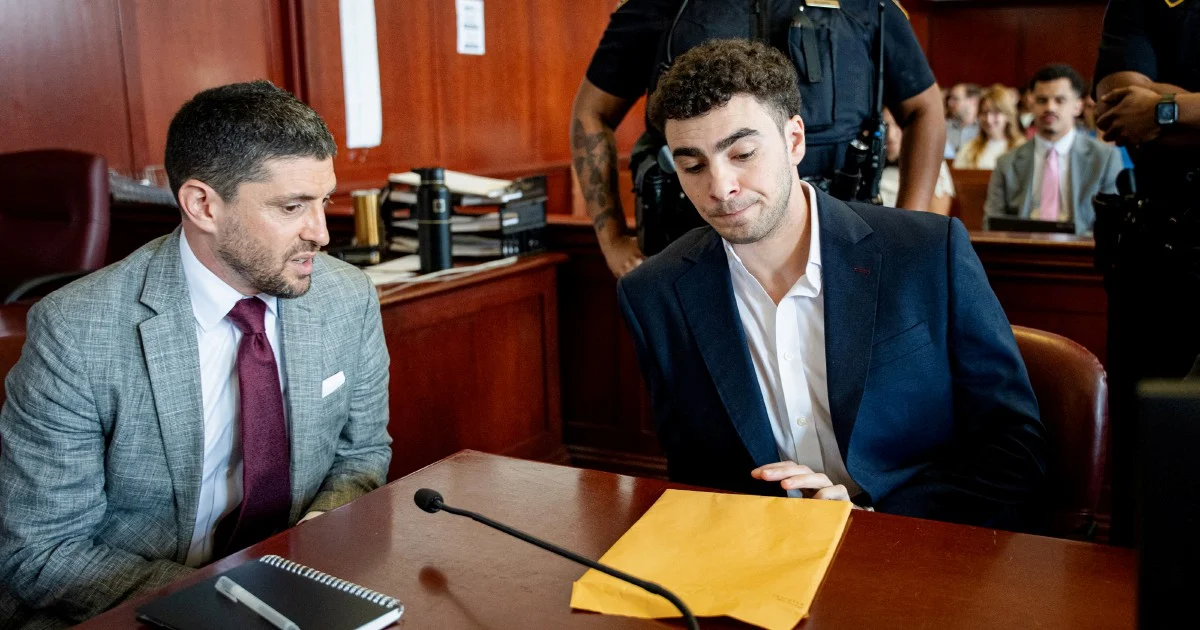
Luigi Mangione, the defendant accused of murdering health insurance company executive Brian Thompson on a Manhattan street, has decided to set aside his earlier strategy of introducing evidence demonstrating he was experiencing a severe mental health crisis when the alleged killing occurred. The tactical shift emerged through a legal filing submitted to the court on Friday, signalling a significant change in how his defence team intends to conduct the trial.
The withdrawal of mental health defence preparations represents a notable pivot in Mangione's legal approach. Defence teams typically introduce such evidence to argue diminished capacity or to support an insanity plea, both of which could mitigate culpability or result in a conviction on lesser charges rather than first-degree murder. By stepping back from this strategy now, Mangione's legal representatives are limiting the scope of psychiatric and psychological testimony that jurors would otherwise hear.
Court filings in high-profile murder cases frequently reveal strategic recalibrations as defence attorneys assess evidence, witness credibility, and the strength of prosecution arguments. Mangione's decision appears to come at a juncture where his legal team has evaluated how jurors might respond to mental health claims, particularly in a case that has attracted significant media attention and public scrutiny. The explicit withdrawal suggests his defence may pursue alternative or complementary approaches instead.
The case itself has captivated New York and drawn national attention, given the victim's prominence in the healthcare industry. Brian Thompson worked in health insurance, a sector that generates substantial public debate, especially regarding coverage denials and patient outcomes. The shooting occurred in a public setting, adding an element of shock that influenced how the case was reported and discussed across American media.
Mangione's previous intention to present evidence of mental health crisis during trial would have required expert witnesses, psychiatric evaluations, and testimony about his psychological state prior to and during the alleged incident. Such evidence, while potentially persuasive to some jurors, can also backfire if the prosecution effectively challenges its reliability or questions whether mental illness actually prevented the defendant from knowing the nature and consequences of his alleged actions.
The strategic withdrawal may also reflect confidence in alternative defence theories or simply a recalibration of resources. Defence teams sometimes conclude that mental health evidence, while sympathetic, ultimately distracts from more compelling factual defences, such as questioning physical evidence, witness identification, or the prosecution's timeline. By narrowing the scope of evidence, Mangione's attorneys may be attempting to keep jury focus on contested factual matters.
For Malaysian observers and Southeast Asian readers, this case illustrates broader principles of criminal defence strategy that apply across common law jurisdictions, including Malaysia. The decision to introduce or withdraw psychiatric evidence reflects universal tensions between legal strategy and compassion, between mitigating circumstances and responsibility, and between what jurors expect to hear and what evidence truly proves.
The implications of this withdrawal extend beyond the courtroom. Mental health advocacy groups often view such cases as opportunities to educate the public about psychiatric illness and its relationship to criminal behaviour. When defendants withdraw such defences, it reduces opportunities for that education, though it may also prevent mischaracterisation of mental illness as an excuse for violence.
Mangione's case continues to unfold within the American legal system's adversarial framework, where both prosecution and defence strategically decide what evidence serves their objectives. His withdrawal of mental health defence plans reflects the practical reality that courtroom tactics must constantly adapt as litigation progresses. The decision made Friday demonstrates that defence strategy is not fixed but rather responsive to developing circumstances and evolving assessments of trial outcomes.
As the case advances toward trial, observers will monitor whether additional strategic shifts occur. The American criminal justice system permits defendants to modify their legal approach substantially before trial begins, and such changes, while sometimes attracting media commentary, are routine within legal practice. Whether this withdrawal ultimately benefits or harms Mangione's defence will only become apparent once trial evidence is presented and jurors render their verdict.
The case remains under close examination by legal analysts, media commentators, and the general public, each viewing it through different lenses—whether criminal justice reform, healthcare industry accountability, or questions about individual responsibility and mental health.