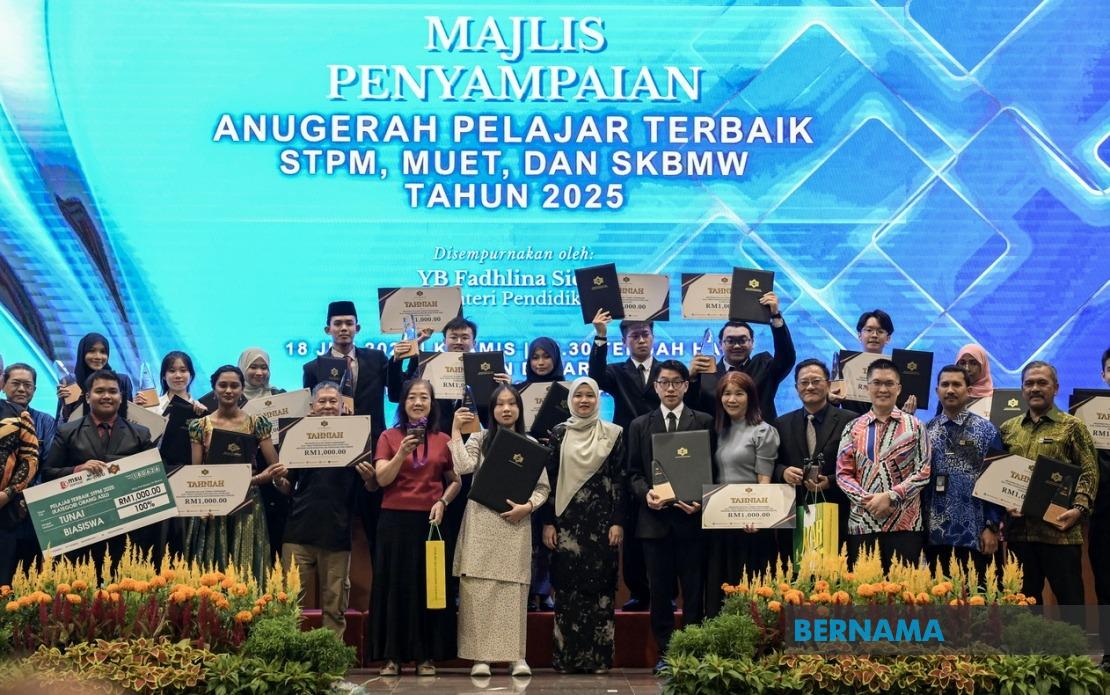
Malaysia's government has introduced a fresh scholarship scheme targeting the country's brightest Form Six students, with 18 top performers from the 2025 STPM cohort set to benefit from tuition fee sponsorships awarded by public universities. Education Minister Fadhlina Sidek unveiled the initiative during the presentation of Best Student Awards at the Malaysian Examinations Council building in Kuala Lumpur on June 18, positioning the move as a strategic effort to reinvigorate the Form Six ecosystem and persuade more students to pursue this established pre-university qualification route.
The scholarship programme represents a coordinated commitment across Malaysia's higher education sector, with each public university now offering Bachelor's degree sponsorships to recognise and reward the top performers among STPM 2025 graduates. By channelling resources directly to tuition costs, the scheme removes a significant financial barrier that can discourage high-achieving students from continuing their studies at tertiary level. Fadhlina emphasised her gratitude to the public university network for embracing this collaborative approach, framing their participation as crucial to the ministry's broader vision of strengthening pathways through the secondary and tertiary education system.
This initiative arrives at a moment when policymakers have grown increasingly attentive to the health of Form Six as a viable pre-university option. In recent years, competition from international baccalaureate programmes, matriculation pathways, and private colleges has shifted student preferences away from the traditional STPM route. By introducing tangible rewards for excellence, the government aims to recalibrate the appeal of STPM among ambitious secondary school students and their families, signalling that academic distinction at this level merits concrete recognition and financial support.
The scholarship announcement comes alongside confirmation of robust overall performance across the 2025 STPM cohort. The national cumulative Grade Point Average rose to 2.88, up from 2.85 in the preceding year, suggesting modest but consistent improvement in student achievement levels. While the gain may appear incremental, sustained upward movement in aggregate measures indicates that interventions within the Form Six system are yielding measurable results, and the scholarship initiative should be understood as part of a broader constellation of supportive measures.
The ministry has invested in multiple complementary initiatives designed to make Form Six more attractive and accessible. These include expansion of Form Six College infrastructure to broaden geographic availability, installation of smartboards to enhance classroom technology, deployment of early schooling assistance programmes to support students from disadvantaged backgrounds, and distribution of MADANI Book Vouchers to reduce the cost of learning materials. Collectively, these initiatives address both supply-side constraints (facility availability) and demand-side obstacles (financial burden), creating a more comprehensive support environment for Form Six students.
For Malaysian students aspiring to university education, the scholarship scheme represents direct validation that excellence at the pre-university level will be rewarded. Unlike merit-based awards that require students to have already secured university admission, these tuition sponsorships are explicitly tied to STPM performance, creating a clear incentive structure that encourages sustained academic effort throughout Form Six. This approach differs from many scholarship models that distribute funds based on need or demographic criteria, placing explicit emphasis on academic meritocracy.
The initiative also carries implications for Malaysia's regional positioning in education. Across Southeast Asia, competition for talented students has intensified, with neighbouring countries offering increasingly generous scholarship packages to attract high achievers. By enhancing the value proposition of the Malaysian STPM qualification through direct financial support, the government strengthens the competitiveness of its own pre-university system and reduces the brain drain of top students seeking opportunities abroad or at international institutions.
Public universities stand to gain tangible benefits from this arrangement as well. By securing commitments to fund scholarships for top STPM students, institutions strengthen their ability to attract academically accomplished cohorts, which enhances institutional rankings, research potential, and overall student quality. The scheme effectively distributes the recruitment burden across the public university sector, ensuring that talented students are distributed throughout Malaysia's higher education ecosystem rather than concentrating at a handful of elite institutions.
Deputy Education Minister Wong Kah Woh's attendance at the awards ceremony, alongside Malaysian Examinations Council chairman Prof Datuk Dr Md Amin Md Taff and Education Malaysia director-general Datuk Dr Mohd Azam Ahmad, underscored the cross-institutional support and coordination required to operationalise such initiatives. The presence of senior figures from multiple government bodies signalled that the scholarship scheme enjoys backing at the highest levels of the education bureaucracy, likely increasing prospects for sustained implementation and resource allocation.
Looking forward, the success of this scholarship initiative will depend on effective communication to secondary school students and their parents, ensuring that prospective STPM candidates understand the opportunity and feel motivated to pursue this pathway. Schools will play a critical role in promoting the scheme and contextualising it within broader career guidance. Additionally, the government may need to monitor participation rates and demographic patterns among scholarship recipients to ensure the programme reaches students from all backgrounds and regions, not merely those already privileged by geography or family resources.
The scholarship announcement reflects a calculated investment in domestic pre-university education at a time when policymakers are increasingly cognisant of the importance of retaining and developing talent within Malaysia's educational system. By attaching meaningful financial rewards to STPM excellence, the government signals confidence in the qualification's value and its capacity to prepare students adequately for university-level work. Over time, such initiatives may help reverse any perception that STPM has become a secondary option, potentially revitalising an examination system that has anchored Malaysian pre-university education for decades.

%22%2F%3E%3C%2Fpattern%3E%3C%2Fdefs%3E%3Crect%20width%3D%22100%25%22%20height%3D%22100%25%22%20fill%3D%22url(%23ph21o2sg)%22%2F%3E%3Crect%20width%3D%22100%25%22%20height%3D%22100%25%22%20fill%3D%22url(%23ph21o2sp)%22%2F%3E%3Ctext%20x%3D%2250%25%22%20y%3D%2250%25%22%20text-anchor%3D%22middle%22%20dominant-baseline%3D%22central%22%20fill%3D%22rgba(255%2C255%2C255%2C0.95)%22%20font-family%3D%22Georgia%2C%20'Times%20New%20Roman'%2C%20serif%22%20font-weight%3D%22700%22%20font-size%3D%22170%22%20letter-spacing%3D%22-0.02em%22%3EGabungan%3C%2Ftext%3E%3C%2Fsvg%3E)