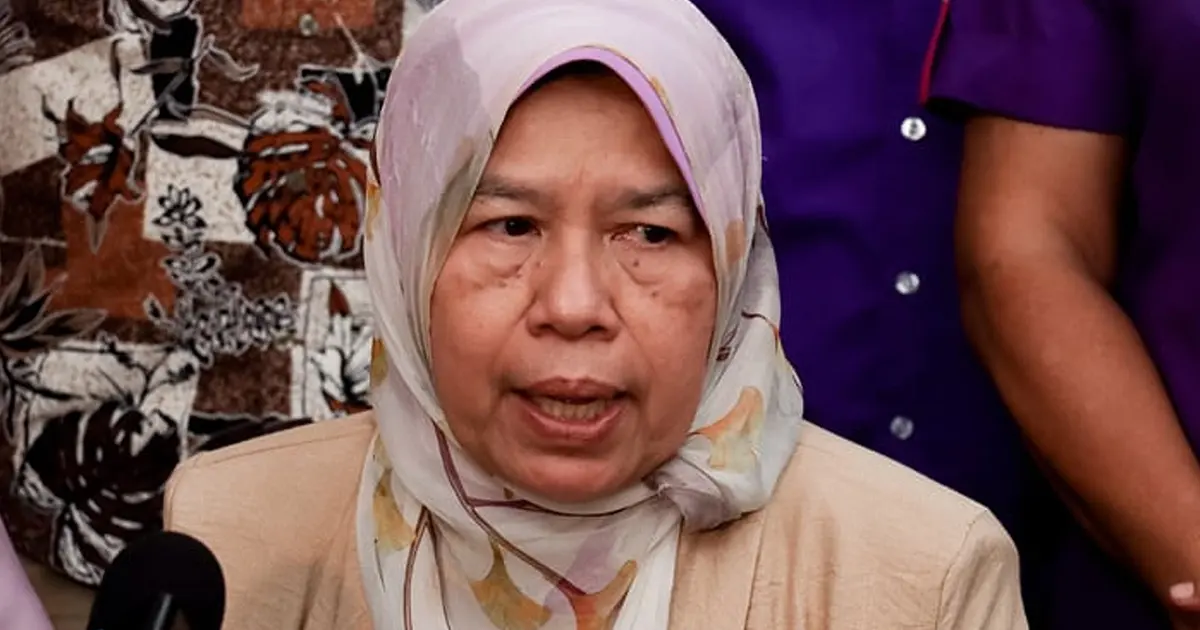
Zuraida Kamaruddin, who previously served as vice-president of Parti Keadilan Rakyat, has made clear her intention to remain outside the party despite recent overtures from its leadership. The statement comes as Anwar Ibrahim, the party president and Prime Minister, has been publicly calling for experienced members who departed in previous years to reconsider their positions and rejoin PKR's ranks. However, Zuraida has indicated she will not be responding to such appeals or reconsidering her status.
The former senior party official's declaration reflects ongoing divisions within PKR that have persisted over several years. The party has experienced multiple waves of departures, with various high-profile members leaving to pursue different political paths or due to disagreements over party direction and internal governance. Zuraida's refusal to engage with Anwar's invitation suggests that personal or political grievances may run deeper than a simple matter of casual party realignment.
Zuraida's political journey has been marked by significant institutional roles and notable decision-making moments. Her tenure as vice-president positioned her among PKR's most influential figures during her time with the party. Her subsequent departure and her current firm stance indicate that the circumstances surrounding her exit may have left lasting impressions that make reconciliation unlikely in the foreseeable future. Such intransigence from former leaders often signals fundamental disagreements rather than temporary conflicts.
Anwar's recent initiative to encourage veteran party members to return represents an attempt to rebuild PKR's internal strength and organizational capacity. The party has faced various challenges in recent years, including the departure of senior figures and ongoing factional tensions that periodically surface in Malaysian political commentary. By reaching out to experienced former members, the leadership appears to be seeking to consolidate party unity and draw on the institutional knowledge of those who helped build PKR during its formative years.
However, the response from Zuraida underscores the difficulty of healing political wounds and reintegrating members who have moved on. In Malaysian politics, departures from parties—particularly at senior levels—frequently involve personal disputes, ideological disagreements, or conflicts over resource allocation and influence. When such departures occur, the individuals involved often establish themselves in alternative political arrangements or withdraw from active politics altogether, making return less attractive than forward momentum in new circumstances.
Zuraida's public dismissal of Anwar's overture also carries implications for PKR's broader positioning within Malaysia's political landscape. As PKR forms part of the governing coalition through the Madani government, internal cohesion becomes increasingly important for maintaining stability and delivering on policy commitments. The party's inability to bring back respected former members may reflect either the intransigence of those who left or the leadership's failure to address the original grievances that prompted departures—or likely both factors working in combination.
For Malaysian observers watching intra-party dynamics, Zuraida's stance represents a recurring pattern in the country's political system. Party departures, particularly at senior levels, tend to be permanent rather than temporary, with individuals building new political identities outside their original organizations. This reflects the personalized nature of Malaysian politics, where individual leaders often command followings based on personal attributes and networks rather than purely on party ideology or institutional loyalty.
The broader context of Zuraida's refusal also extends to questions about PKR's generational transition and leadership renewal. If the party is relying on previous generations of leaders to return rather than cultivating new talent from its current ranks, it may face long-term challenges in maintaining organizational vitality. This approach can sometimes suggest that current leadership lacks confidence in emerging figures within the party's ranks, potentially limiting internal enthusiasm and innovation.
Looking forward, Zuraida's explicit rejection of overtures from Anwar and PKR suggests that the party leadership should invest energy in strengthening existing internal structures and identifying emerging talent rather than pursuing potentially unreceptive former members. For regional observers, this episode illustrates the enduring reality that Malaysian political parties often struggle with institutional memory and continuity when senior figures depart, particularly when reconciliation attempts prove unsuccessful. Zuraida's position, though confined to a single individual, may prove emblematic of broader challenges facing PKR as it navigates the complexities of governing while managing internal organizational dynamics in an increasingly competitive political environment.

