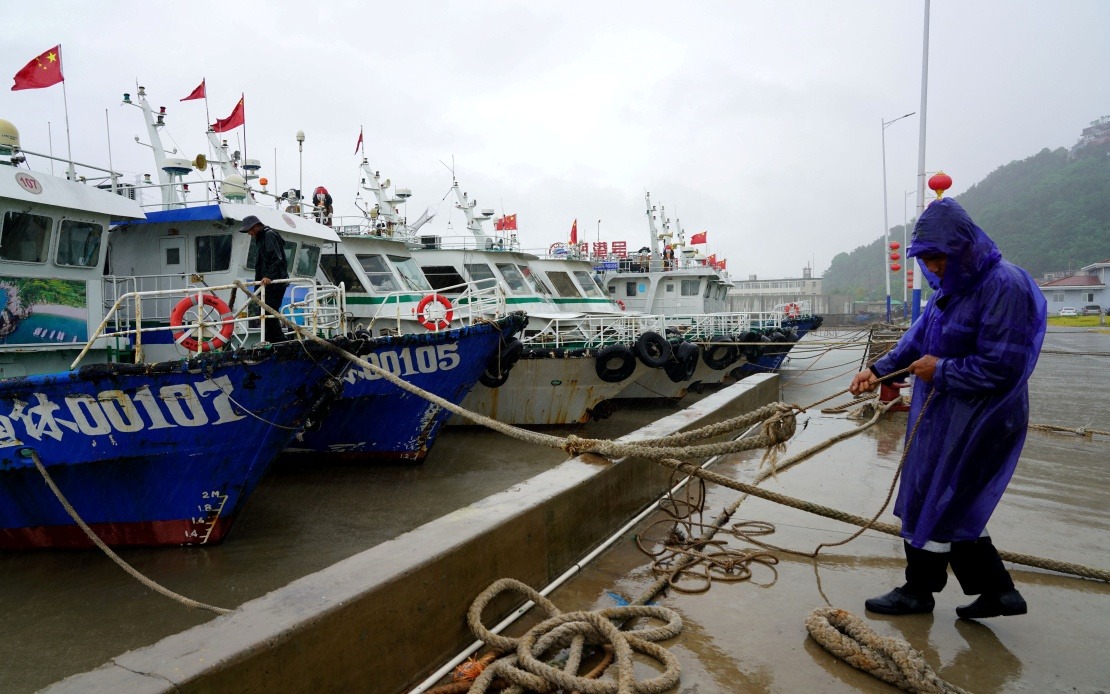
Authorities in Zhejiang Province, in east China's densely populated coastal region, have elevated their emergency preparedness for Typhoon Dolphin to the second-highest alert level, signalling intensifying concerns about the approaching weather system. The upgrade from Level IV to Level III was implemented on Friday at noon, according to reports from the Zhejiang Meteorological Observatory, as meteorologists track the 13th typhoon to emerge this year across the western Pacific. The decision reflects growing confidence in forecasting models indicating a direct strike on this economically vital province, which sits strategically between the major financial centres of Shanghai and Fujian's coastal cities.
As of Friday morning, Typhoon Dolphin was positioned approximately 763 kilometres east of Wenling, a coastal city in Zhejiang's southeast. The system is expected to maintain a westward trajectory at a measured pace of 15 to 20 kilometres per hour, bringing it steadily closer to the mainland. Meteorologists anticipate the typhoon's core intensity will either stabilize or intensify modestly during its approach, with impacts likely to escalate as it transitions from open ocean to coastal waters. The measured forward movement provides a window of time for preparation, though the track remains uncertain by several dozen kilometres, creating anxiety for residents and officials across the broader region.
China's National Meteorological Centre issued a yellow-level alert on Thursday evening, projecting Typhoon Dolphin will make landfall somewhere along China's eastern seaboard between Shanghai and Fuqing in Fujian Province by Sunday or early Monday. The positioning of this forecast zone—spanning more than 300 kilometres of densely populated coastline—underscores the inherent uncertainty in typhoon tracking at this range. Within this band, meteorological officials expect the system to achieve a maximum intensity spanning from severe typhoon classification upward, potentially bringing extreme winds and torrential rainfall. Areas situated north of the eventual landfall location face elevated risks of prolonged heavy precipitation, raising flood and landslide concerns across inland regions where drainage systems may become overwhelmed.
Lou Xiaofen, chief forecaster at the Zhejiang Meteorological Observatory, has emphasized that the storm carries a substantially elevated probability of making a direct hit across Zhejiang Province itself. This geographic positioning—nestled directly between Shanghai to the north and Fujian to the south—places the province in the crosshairs of the approaching system. Such a scenario would present considerable disaster risks, particularly given the region's concentrated infrastructure, manufacturing bases, and population centres. The economic implications extend beyond immediate weather damage to include business disruption, supply chain interruption, and potential marine casualties if vessel operators fail to seek shelter in time.
In response to the escalating threat, Zhejiang's maritime and transport authorities have implemented sweeping operational shutdowns across the province's crucial coastal and offshore sectors. All 162 passenger ferry routes operating throughout the province have suspended services, effectively isolating some communities and halting tourism and business travel. Simultaneously, authorities have ordered a complete halt to work at all 193 offshore projects—including oil and gas installations, renewable energy facilities, and aquaculture operations—that rely on stable ocean conditions. Construction vessel operators have been mandated to bring 474 work boats and support ships to designated ports, removing these assets from areas where they could become damaged or create navigation hazards during the typhoon's passage.
The maritime safety apparatus has been mobilized comprehensively to protect both vessels and personnel at risk. Provincial maritime authorities have disseminated 86,000 early warning messages through text, broadcast, and digital channels to ensure widespread awareness of the approaching danger. Officials have conducted safety inspections aboard 24,000 individual vessels, identifying seaworthiness deficiencies and ensuring proper securing of cargo and equipment. This systematic vessel monitoring represents a substantial logistical undertaking but reflects lessons learned from previous typhoon seasons when inadequately secured or poorly maintained vessels became casualties themselves, sometimes creating secondary hazards. High-powered tugboat crews stand on alert status for potential emergency rescue operations, positioned strategically at major ports to respond quickly if vessels encounter distress conditions during the storm's passage.
The implementation of Level III emergency response triggers a comprehensive set of mandatory procedures across Zhejiang's provincial governance structure. Under this classification, local authorities face strict obligations to maintain continuous monitoring of the typhoon's developing track and intensity, issuing updated forecasts and warnings as new meteorological data becomes available. Crucially, evacuation operations must proceed for populations in high-risk zones—particularly those in coastal communities, flood-prone valleys, and areas downwind of potential mudslide terrain. Public guidance systems are activated to educate residents about protective measures, emergency assembly points, and response procedures, ensuring that even those with limited typhoon experience understand the basic steps required to safeguard themselves and their families.
The comprehensive pre-impact preparations undertaken by Zhejiang authorities reflect the escalating economic and human costs of major typhoons in China's developed eastern provinces. Unlike less developed regions where property damage may be limited, Zhejiang's dense urban and industrial infrastructure multiplies potential losses exponentially. Manufacturing facilities, ports, power transmission networks, and transportation systems represent billions of yuan in assets vulnerable to typhoon-force winds and flooding. By implementing early shutdowns and evacuations, officials attempt to reduce casualty potential and property damage, though the economic cost of operational halts themselves runs into millions daily. This calculus—weighing the expense of precautionary closures against the far greater potential damage of unpreparedness—increasingly favours aggressive early action.
For Malaysia and broader Southeast Asian observers, Typhoon Dolphin's approach demonstrates the sophisticated disaster management capabilities that developed coastal nations have assembled in response to recurring tropical cyclone threats. The combination of advanced meteorological forecasting, coordinated inter-agency response protocols, and aggressive pre-impact mitigation represents institutional capacity that many regional nations aspire toward. Zhejiang's approach offers instructive lessons in vessel management, population evacuation coordination, and maritime safety procedures that could inform Southeast Asian emergency management frameworks. The storm's ultimate track and intensity will provide crucial data for meteorological models, potentially improving regional forecasting accuracy for future cyclones affecting maritime Southeast Asia.

