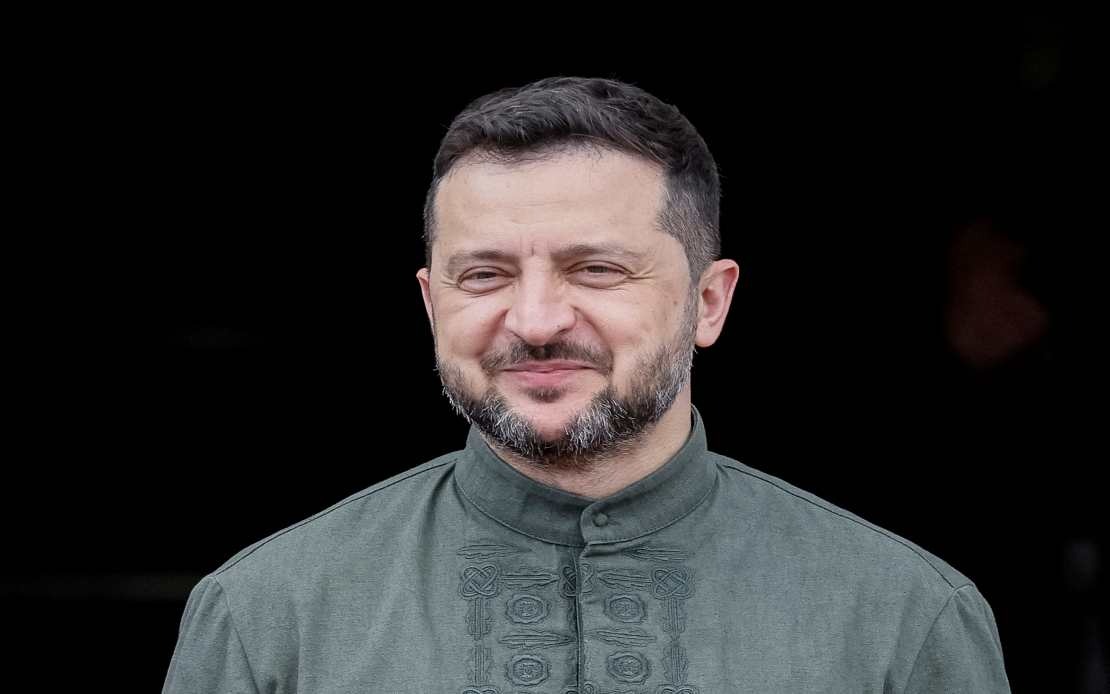
Ukrainian President Volodymyr Zelensky has formally enacted legislation creating a prestigious national pantheon dedicated to honouring the nation's historical heroes, a move that has ignited a serious diplomatic confrontation with neighbouring Poland. The legislation, passed through parliament in July and now signed into law, represents Kyiv's determination to define its own historical narrative independently, even as the decision threatens to strain relations with a crucial wartime ally providing critical military and humanitarian support against Russian aggression.
The pantheon will be constructed in the capital and serve multiple purposes: a burial ground for deceased Ukrainian presidents, a repository for the remains of nationalist figures deemed heroic by contemporary Ukraine, and a physical monument spanning Ukraine's historical trajectory from the medieval Kyivan Rus period through to the modern era. The memorial is designed to centralise Ukraine's commemoration of figures whose legacies remain deeply contested across European borders, particularly those associated with independence movements during foreign occupation.
The core controversy centres on the inclusion of members from the Ukrainian Insurgent Army, a nationalist underground militia that resisted German occupation during World War II. Historical records document that UPA forces orchestrated systematic massacres targeting Polish and Jewish civilian populations, particularly in the Volyn region of what is now western Ukraine. Scholarly estimates place the death toll in the tens of thousands, with entire communities subjected to coordinated extermination campaigns. For Poland, memorialising these figures equates to honouring perpetrators of genocide, a fundamental breach of historical respect and moral accountability.
Zelensky's public statements reveal the Ukrainian government's positioning of this matter as a question of national sovereignty and historical self-determination. Speaking before war veterans on Saturday, the president declared that Ukraine alone possesses the authority to designate its heroes, rejecting external pressure or judgment. This rhetoric reflects a broader Ukrainian narrative positioning these UPA fighters as independence advocates resisting imperial domination, a framing that diverges sharply from how their actions are understood in Poland and among Jewish communities internationally.
The diplomatic fallout has already demonstrated tangible consequences for bilateral relations. In June, following Zelensky's award of the honorary "Heroes of the UPA" designation to a military unit, Poland's response was swift and symbolic. The Polish government withdrew the Order of the White Eagle, a prestigious national honour previously bestowed on Zelensky himself. Multiple senior politicians from both nations subsequently returned decorations and honours they had received from their neighbouring counterparts, representing an unusual escalation of mutual diplomatic rejection.
Polish President Karol Nawrocki's office framed the advancement of the pantheon project as fundamentally incompatible with Ukraine's stated Western orientation and integration aspirations. Officials in Warsaw contended that memorialising individuals convicted of genocide contradicted the values and historical consciousness that define European democratic societies. This argument positions Poland not merely as a grieved party but as a custodian of principles essential to Western membership, suggesting that Ukraine's memorial project creates obstacles to its own European trajectory.
The timing of this conflict presents significant complications for Ukraine's strategic position. Poland remains among Kyiv's most steadfast supporters within the European Union and NATO, providing substantial military assistance, hosting millions of Ukrainian refugees, and consistently advocating for Ukrainian interests within Western institutions. Tensions over historical memory, however, can prove remarkably intractable, often outlasting more conventional diplomatic disputes because they touch upon fundamental questions of national identity and collective trauma.
This dispute reflects a broader challenge confronting post-Soviet Ukraine as it reconstructs national identity following independence and particularly since Russia's 2022 invasion. The nation faces genuine pressure to commemorate resistance figures across its history, yet many individuals who fought Soviet or German occupation have complicated legacies involving atrocities against other populations. Unlike Western European nations that underwent thorough post-war reckoning with such figures, Ukraine's historical debate remains more contested and politically charged.
The pantheon legislation also carries implications for Ukraine's relationships beyond Poland. Jewish organisations internationally have expressed concern about memorialising perpetrators of wartime killings regardless of nationalist credentials. These concerns gain particular weight in Western capitals where Holocaust remembrance and historical responsibility remain central to democratic legitimacy. Ukraine's Western allies may privately harbour reservations about the memorial even while maintaining diplomatic restraint regarding an allied nation engaged in existential conflict.
For regional observers in Southeast Asia, this conflict illustrates how historical memory disputes can threaten contemporary diplomatic relationships and complicate alliance-building. As nations across the region grapple with complex colonial and occupation histories, the Ukraine-Poland situation demonstrates the enduring power of contested historical narratives to damage present-day cooperation, even among nations with shared strategic interests.
Looking forward, this conflict may persist as a festering wound in Ukraine-Poland relations unless addressed through serious historical dialogue and memorial design that acknowledges competing narratives. The practical impact on military cooperation or EU relations remains limited for now, but such symbolic ruptures, if left unresolved, can erode the goodwill necessary for sustained alliance cohesion. Ukraine's determination to implement this memorial reflects legitimate sovereign rights over national commemoration, yet the cost in diplomatic relations with a crucial partner remains substantial and troubling.

