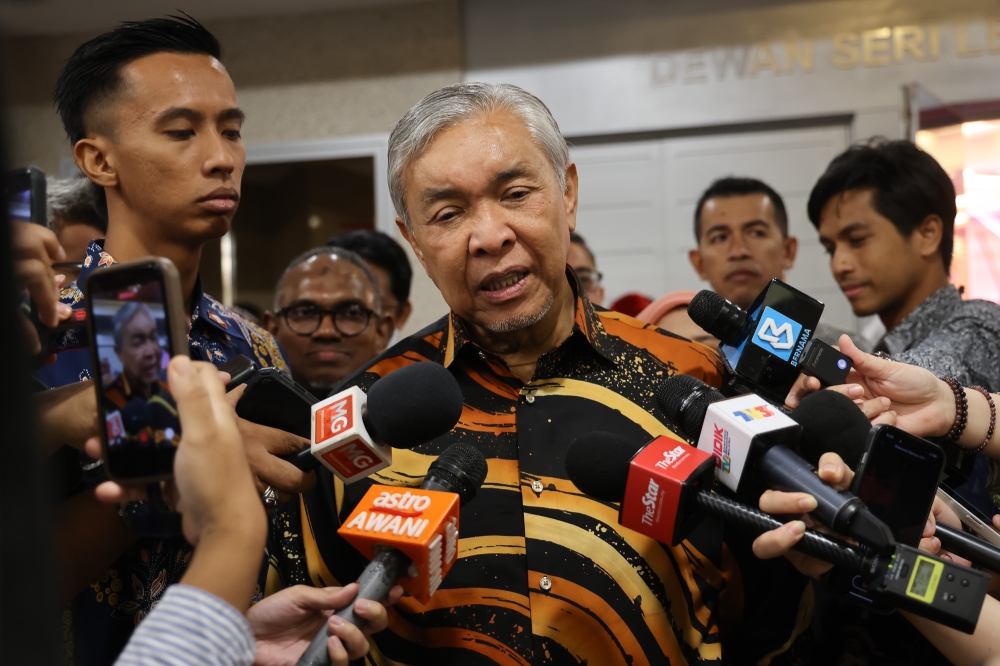
Deputy Prime Minister Ahmad Zahid Hamidi has made clear that Barisan Nasional and Umno intend to hold accountable anyone implicated in the mismanagement of Tabung Haji, the government pilgrimage fund that has faced considerable scrutiny over its financial operations and governance failures. Speaking in Putrajaya, Zahid underscored the coalition's position that breaches of trust would not be overlooked or tolerated within party ranks or public institutions under their purview, marking a significant statement on how the government plans to address the mounting controversy.
The Tabung Haji scandal represents one of the most contentious issues facing Malaysia's current administration, with revelations about investment losses, questionable financial decisions, and governance lapses that have eroded public confidence in the institution responsible for managing funds belonging to intending pilgrims. The fund, which holds savings from millions of Malaysian Muslims preparing for the hajj pilgrimage, holds particular cultural and religious significance, making any mismanagement a matter of national concern that extends beyond simple financial accountability.
Zahid's declaration reflects mounting pressure on the government to demonstrate tangible action against those allegedly responsible for the fund's deteriorating financial position. The statement serves as both a warning to party members and officials who may have been complicit in questionable decisions, and a reassurance to the Malaysian public that leadership intends to enforce consequences regardless of position or seniority. This approach aims to restore credibility to institutions that have suffered reputational damage following years of revelations about poor management practices.
The emphasis on holding individuals accountable regardless of their rank or standing within Umno and Barisan Nasional suggests the leadership recognises the political cost of appearing lenient toward those responsible for losses affecting ordinary Malaysians' savings. In a climate where public trust in government institutions remains fragile, failing to pursue meaningful consequences could further damage the coalition's standing and provide ammunition to opposition parties challenging their governance credentials.
Tabung Haji's troubles have exposed systemic weaknesses in institutional oversight and board governance that extend beyond individual misconduct. The fund has reported significant investment losses, questioned procurement practices, and controversial property acquisitions that consumed resources without proportionate returns. These structural issues suggest that accountability measures must address not only individual decision-makers but also the mechanisms and processes that permitted such decisions to proceed without adequate scrutiny or challenge.
The Umno-led government faces a delicate political balancing act in handling the matter. Party members implicated in previous administrations' decisions regarding Tabung Haji investments face potential investigation and prosecution, yet pursuing such cases risks internal party friction and accusations of selective justice if investigations appear politically motivated. Nevertheless, Zahid's unambiguous language indicates the leadership has determined that appearing tough on accountability carries greater political benefit than protecting implicated party figures.
For Malaysian Muslim pilgrims and their families whose savings are held in the fund, Zahid's statement represents a critical signal about whether their concerns will be taken seriously by the government. Many have watched nervously as revelations about investment losses accumulated, wondering whether authorities would act decisively to recover losses or prevent further deterioration. The Deputy Prime Minister's public commitment suggests that pursuing remedial action and recovering lost funds remains a priority for the administration.
The broader implications for governance and institutional reform in Malaysia cannot be overlooked. The Tabung Haji case exemplifies failures in corporate governance, audit mechanisms, and oversight procedures that plague various government-linked entities and statutory bodies. A serious investigation and meaningful consequences could establish precedent for stronger accountability standards across public institutions, potentially prompting reforms to board structures, audit processes, and decision-making frameworks that have proven inadequate in detecting and preventing mismanagement.
International observers watching Malaysia's governance trajectory will view the government's follow-through on these commitments as an indicator of institutional strength and commitment to transparent administration. Countries throughout Southeast Asia face similar challenges with state-owned enterprises and government-linked companies, making Malaysia's response to the Tabung Haji controversy relevant to regional discussions about strengthening institutional governance and anti-corruption frameworks.
Moving forward, the government must translate Zahid's statements into concrete investigative steps, legal proceedings where warranted, and institutional reforms that address root causes. The credibility of leadership commitments to accountability depends entirely upon visible action, transparency in investigations, and willingness to pursue consequences without regard to political considerations. For a government seeking to rebuild public confidence in state institutions, the Tabung Haji matter represents both a challenge and an opportunity to demonstrate that accountability principles are not merely rhetorical flourishes but operational commitments guiding administrative conduct.

