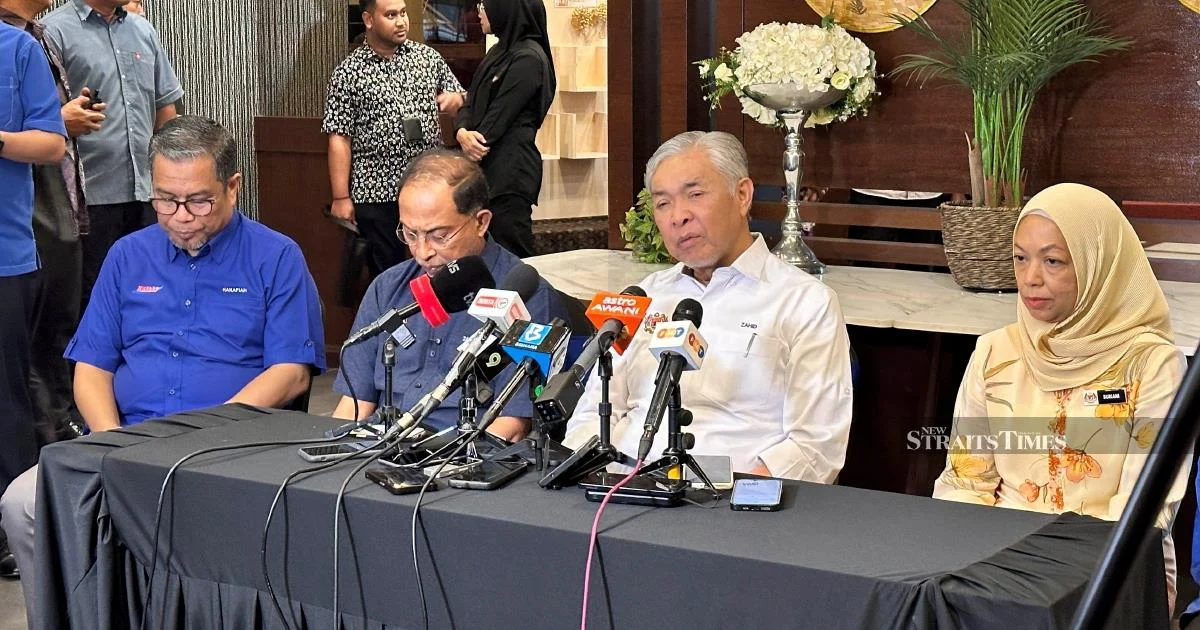
During a campaign stop in Kluang, Barisan Nasional (BN) chairman Datuk Seri Dr Ahmad Zahid Hamidi delivered a pointed message to his coalition partners: the ghosts of the Najib-Rosmah era should not haunt the current campaign trail in Johor. His remarks, made in the context of preparations for the state election, appeared directed at a unity government component that had featured Datin Seri Rosmah Mansor's likeness in campaign materials, suggesting growing tensions within the broader coalition over how to navigate the controversial legacies of Malaysia's recent political past.
The incident underscores a delicate balancing act facing the unity government as it prepares for electoral contests. While the coalition has maintained its grip on federal power since the 2022 election, internal cohesion remains fragile, particularly when sensitive historical chapters resurface during campaign moments. Zahid's intervention signals that the BN leadership wishes to pivot away from association with the former prime minister and his wife, whose tenure was marked by the multibillion-ringgit 1Malaysia Development Berhad (1MDB) scandal and subsequent legal troubles.
Rosmah Mansor's continued prominence in political discourse has remained a contentious matter. Her convictions on money-laundering charges and involvement in the SRC International case have kept her name firmly in the public consciousness, despite efforts by some quarters to move past the scandal-laden 2009-2018 period. By publicly discouraging the use of her image in Johor's campaign, Zahid appears to be protecting the coalition's electoral prospects by creating distance from liabilities that continue to invite scrutiny and criticism.
For Malaysian voters, particularly in Johor, such internal coalition disputes carry real implications. The state represents one of the nation's largest economic engines and a crucial swing territory in electoral mathematics. Campaigns marred by references to corruption scandals and controversial figures can distract from substantive policy debates regarding development, cost of living, education, and healthcare—issues that directly affect household welfare across the peninsula's southern region.
The tension also reveals fault lines within the unity government framework itself. The coalition, which brought together UMNO-led Barisan Nasional, the opposition Pakatan Harapan, and other partners to prevent a Perikatan Nasional takeover, has always been an uncomfortable marriage of political convenience. When individual components pursue their own strategic interests—such as leveraging historical figures for local support—they risk destabilising the broader arrangement that benefits all participants at the federal level.
Zahid's rebuke suggests that BN's national leadership recognises a fundamental political reality: Malaysian voters, particularly younger demographics and urban constituencies, increasingly view the Najib administration's corruption allegations as disqualifying. While some rural and traditional voting blocs may retain sympathy for former leaders regardless of legal outcomes, modern electoral campaigns require broader coalitional appeal that cannot be achieved through nostalgic references to discredited administrations.
The Johor campaign itself carries symbolic weight within Malaysia's political ecosystem. As the home state of UMNO's traditional powerbase and a territory that has historically returned strong majorities for the party, any erosion of BN support in Johor would signal deepening challenges for the coalition nationwide. Zahid's intervention appears aimed at preventing self-inflicted wounds that could alienate persuadable voters already fatigued by Malaysian politics' recurring corruption narratives.
Regionally, Malaysia's experience offers instructive lessons for Southeast Asian democracies grappling with how to address authoritarian or scandal-ridden predecessors. Thailand's persistent political conflicts have partly resulted from unresolved questions about military rule and disputed national leaders. The Philippines has witnessed decades of family-based political dynasties rebounding despite serious allegations. Malaysia's more orderly management of the Najib transition—through courts, elections, and coalition-building rather than coups or violence—represents a comparative advantage, but only if major political players resist the temptation to rehabilitate tainted figures prematurely.
From a governance perspective, Zahid's stance reflects a recognition that institutional legitimacy requires consistent messaging about accountability. If BN's leadership publicly distances itself from Rosmah while simultaneously allowing coalition components to platform her image, the party risks appearing hypocritical and morally inconsistent. Voters interpreting such mixed signals may conclude that anti-corruption commitments are mere electoral tactics rather than principled positions.
Looking ahead, the Johor campaign will test whether the unity government can maintain campaign discipline while accommodating diverse coalition interests. Zahid's intervention provides a template for managing such tensions, but successful implementation depends on whether junior partners respect the BN chairman's guidance and whether the broader coalition prioritises unity over short-term factional advantage.
Ultimately, this episode illuminates a broader truth about post-1MDB Malaysian politics: the scandal's gravitational pull continues affecting strategy and messaging even years after initial revelations. Until the public consensus fully crystallises around how the nation processes this chapter, political actors will face recurring pressure to position themselves relative to its key figures, making Zahid's exhortation to move beyond the Najib-Rosmah era both timely and, perhaps, premature.

