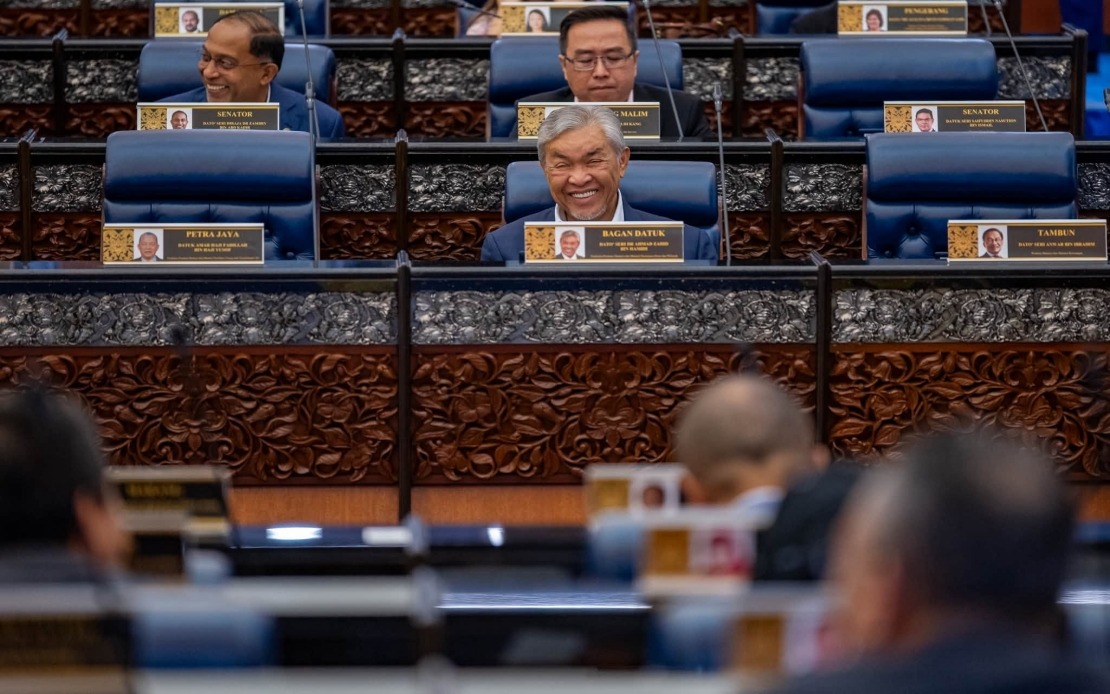
Deputy Prime Minister Datuk Seri Dr Ahmad Zahid Hamidi has underscored the need for meaningful accountability mechanisms to follow any assessment of Lembaga Tabung Haji's operations, cautioning against criticism that lacks substance or fails to drive genuine reform. His remarks came as Parliament convened for a special sitting to deliberate the findings and recommendations of the Royal Commission of Inquiry into the major Islamic financial institution, signalling the government's determination to move beyond preliminary investigations towards tangible institutional improvements.
Ahmad Zahid, concurrently serving as Rural and Regional Development Minister, framed the parliamentary debate as an opportunity to establish clear pathways for addressing systemic issues while simultaneously safeguarding TH's standing within Malaysia's faith-based financial ecosystem. By emphasizing the link between critical assessment and responsible follow-through, he articulated an implicit concern that prolonged controversy surrounding TH could undermine public confidence in an institution that manages pilgrimage savings for millions of Malaysians. The distinction he drew between constructive engagement and merely airing grievances reflects broader anxieties about institutional credibility in the context of recent corporate governance failures across Southeast Asia.
The RCI report, made public on July 29 after years of investigation, documented significant operational and managerial shortcomings spanning 2014 to 2020, a period that witnessed substantial financial underperformance and strategic missteps. The inquiry's 25 recommendations represented a comprehensive blueprint for institutional renewal, addressing everything from governance frameworks to investment protocols. As of the report's release, TH had already begun implementing three-quarters of these recommendations, a pace that officials cited as evidence of institutional responsiveness and commitment to reform.
The special parliamentary sitting provided legislators with their first formal opportunity to scrutinize the inquiry's findings in depth, debate competing interpretations of TH's challenges, and evaluate the adequacy of proposed remedies. This forum proved particularly significant because it allowed elected representatives to move beyond media commentary and engage directly with the technical and policy dimensions of institutional reform. For many MPs, particularly those representing constituencies with substantial numbers of TH participants, the debate offered a chance to articulate constituent concerns and demand accountability from both the institution and the government bodies responsible for its oversight.
Ahmad Zahid's intervention carried implicit warnings against what he termed excessive allegations and baseless perceptions, suggesting that some criticism circulating about TH lacked evidentiary foundation. This framing revealed the delicate political balance the government sought to maintain, simultaneously acknowledging legitimate institutional failures while discouraging what it characterized as inflammatory or speculative discourse. The distinction between evidence-based critique and sensationalism became increasingly important as TH's difficulties intersected with broader public skepticism about institutional competence and financial management across the sector.
The deputy prime minister's invocation of religious and national interests—invoking the 'ummah' and the country—positioned TH reform as extending beyond technical financial restructuring to encompass Malaysia's Islamic institutional architecture and international credibility. This framing resonated particularly within Malaysia's political economy, where faith-based institutions carry both functional importance and symbolic significance in the nation's identity. The stakes of TH's rehabilitation thus extended beyond balance sheets to encompass questions about whether Islamic financial institutions could successfully modernize governance and operations while preserving public trust.
The RCI's documentation of weaknesses between 2014 and 2020 coincided with broader regional scrutiny of Islamic financial institutions' governance standards. Malaysia's approach to the TH situation—initiating a public inquiry, releasing findings, facilitating parliamentary debate, and tracking implementation progress—distinguished it from some regional peers and offered a model of institutional accountability. However, the real test lay in sustained execution of reform commitments rather than preliminary declarations of intent, a point implicit in Zahid's emphasis on matching words with concrete action.
The implementation rate cited by officials—75 per cent of recommendations adopted by late July—appeared substantial, yet details about the remaining 25 per cent remained consequential. Parliamentarians and stakeholders focused intently on whether outstanding recommendations addressed fundamental structural issues or represented peripheral adjustments. The nature of incomplete reform measures would likely determine whether the initiative succeeded in genuinely restoring institutional functionality and public confidence or merely created an appearance of remediation.
Zahid's prayer for wisdom and sincerity among all parties reflected acknowledgment that technical fixes, while necessary, remained insufficient without broader institutional commitment to ethical governance and transparent operations. This spiritual invocation carried practical implications, suggesting that successful TH reform required cultural transformation within the institution alongside structural modifications. For Malaysian readers and stakeholders across Southeast Asia observing this process, the lesson extended beyond one institution to encompass how major financial entities could acknowledge failure, respond to scrutiny, and rebuild credibility through demonstrated commitment to accountability and improvement.

