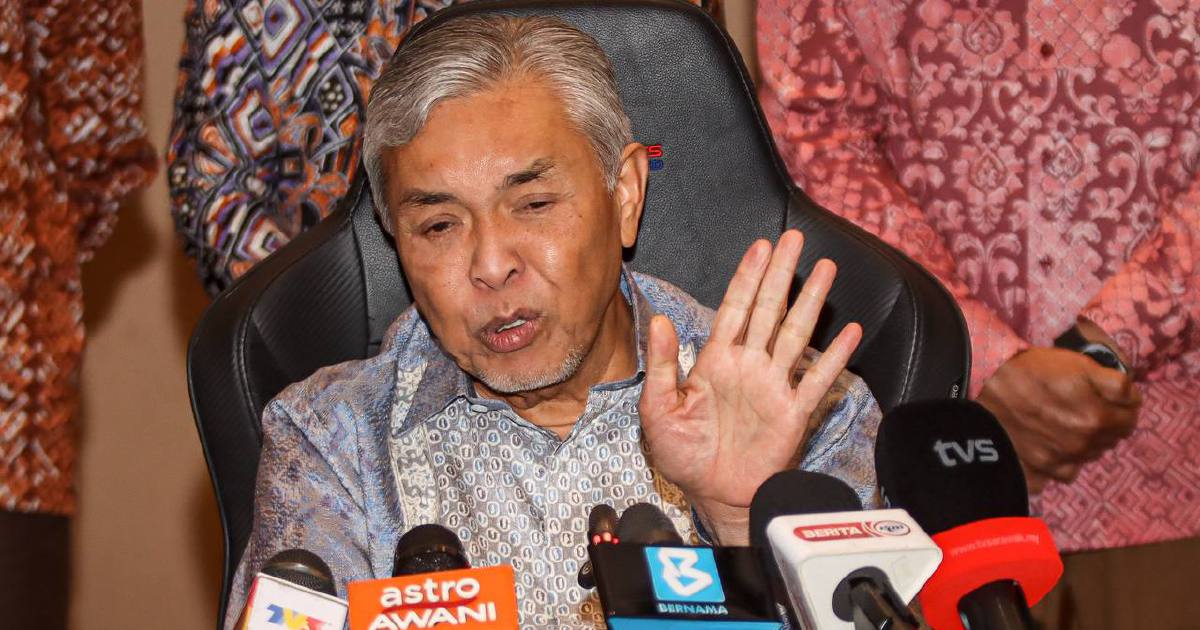
Datuk Seri Dr Ahmad Zahid Hamidi has firmly rejected reports suggesting plans to remove Prime Minister Datuk Seri Anwar Ibrahim from office, reaffirming that Barisan Nasional remains committed to supporting the unity government for the remainder of the 15th Parliamentary term.
The Barisan Nasional deputy chairman's statement, made in George Town, comes amid persistent speculation about the stability of Malaysia's coalition arrangement and the sustainability of the alliance that has governed since the 2022 elections. Such rumours periodically surface in Malaysia's political landscape, particularly when governing coalitions face legislative challenges or public criticism. The denial underscores the importance political leaders place on projecting an image of stability, even as underlying tensions within broad coalitions frequently test such unity.
The unity government, formed following the 2022 general election, brought together Barisan Nasional, Pakatan Harapan, and smaller coalition partners in an unprecedented arrangement designed to provide stable governance after years of political turmoil. This configuration has faced various pressures since its inception, ranging from disagreements over policy direction to broader questions about the viability of combining historically opposing political blocs. Each reaffirmation of commitment thus carries significance for investor confidence, policy continuity, and Malaysia's international standing.
Zahid's comments reflect the delicate balancing act required of coalition partners in Malaysia's current political environment. Barisan Nasional, having been the dominant force in Malaysian politics for decades before its 2018 defeat, agreed to join forces with Pakatan Harapan in 2022 to prevent political instability. This cooperation required both sides to set aside deep historical rivalries and work towards mutual objectives, a constraint that inevitably generates friction and speculation about the arrangement's durability.
The coalition structure has proven resilient through several parliamentary votes and policy debates, yet observers continually monitor for signs of strain. Past Malaysian governments have experienced unexpected collapses when coalition partners withdrew support, making stakeholders particularly attentive to any indication of fracture. This heightened scrutiny means that isolated statements or political manoeuvres can quickly trigger broader speculation about governmental stability.
Barisan Nasional's explicit reaffirmation of support carries practical implications for legislative business and executive capacity. The government requires sufficient parliamentary backing to pass budgets, critical legislation, and constitutional amendments when necessary. Any weakening of coalition discipline could complicate the government's policy agenda, particularly on matters requiring large majorities. Zahid's statement serves partly to reassure other coalition members, the legislature, and the market that such parliamentary support remains solid.
For Prime Minister Anwar Ibrahim personally, maintaining coalition unity remains essential to his administration's ability to govern effectively. His government must simultaneously manage macroeconomic challenges, address public service transformation, combat corruption, and navigate complex foreign policy issues. Political instability or persistent coalition tensions would divert leadership attention and limit bandwidth for substantive policy implementation. Statements from senior coalition figures like Zahid therefore serve as confidence-building measures for his administration.
The broader Malaysian political context shapes how such statements should be understood. The country's history includes instances where previously stable coalitions fractured suddenly, sometimes through defection of individual lawmakers or coordinated withdrawal by coalition partners. This history creates an environment where any ambiguity about commitment receives intense scrutiny. Zahid's unambiguous language thus aims to eliminate space for misinterpretation or speculation.
Regionally, Malaysia's political stability holds importance beyond domestic considerations. Southeast Asia's largest economies require predictable governance environments to attract investment and maintain economic momentum. International observers and business partners monitor Malaysian political developments closely when assessing regional stability and growth prospects. Disruptions to Malaysia's governing coalition could ripple through regional economic and diplomatic relationships.
The unity government framework itself represents an experiment in Malaysian political practice, having no direct precedent in the country's post-independence governance. Success in maintaining this arrangement through a full parliamentary term would demonstrate that ideological opponents can cooperate on matters of shared national interest. Conversely, its collapse would likely reinforce scepticism about coalition-based governance and potentially trigger demands for electoral reform or constitutional change.
Barisan Nasional's stake in this arrangement extends beyond immediate political considerations. The coalition has spent recent years rebuilding its image and institutional capacity following the electoral defeat and subsequent legal troubles affecting several senior members. Demonstrating commitment to the unity government and contributing to effective administration allows Barisan Nasional to rehabilitate its brand and rebuild voter confidence for eventual elections. Premature withdrawal or destabilisation would undermine these longer-term strategic objectives.
Zahid's George Town remarks therefore represent more than simple political messaging. They reflect the calculated navigation required of senior politicians within complex coalition arrangements, the importance of reassurance in Malaysia's current political environment, and the stakes involved in maintaining stable governance. As Malaysia approaches the end of the 15th Parliamentary term, questions about the next electoral cycle and subsequent coalition possibilities will intensify, making leaders' current statements about commitment increasingly significant as touchstones for understanding parties' true intentions.

