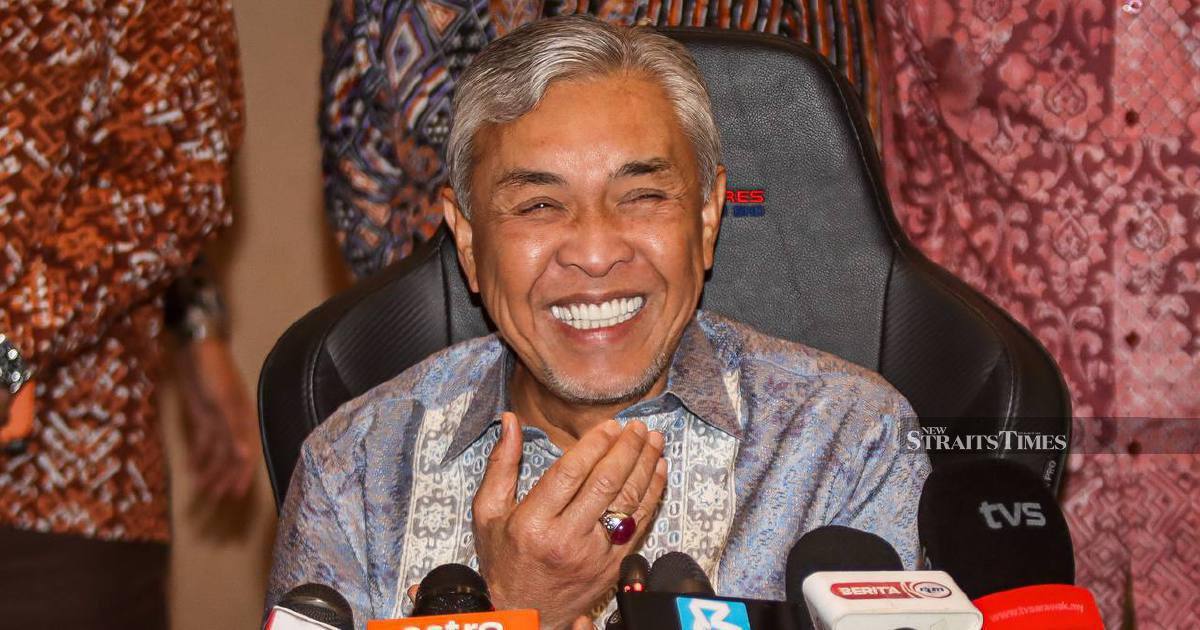
In a display of Malaysia's enduring political culture that occasionally transcends partisan divisions, Deputy Prime Minister Datuk Seri Dr Ahmad Zahid Hamidi has answered Prime Minister Datuk Seri Anwar Ibrahim's recent pantun with a poetic composition of his own, delivered in George Town. The exchange, conducted through the traditional four-line Malay verse form, underscores how figures at the highest echelons of Malaysian governance occasionally employ literary devices to communicate messages of national significance.
The pantun, a classical Malay poetic tradition stretching back centuries, has long served purposes beyond mere artistic expression in Malaysian political discourse. Prime ministers and senior government officials have periodically invoked this traditional form to deliver statements on governance, unity, and national direction. The fact that both the sitting Prime Minister and his deputy have chosen to engage in this exchange suggests the symbolic weight such communications carry within Malaysian political culture, particularly when unity themes are involved.
Anwar Ibrahim's original pantun, which centred on themes of national cohesion and collective purpose, prompted Zahid's response in kind. Rather than issuing a conventional statement or media release, the Deputy Prime Minister selected verse as his medium, indicating an understanding that certain messages resonate more powerfully when cast in Malaysia's traditional literary framework. The choice also reflects the broader Malaysian political landscape, where cultural symbols and classical arts forms often carry negotiating weight between rival factions.
The imagery Zahid selected—invoking concepts of roof and storm—carries particular resonance in the context of contemporary Malaysian governance. These metaphors suggest protection, shelter, and endurance through challenging weather, potentially alluding to the stability and resilience required as Malaysia navigates complex economic headwinds and political complexities. Such poetic language allows political leaders to address delicate situations without the explicit nature of direct statements, providing diplomatic cover while still communicating clear intended meanings.
The exchange demonstrates that despite regular political tensions and policy disagreements that characterise Malaysian cabinet dynamics, senior leadership continues to find common cultural ground through traditional artistic forms. This phenomenon is distinctly Malaysian, reflecting how governance at the highest level occasionally weaves together the formal structures of Westminster-style administration with indigenous cultural practices. The pantun tradition, in particular, has become a device through which Malaysian leaders can speak to national audiences on matters deemed significant enough to warrant more than everyday communication methods.
Zahid's willingness to engage in this poetic exchange carries implications for understanding the current political climate within Malaysia's corridors of power. Rather than interpreting such exchanges as lightweight or ceremonial, observers of Malaysian politics recognise them as meaningful components of high-level political communication. The fact that both leaders have invested time in crafting verses suggests a level of engagement that transcends protocol and enters the realm of substantive interaction, however mediated through artistic convention.
The use of pantun in modern Malaysian politics represents an interesting continuity with the nation's pre-colonial and colonial past, when Malay literature served as a repository for social commentary and political thought. Contemporary invocations of this form carry the weight of that historical tradition, lending gravitas to messages that might otherwise appear straightforward in conventional statements. For Malaysian audiences familiar with classical Malay literature, such exchanges communicate on multiple levels simultaneously—both the explicit poetic content and the implicit message conveyed through the choice to use such a form.
For Southeast Asian observers and international audiences monitoring Malaysian politics, these pantun exchanges provide insight into how cultural identity and national symbols remain central to political communication even in an era of globalisation and modern media. Unlike many other regional nations, Malaysia's senior leadership has maintained connection to pre-modern cultural forms, suggesting these remain genuinely valued rather than merely ornamental. This approach reflects broader patterns in Malaysian governance where Islamic principles, constitutional monarchy, and classical Malay traditions are woven throughout official discourse and ceremonial practice.
The specific themes of Zahid's response—roof and storm imagery—warrant deeper analysis within the broader context of Malaysian political developments. These natural metaphors speak to fundamental questions of governance: how leadership provides shelter and maintains structural integrity when external pressures mount. In the Malaysian context, where economic performance, inflation concerns, and external geopolitical uncertainties have dominated recent policy discussions, such imagery carries practical implications alongside poetic layers. The Deputy Prime Minister's choice to invoke protection and endurance may signal his position on how government should respond to current challenges.
Looking forward, the exchange suggests that pantun may continue to feature in how Malaysia's top leadership communicates on significant matters. The tradition offers particular utility for discussing sensitive topics, expressing solidarity across factional lines, and addressing national audiences in ways that transcend partisan messaging. For a nation as culturally diverse as Malaysia, classical Malay literary forms provide symbolic common ground that appeals across ethnic and religious divides, however fraught relations between communities may become on other fronts.
The incident also reflects broader questions about how political leaders in the modern era choose which communication channels to deploy for different messages. That senior Malaysian figures continue to invest in mastering classical poetic forms—a skill requiring genuine literary knowledge—suggests these remain valued elements of political leadership rather than antiquated practices. This stands in contrast to some other Asian democracies where such traditional approaches have largely fallen away in favour of contemporary media and direct communication methods.

