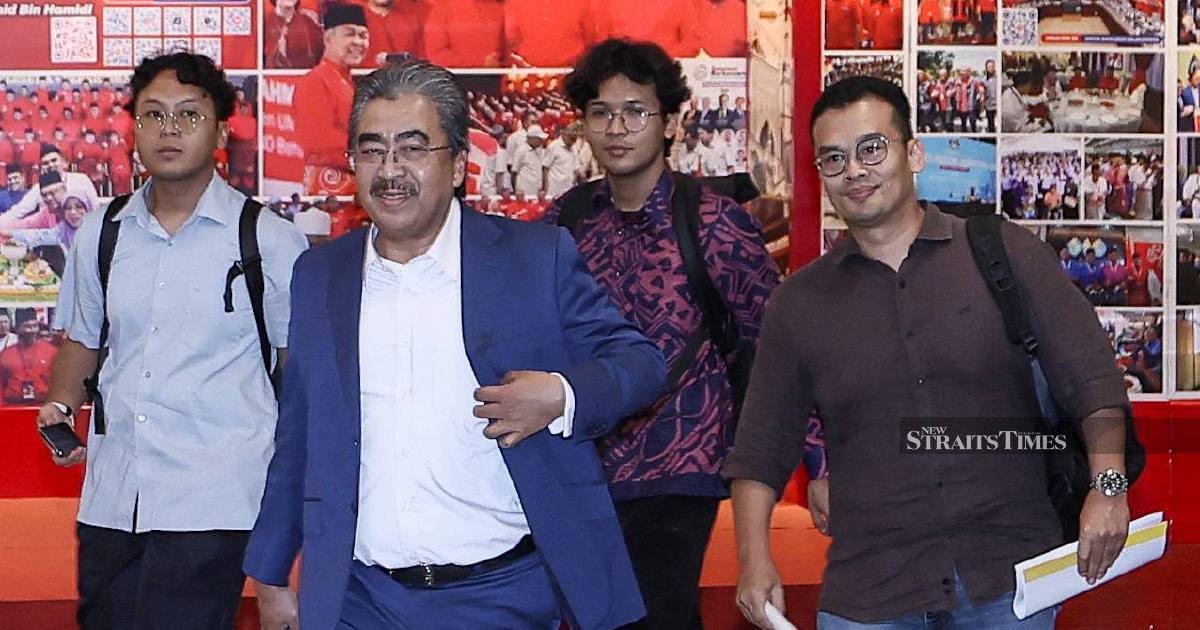
Deputy Prime Minister Ahmad Zahid Hamidi convened a restricted briefing session at Barisan Nasional's Umno headquarters in Kuala Lumpur, bringing together high-ranking coalition figures to review the newly declassified findings from the Royal Commission of Inquiry examining the governance and management of Lembaga Tabung Haji. The attendance of Perikatan Nasional representatives alongside core Barisan Nasional membership reflected the significance the government coalition places on the inquiry's conclusions regarding one of Malaysia's most important Islamic financial institutions.
The Tabung Haji RCI investigation has commanded substantial public attention in recent years, as the institution manages savings for millions of Malaysian Muslims preparing for pilgrimage to Mecca. Any findings touching on administrative irregularities, financial mismanagement, or governance failures carry implications extending far beyond bureaucratic circles, affecting millions of depositors and their families. The decision to declassify the report and brief coalition partners suggests officials believe transparency on institutional reforms serves broader national interests and coalition unity.
The closed-door nature of the briefing underscores the sensitivity surrounding the inquiry's recommendations and findings. While government transparency regarding state institutions remains desirable for public confidence, the restricted access indicates coalition leaders preferred to absorb and discuss technical details, potential policy responses, and coordinated messaging before public release. This approach allows senior figures adequate time to prepare parliamentary responses and departmental implementation strategies without premature public speculation.
Tabung Haji occupies a unique position within Malaysia's institutional landscape, blending religious significance with complex financial operations. The institution holds responsibility for safeguarding billions in deposits while managing sophisticated investment portfolios spanning local and international markets. Any governance review conducted at the highest level naturally engages both political leadership and financial regulators, making the presence of multiple coalition partners at Zahid's briefing unsurprising given the wide-ranging implications.
The involvement of Perikatan Nasional leaders at a Barisan Nasional-convened briefing reflects Malaysia's current coalition arrangement, where opposition partners participate in government decision-making on matters of national significance. While Malaysia's political structures remain fractious, mechanisms enabling cross-coalition briefings on institutional matters demonstrate commitment to collaborative oversight of critical public institutions, regardless of electoral divisions.
Governance reform at Tabung Haji likely figures prominently among the RCI's recommendations, potentially touching on board composition, internal audit procedures, investment oversight mechanisms, and supervisory relationships with Bank Negara Malaysia. Any proposed structural changes require careful implementation to avoid disrupting ongoing pilgrimage support services while simultaneously addressing identified weaknesses. Coalition leaders required detailed understanding of implementation timelines and resource requirements to craft coherent policy responses.
The inquiry's completion and declassification represent the culmination of extensive investigation into institutional practices spanning multiple years and administrative cycles. Previous concerns raised by stakeholders—including depositors, consumer advocates, and financial oversight bodies—likely formed the investigative foundation. The RCI's formal conclusions carry weight unavailable to informal scrutiny, potentially validating long-standing criticisms while suggesting concrete remedial pathways forward.
Public reception of the report's declassification and any recommended reforms will shape perceptions of government willingness to confront institutional problems transparently. Malaysian Muslims planning pilgrimage investments carefully monitor developments affecting Tabung Haji, as confidence in institutional reliability directly influences participation levels and savings accumulation rates. Coalition messaging regarding report findings and reform implementation therefore carries considerable weight among this significant demographic group.
The briefing session's timing suggests preparation for subsequent parliamentary disclosure and public announcement phases. Coalition coordination preceding such announcements prevents fragmented messaging, embarrassing contradictions, or appearance of institutional disagreement during crucial governance transition periods. Senior Barisan Nasional leadership maintaining alignment with Perikatan Nasional partners on substantive institutional matters bolsters overall coalition credibility on economic management and institutional oversight.
For Southeast Asian observers monitoring Malaysia's governance trajectories, the Tabung Haji RCI represents important development regarding Islamic financial institution regulation and transparency standards. Regional governments managing analogous pilgrimage savings mechanisms or Islamic financial bodies likely observe Malaysian approaches to governance reform, internal accountability mechanisms, and depositor protection frameworks. Any recommendations emphasizing enhanced transparency, audit independence, or regulatory coordination may establish regional benchmarks for institutional administration.
Longer-term implications involve potential legislative amendments, regulatory directive updates, or administrative directive reissuance depending on RCI recommendations. Coalition partners must ensure reform packages receive adequate resources for implementation while maintaining institutional continuity throughout transition phases. The briefing represented crucial stage in transforming investigative findings into operational institutional change affecting millions of Malaysian depositors.
Moving forward, public disclosure of key findings and reform frameworks will occupy government attention, requiring communication strategies balancing transparency imperatives with legitimate confidentiality concerns regarding ongoing investigations or pending legal proceedings. Coalition cohesion maintained through events like Zahid's briefing session ultimately determines whether reform momentum continues or faces implementation obstacles arising from political miscalculation or insufficient coordination.

