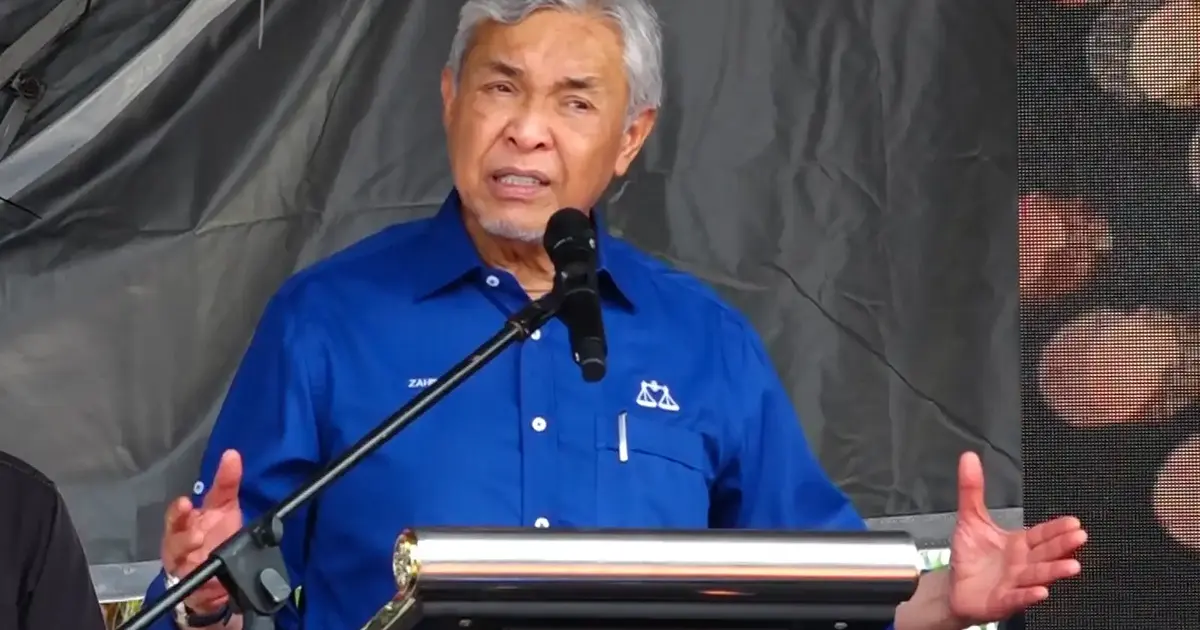
Umno president Ahmad Zahid Hamidi has signalled that the ruling party should move past any public commentary from former Umno leader Muhamad Puad Zarkashi regarding the Barisan Nasional's slate of candidates for the imminent Johor state election. The directive underscores internal tensions within Malaysia's oldest political party as it prepares for a crucial electoral contest in one of its traditional strongholds.
Zahid's instruction to party operatives to overlook Puad's statements reflects a broader strategy to maintain party cohesion during the campaign period. Rather than engage with the former leader's criticisms, Umno's hierarchy has opted for a public relations stance that treats such remarks as peripheral noise rather than substantive political debate. This approach suggests that Zahid and the party's leadership believe responding to internal dissent could amplify division and distract from their campaign messaging.
Puad Zarkashi, whose tenure as Umno leader preceded Zahid's rise to the party presidency, has apparently expressed concerns or reservations about certain Barisan Nasional candidates selected for the Johor contest. The specific nature of his criticisms remains unclear, but his willingness to voice opinions about candidate selection has evidently prompted the party hierarchy's response. In Malaysian political culture, where party unity is traditionally emphasised as paramount, such public criticism from senior figures carries symbolic weight even if substantive policy disagreements are modest.
The Johor state election represents a significant test for Barisan Nasional's continued dominance in the peninsula's southern region. Johor has long been considered a Barisan stronghold, and any erosion of support there would signal broader vulnerabilities for the coalition as it approaches the next federal general election. The timing of Puad's criticism, whether intentional or not, adds pressure to an already high-stakes campaign environment where party discipline becomes a competitive advantage.
Umno's decision to publicly downplay Puad's remarks rather than directly counter them suggests confidence in its electoral machinery and campaign message. By instructing party members to simply ignore the former leader, Zahid implicitly argues that Puad's concerns lack sufficient credibility or resonance to warrant official rebuttal. This calculated indifference is a common political tactic when party leaders wish to deny oxygen to internal critics without appearing defensive or divided.
However, the very fact that Zahid felt compelled to address Puad's commentary reveals underlying anxieties within Umno's ranks. The need to explicitly instruct party workers to disregard criticism suggests that some party members might otherwise be inclined to listen or sympathise with Puad's perspective. This indicates that discontent with candidate selection, campaign strategy, or leadership direction may be more widespread than the party's public unity messaging implies.
In the context of Malaysian electoral politics, where personal networks and intra-party factionalism significantly influence outcomes, Puad's status as a former party president grants him considerable standing even after stepping down. His accumulated experience and reputation mean that his opinions on candidate viability or strategic direction carry weight among party grassroots. Zahid's response therefore serves partly to pre-empt any narrative in which Puad's concerns gain traction among Umno's wider membership.
The incident also reflects generational tensions within Umno between established senior figures and the current leadership. Puad represents an earlier era of Umno stewardship, and his public commentary on current party affairs touches on questions about whether the current leadership is adequately inclusive of past experience and institutional memory. Zahid's directive to ignore Puad can be read as a statement that present leadership's decision-making authority supersedes historical perspectives.
For Malaysian voters, particularly in Johor, this internal party dynamic provides a window into Barisan Nasional's current health. While intra-coalition disagreements are normal in any political organisation, the openness of such criticism and the leadership's perceived need to manage it publicly could influence voter perceptions of party stability and competence. Voters across Southeast Asia increasingly evaluate coalitions and parties not merely on policy platforms but on apparent internal coherence and leadership effectiveness.
The broader implication is that even traditionally dominant political parties must actively manage their internal communication during electoral campaigns. Zahid's instruction effectively consolidates control around the current campaign narrative while signalling to critics that dissent expressed outside proper party channels will be treated as irrelevant rather than engaged as substantive critique. This approach preserves party unity publicly while potentially creating space for resentment or further criticism among those who feel their concerns are being dismissed.
As the Johor election approaches, how effectively Umno manages such internal messaging will partly determine whether the party can translate its traditional advantages into electoral victory. The party's capacity to present a unified front while accommodating diverse opinions within its ranks will be tested. Zahid's public handling of Puad's criticism suggests a preference for firmness over accommodation, a strategy that may prove effective if Barisan Nasional prevails but could become a vulnerability if the coalition faces unexpected electoral headwinds.

