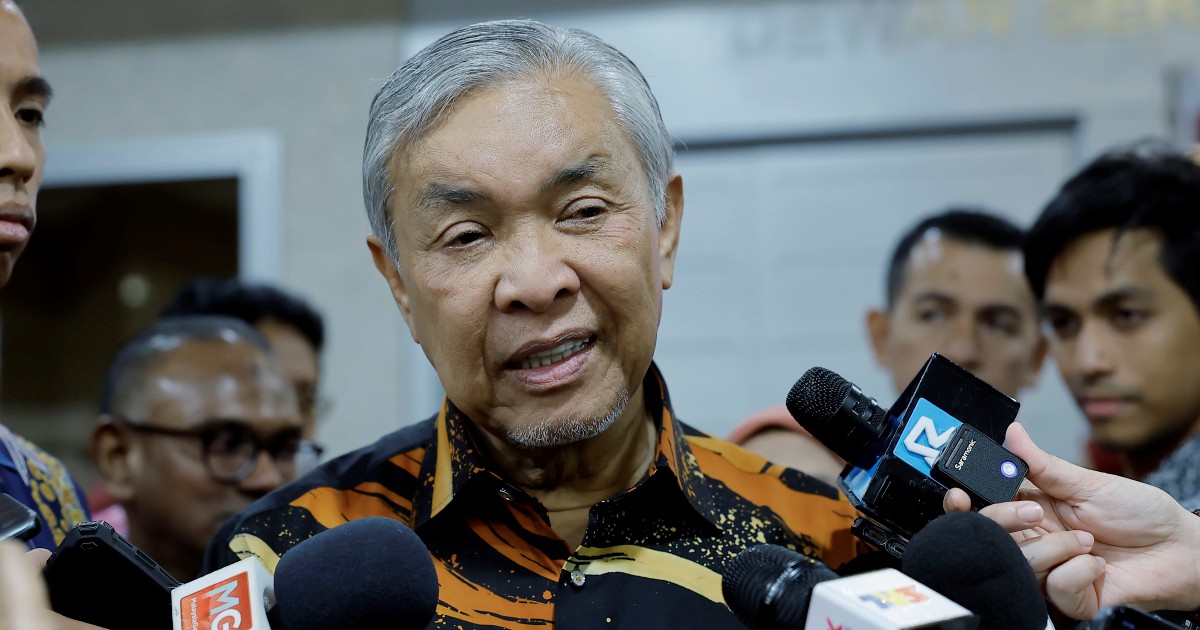
Barisan Nasional chairman Datuk Seri Dr Ahmad Zahid Hamidi has roundly rejected allegations that external players manipulated the selection process for Negri Sembilan's Menteri Besar, insisting that those making such accusations lack fundamental comprehension of how Malaysia's political machinery functions. Speaking in Putrajaya, Zahid portrayed the criticism as emanating from individuals disconnected from practical political realities, attempting to dismiss the controversy by questioning the accusers' credibility rather than directly addressing the procedural concerns they raised.
The appointment of a Menteri Besar represents one of the most consequential decisions in state politics, as the officeholder commands both executive authority and influence over substantial development budgets. In Negri Sembilan specifically, the Menteri Besar appointment carries particular weight given the state's position as a strategically important swing state in national politics and its role as a buffer between the densely populated Klang Valley and southern regions. The selection process traditionally involves complex negotiations among BN's component parties, consideration of incumbent performance, factional interests within UMNO, and consultation with the state's royal institution, which retains constitutional relevance in the appointment framework.
Zahid's characterisation of the controversy as stemming from political naiveté appears designed to delegitimise questioning without substantively engaging with the specific mechanisms that governed the recent appointment. By framing critics as ignorant rather than as legitimate stakeholders raising procedural concerns, he implicitly acknowledges that a process did occur—one complex enough to generate speculation about external influence. This rhetorical approach is common in Malaysian politics when senior leaders face uncomfortable scrutiny about decision-making processes that lack transparency.
The broader context matters considerably for Malaysian observers. Negri Sembilan has witnessed significant internal BN dynamics in recent years, with shifts in power between UMNO factions and changes in the composition of state government influence. Any Menteri Besar appointment inevitably affects resource distribution, patronage networks, and political momentum entering the next election cycle. When such appointments appear to diverge from expected patterns or prior understandings, questions about external interference naturally arise among party members and political analysts tracking factional movements.
Zahid's position as BN chairman gives him substantial influence over party machinery and coalition decisions, yet his dismissal of interference allegations might paradoxically invite further scrutiny regarding his own role in shaping outcomes. Critics could reasonably interpret his defensive posture as suggesting that questioning the appointment mechanism itself represents a departure from accepted norms—which would be noteworthy only if the appointment process itself deviated from standard practice in ways worth defending.
For Malaysia's political community, particularly in states governed by BN coalitions, Zahid's comments underscore the tension between insider knowledge of political processes and public transparency. Seasoned political actors undoubtedly understand the constellation of factors influencing high-level appointments, but the public legitimacy of such appointments depends partly on perceptible fairness and adherence to established conventions. Dismissing all external commentary as ignorant does not resolve the underlying question of whether the appointment reflected genuine consensus or was shaped by factors outside formal party structures.
The Negri Sembilan situation also reflects broader challenges facing BN as it navigates post-2018 political recalibration. The coalition must demonstrate both internal cohesion and commitment to meritocratic principles to maintain credibility with voters and party members. Appointment processes that appear opaque or heavily influenced by factional considerations can damage the coalition's reform narrative, particularly as younger voters increasingly scrutinise institutional decision-making.
Zahid's intervention signals that BN leadership considers the appointment matter closed and expects the political ecosystem to move forward. This approach may satisfy coalition hardliners who prefer minimal public airing of internal dynamics, but it potentially leaves unresolved the substantive questions about procedural fairness that prompted the original accusations. In Malaysian politics, such unresolved tensions often resurface during subsequent state-level conflicts or national coalition negotiations.
The episode highlights how Malaysian political discourse frequently operates at two levels simultaneously: an insider conversation about factional positioning and resource distribution, conducted through coded language and implicit understanding among participants, and a parallel public narrative emphasizing unity, merit, and institutional propriety. Zahid's comments belong firmly to the insider conversation, assuming that the public should accept elite judgments regarding appointments without demanding detailed explanations of the decision-making rationale or evidence that proper procedures were followed.
For Southeast Asian observers, Malaysia's handling of such appointment controversies offers insight into how Westminster-derived systems function in contexts where traditional institutions retain constitutional roles and where party factionalism significantly influences governance. The willingness of senior leaders to dismiss questioning as mere ignorance, rather than engaging substantively with procedural concerns, suggests confidence that the political system's internal stabilising mechanisms will contain dissatisfaction without requiring public accountability measures.
Moving forward, the Negri Sembilan situation will likely influence how BN manages future state-level appointments and how internal party dynamics play out in other coalition-governed states. If the dismissed concerns prove to have merit—if the appointment indeed reflected external pressure or factional manipulation—such revelations could undermine Zahid's credibility and BN's broader governance narrative. Conversely, if the appointment ultimately proves defensible on merit, BN may have simply weathered another cycle of political speculation without substantive consequence, reinforcing the pattern where insider decision-making operates with minimal public scrutiny.

