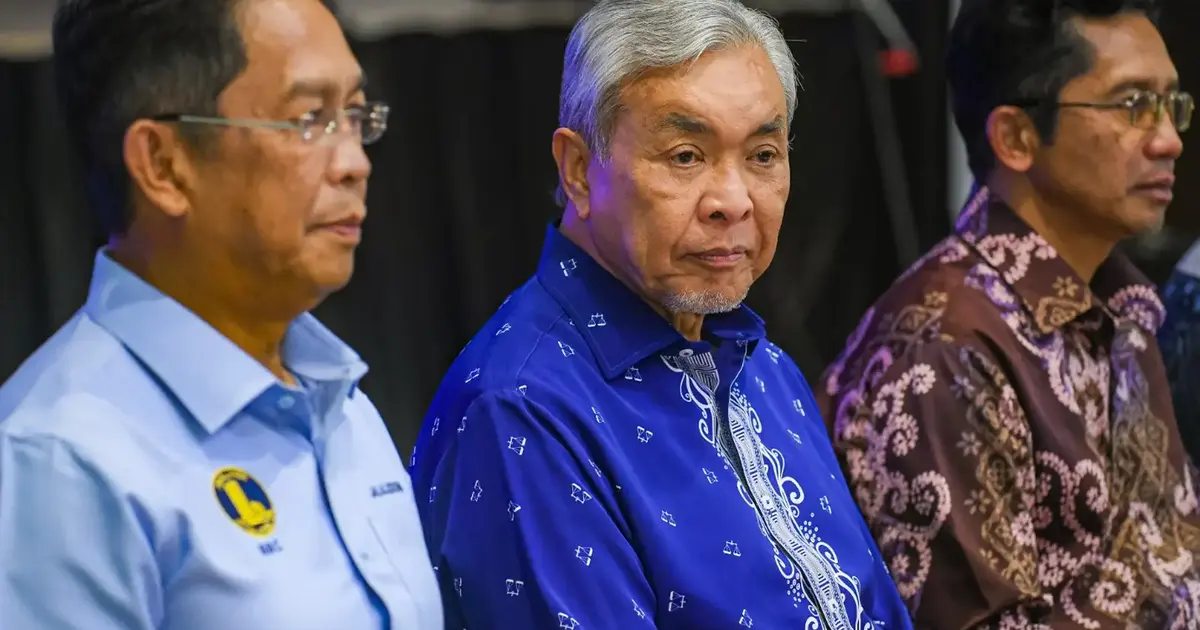
Barisan Nasional chairman Zahid Hamidi has demanded that authorities investigate allegations of vote-buying in Negeri Sembilan, marking a significant escalation in scrutiny over electoral integrity within the state. The BN leader's call for action underscores growing concerns about irregularities that could undermine public confidence in democratic processes across the peninsula.
Zahid has indicated that formal police reports concerning the vote-buying claims have already been submitted to law enforcement agencies. These reports, according to the BN chairman, come bolstered by concrete evidence as well as detailed accounts from individuals who witnessed the alleged activities. The submission of such documentation suggests that those raising the allegations possess material that could form the basis for a criminal investigation.
Vote-buying remains one of the most serious challenges to electoral credibility in Malaysia. The practice not only violates election laws but also represents a fundamental breach of democratic principles by substituting financial inducement for genuine voter choice. When allegations surface, particularly at the state level where electoral contests are often closely contested, they warrant thorough examination to determine whether systematic misconduct has occurred.
Negeri Sembilan, located in the heart of Peninsular Malaysia, has been a competitive electoral battleground where both BN and opposition parties vie for influence. The state's political landscape has shifted considerably over recent election cycles, making it a bellwether for broader national political trends. Any credible allegations of electoral impropriety in the state therefore carry implications beyond the immediate jurisdiction, potentially affecting how voters across other states assess the integrity of their own elections.
The involvement of witness statements in these reports suggests that the allegations extend beyond mere suspicion or hearsay. Eyewitness testimony, when corroborated with documentary evidence, can provide law enforcement with a foundation upon which to launch a serious inquiry. Police investigators will likely examine financial transaction records, communications between alleged perpetrators, and testimony from those who claim to have been targeted by vote-buying schemes.
It remains unclear from the available information whether the allegations target specific individuals, particular constituencies, or broader coordinated efforts across multiple polling districts. The scope of the investigation will significantly influence its duration and the potential political ramifications. A limited, localized issue differs substantially in gravity from evidence suggesting systematic manipulation across the state.
For the BN coalition, demonstrating commitment to investigating credible allegations serves multiple purposes. It signals to the public that the coalition takes electoral standards seriously and will not tolerate misconduct within its own ranks. Simultaneously, it attempts to preempt criticism that BN might be complicit in or indifferent to such irregularities. However, the manner in which any investigation unfolds and whether it leads to prosecutions will ultimately determine whether this demonstrates genuine institutional commitment to democratic integrity or merely performs the appearance of accountability.
The broader context matters considerably. Malaysia has faced persistent international and domestic scrutiny regarding election administration quality and the independence of electoral bodies. While the country's institutional frameworks for conducting elections rank comparatively well within Southeast Asia, concerns about irregularities—including vote-buying, intimidation, and voter registration anomalies—persist. Each specific allegation that receives public attention contributes either toward strengthening or weakening public confidence in the entire electoral system.
For opposition parties and civil society observers, these allegations merit independent scrutiny beyond what police investigation alone might provide. Election monitoring organisations and civic groups often maintain different evidentiary standards and can offer complementary perspectives on whether irregularities occurred. Transparency in any investigation, including public disclosure of findings whether they confirm or refute the allegations, becomes essential for maintaining democratic legitimacy.
The timing of these allegations and Zahid's public call for investigation will likely feature prominently in broader political discourse surrounding Negeri Sembilan governance and electoral politics more generally. State-level elections in Malaysia increasingly attract national media attention, particularly when irregularities emerge. How authorities handle these claims will send signals to voters, candidates, and party operatives regarding the consequences of electoral misconduct.
Moving forward, Malaysian election officials should consider whether existing mechanisms for detecting and reporting vote-buying allegations function effectively across all constituencies. Strengthening complaint procedures, ensuring adequate resources for investigation, and establishing clear public accountability for outcomes would reinforce institutional credibility. Without such systems working demonstrably well, suspicions about electoral integrity will inevitably persist.
The investigation now underway in Negeri Sembilan represents an opportunity to demonstrate that electoral standards in Malaysia have real teeth and that even high-profile political actors face consequences for breach of those standards. Conversely, should the investigation prove inconclusive or face obstruction, the resultant public scepticism could deepen existing concerns about democratic governance. The stakes extend well beyond a single state.

