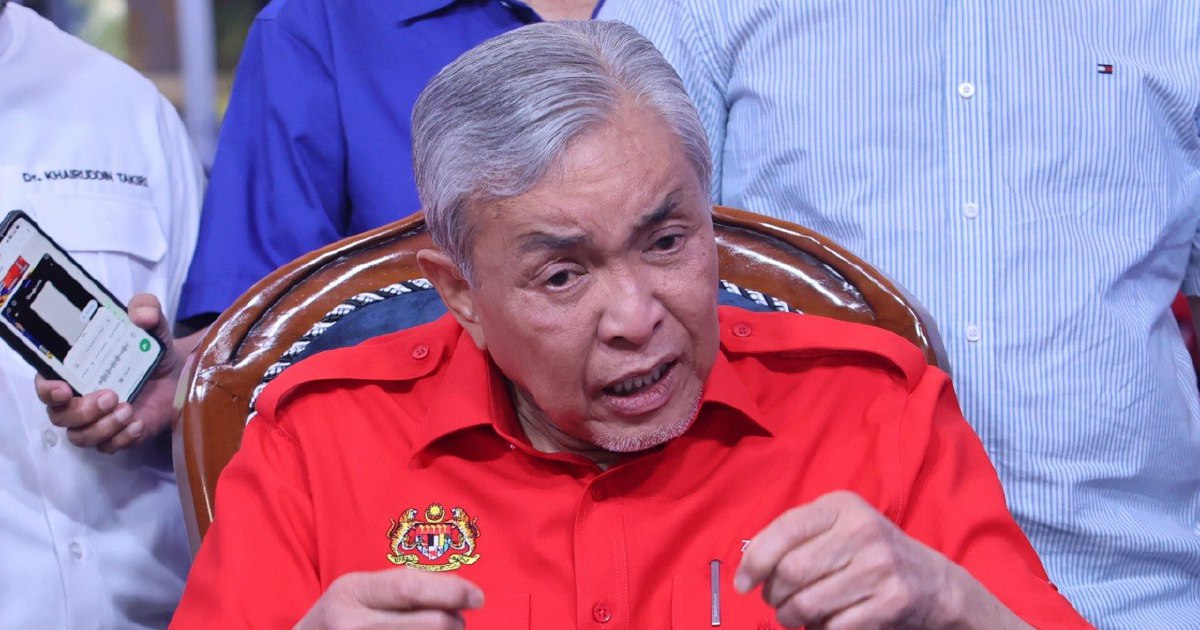
Datuk Seri Dr Ahmad Zahid Hamidi, who leads the Barisan Nasional coalition, has signalled that the broad political alliance needs to significantly increase the intensity and scope of its election campaign in Negri Sembilan. In remarks made in Seremban, the BN chairman made clear his understanding that the coalition faces a challenging electoral landscape, having cautioned party members and supporters that they cannot approach the state poll with complacency or assumptions of automatic victory.
The timing of Zahid's appeal is significant, coming as Malaysia's political landscape continues to undergo substantial shifts in the aftermath of the 2022 general election and the subsequent formation of the unity government. Negri Sembilan, a state with considerable economic importance owing to its industrial base and location as a transit point between the Klang Valley and southern regions, represents contested political terrain where the balance of power remains genuinely uncertain. The state's diverse demographic composition—spanning urban, semi-urban, and rural constituencies—means that no single political bloc can take victory for granted.
BN's acknowledgement of underdog status reflects a realistic assessment of current political dynamics. The coalition has faced considerable erosion of support in recent elections, particularly in urban areas where younger voters and middle-class constituencies have demonstrated willingness to split their votes or shift allegiance entirely. Negri Sembilan is no exception to this trend, with certain constituencies showing pronounced volatility in voting patterns across successive elections. For a coalition that once dominated Malaysian politics with overwhelming majorities, confronting competitive rather than dominant positions in state contests represents a marked departure from historical patterns.
The coalition's campaign imperative in Negri Sembilan extends beyond simply securing electoral victory; it carries broader implications for BN's national political standing. A strong performance or conversely a disappointing result in the state election will inevitably be interpreted as either validation or repudiation of the unity government arrangement that has governed Malaysia since late 2022. For the broader Malay-Muslim constituency that forms BN's traditional base, Negri Sembilan elections carry symbolic weight as a test of whether the coalition can effectively mobilize support and articulate a compelling vision distinct from competing political options.
The challenge confronting Zahid and the BN machinery involves coordinating effectively across the coalition's constituent parties—UMNO, MCA, MIC, and GPS—while simultaneously addressing genuine policy concerns and grievances that have motivated voters to consider alternatives. At the state level, local issues such as infrastructure development, administrative efficiency, quality of governance, and management of state resources often weigh more heavily than national political considerations. BN's campaign strategy must therefore balance national messaging with sophisticated understanding of localized preferences and community-specific concerns across Negri Sembilan's diverse constituencies.
Resource allocation and ground organization will prove critical to BN's campaign effectiveness. The coalition's organizational machinery, though still formidable compared to opposition alternatives in many areas, has atrophied in certain regions due to years of electoral defeats and membership drift. Reactivating and energizing local party structures, recruiting credible candidates who reflect their constituencies' aspirations, and ensuring consistent messaging across the sprawling coalition represents a substantial organizational undertaking. Zahid's call for momentum amplification appears designed to jar party structures at all levels into intensified activity.
The opposition's positioning in Negri Sembilan will substantially shape the electoral battleground. The Pakatan Harapan coalition, comprising PKR, DAP, and AMANAH, has demonstrated variable appeal across the state, with stronger performance in certain urban and semi-urban constituencies. The Independent political movement and smaller parties could also fragment the vote in ways that either benefit or disadvantage BN depending on where splitting occurs. For BN to overcome underdog status, the coalition requires not merely that its supporters turn out enthusiastically, but that opposition votes distribute across competing alternatives rather than coalescing behind a single challenger.
Zahid's strategic messaging—essentially preparing supporters for a competitive fight rather than anticipated triumph—may also serve psychological purposes within the coalition ranks. Political campaigns operate through narratives and momentum; framing BN as the fighting underdog can energize activists and volunteers who might otherwise feel demotivated if the campaign appeared headed toward inevitable defeat. Conversely, positioning BN as defending its legitimate interests against challenger alternatives may resonate more effectively with traditional constituencies than campaigns that assume inherited political dominance.
The broader context involves significant transitions within Malaysian politics generally. The unity government has attempted to reduce polarization and build national consensus on governance approaches, yet electoral competition continues unabated at state and local levels. Negri Sembilan's election will test whether voters respond to unity government messaging or whether they maintain preferences for opposition alternatives. For BN specifically, the results will indicate whether the coalition can rebuild electoral competitiveness through improved governance and message discipline, or whether the structural shifts favoring electoral competition over coalition dominance have become permanent features of Malaysian political life.
For Malaysian readers and Southeast Asian observers, Zahid's remarks underscore that even dominant political coalitions must actively compete and cannot assume voter loyalty. The campaign intensity that BN chairman has urged reflects realistic political maturity, acknowledging that contemporary voters make decisions based on current performance rather than historical affiliations. How effectively BN executes its intensified campaign strategy in Negri Sembilan will carry implications extending beyond state politics to the broader question of whether the unity government framework can sustain itself through coming electoral cycles.

