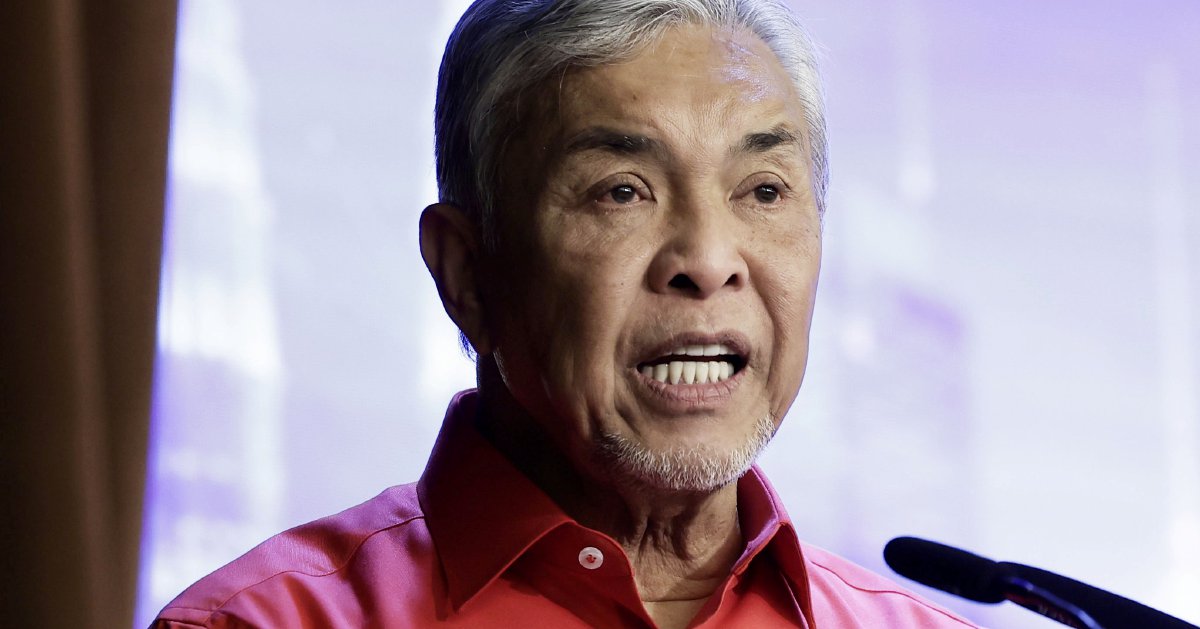
Deputy Prime Minister Datuk Seri Dr Ahmad Zahid Hamidi has made a forceful appeal for stakeholders to desist from circulating unsubstantiated claims and perceptions about Lembaga Tabung Haji, emphasising the need for public discourse rooted in verifiable evidence rather than conjecture.
The call comes against a backdrop of persistent scrutiny surrounding Malaysia's Islamic pilgrimage fund, which has faced intermittent criticism and speculation regarding its governance and financial management. TH, which serves as the custodian of savings for millions of Malaysian Muslims preparing for the Hajj pilgrimage, remains a significant financial institution with substantial assets and a broad stakeholder base, making it vulnerable to both legitimate oversight and unfounded rumours.
Zahid's intervention signals the government's concern that unverified narratives about TH could undermine public confidence in the institution and distract from substantive policy discussions. The Deputy Prime Minister's emphasis on truth-based discourse reflects a broader governmental push to distinguish between legitimate accountability mechanisms and what officials view as baseless speculation that lacks empirical foundation.
Tabung Haji has historically occupied a unique position within Malaysia's financial ecosystem, combining social policy objectives with investment responsibilities. The institution manages funds contributed by Malaysian Muslims as mandatory savings toward their pilgrimage, while also investing these resources to generate returns. This dual mandate has occasionally created tension between social mission and commercial performance, particularly during economic downturns or market volatility.
The perceptions and allegations Zahid references likely encompass various concerns raised by critics, including questions about investment strategies, administrative costs, and governance structures. Such scrutiny is not uncommon for large financial institutions, particularly those with quasi-governmental status and public trust dimensions. However, officials have consistently argued that much of the criticism circulates without proper substantiation or understanding of TH's operational complexities.
For Malaysian readers, the relevance of this dispute extends beyond institutional governance. Many middle-class Muslims rely on TH as a primary savings mechanism, making the fund's stability and reputation matters of personal financial consequence. Any erosion of public confidence could affect participation rates and ultimately the institution's capacity to fulfil its mandate. Additionally, public perception influences regulatory oversight and political support for the fund's strategic initiatives.
The Deputy Prime Minister's statement also reflects growing awareness among policymakers that misinformation and unfounded allegations, whether spread deliberately or inadvertently, can distort public understanding of complex financial institutions. In an age where social media amplifies claims rapidly, institutional leaders face mounting pressure to engage in proactive communication and correct the record when false narratives gain traction.
Zahid's appeal appears calibrated to address multiple audiences simultaneously. To TH stakeholders and the general public, the message emphasises that confident institution-building requires factual groundwork. To media practitioners and opinion leaders, there is an implicit suggestion that responsible reporting demands verification before publication. To political opponents who might leverage TH issues for partisan advantage, there is a clear signal that unsubstantiated attacks will be contested.
The timing of this pronouncement may also reflect efforts to stabilise TH's standing ahead of potential policy announcements or strategic reforms. Malaysian financial institutions, particularly those with sovereign characteristics, often require periods of reputation management before introducing significant changes or seeking expanded mandates from legislators.
Regionally, TH's challenges resonate with comparable institutions across Southeast Asia and the wider Muslim world. Islamic financial products and pilgrim-focused savings schemes operate in multiple countries, and governance questions affecting one institution inevitably attract attention from industry observers elsewhere. How Malaysia's leadership addresses TH's reputation will influence perceptions of the broader Islamic finance sector's institutional competence.
Moving forward, Zahid's intervention suggests that the government intends to combine defensive messaging about TH with potentially more assertive action against what it considers frivolous allegations. This could include enhanced communication strategies, greater transparency in reporting, or amplified responses to criticisms circulating in public discourse. Institutional leaders may also accelerate governance reforms to provide empirical ground for rebuttals to scepticism.
The Deputy Prime Minister's statement ultimately reflects a tension inherent in democratic governance: balancing the right of citizens and media to scrutinise public-adjacent institutions against the legitimate need for those institutions to operate without being destabilised by unverified claims. How this tension resolves will partly depend on whether TH itself embraces heightened transparency and whether critics focus their concerns on specific, investigable propositions rather than generalised insinuations.

