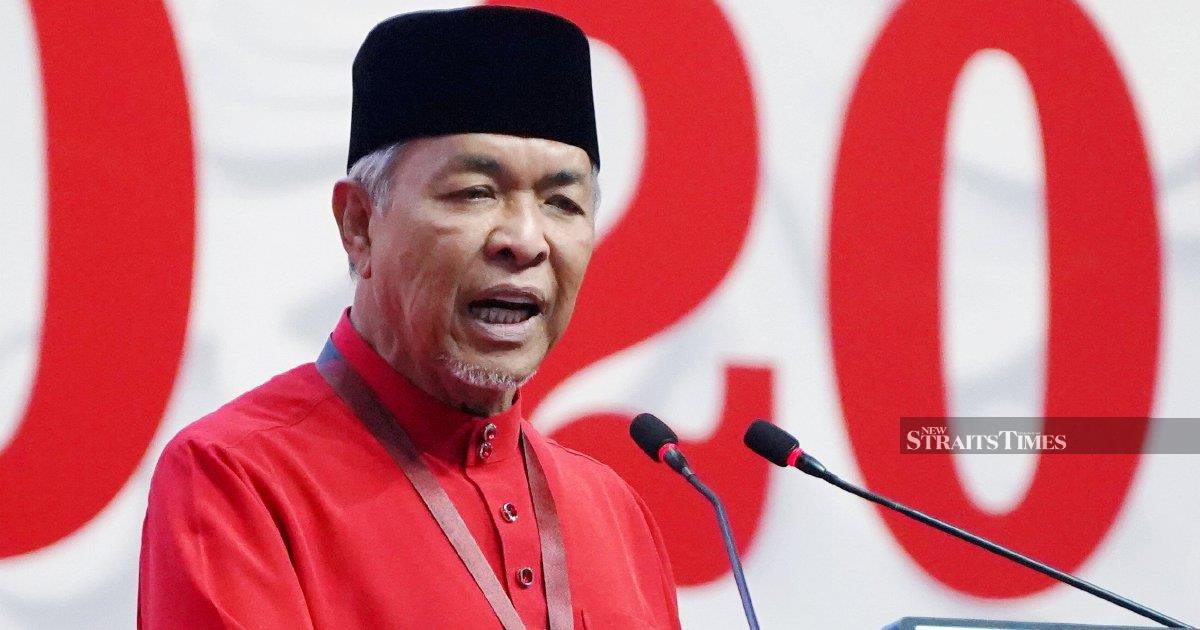
BN chairman and Umno president Datuk Seri Dr Ahmad Zahid Hamidi has signalled that his party and coalition will take a hardline stance against anyone implicated in wrongdoing at Tabung Haji, the pilgrimage fund that has faced mounting scrutiny over its financial management and governance structures. Speaking in Putrajaya, Zahid stressed that there would be no political protection or compromise if the ongoing Royal Commission of Inquiry uncovers evidence of criminal breach of trust, individual misconduct, or systemic governance failures within the institution.
The statement carries significant weight given the controversy surrounding Tabung Haji's operations in recent years. The fund, which manages savings for Malaysian Muslims preparing for the hajj pilgrimage, has come under intense public and political examination following revelations about investment decisions, fund management practices, and internal accountability mechanisms. The establishment of the RCI itself reflected broader concerns about whether proper oversight and fiduciary responsibilities were being maintained.
Zahid's declaration appears designed to position BN and Umno as champions of institutional accountability and clean governance, particularly important as the coalition seeks to rebuild public confidence after the 1MDB scandal and other governance controversies that damaged its reputation. By publicly committing to hold members accountable regardless of rank or affiliation, he is attempting to demonstrate a break from the perception that power and party loyalty supersede the rule of law. This messaging will be carefully monitored by both supporters and critics as a test of whether political rhetoric translates into concrete action.
The Tabung Haji inquiry represents one of several governance reviews underway across Malaysian institutions. The fund, established decades ago, has accumulated substantial resources and serves millions of Malaysian Muslim pilgrims. Its investment portfolio and financial decisions therefore have implications extending far beyond the organisation itself, touching upon public trust in how government-linked entities manage collective assets. Any findings of mismanagement would reverberate through both religious communities and the broader public sphere.
For Southeast Asian observers, the Tabung Haji case offers insights into how Malaysia's institutional accountability mechanisms function. The RCI process itself—establishing an independent inquiry with investigatory powers—reflects Malaysia's formal commitment to institutional oversight. However, the real test lies in what happens after the inquiry concludes and recommendations are presented. Political will to implement findings and pursue accountability, even when inconvenient for ruling parties, remains a critical measure of democratic maturity.
Zahid's statement also carries implicit messaging about internal party discipline. By explicitly rejecting compromise, he is signalling that being an Umno member or BN politician provides no immunity from consequences if misconduct is substantiated. This is particularly relevant given the prominent roles that several Umno figures and government-linked company directors have played in various governance issues. The declaration, if enforced consistently, would mark a departure from historical patterns where party connections sometimes buffered individuals from full accountability.
The timing of such statements is also notable. Malaysia continues navigating a complex political landscape following recent elections, with questions about whether the coalition can restore institutional credibility and reconnect with voters concerned about governance. Public sector accountability, particularly within institutions managing collective Muslim resources, resonates strongly across Malaysian society. Zahid's unequivocal stance may be calculated to resonate with this constituency while simultaneously pressuring other political actors to maintain similar positions.
The practical implications of the RCI inquiry extend to current and former Tabung Haji management, board members, and government officials who may have exercised oversight responsibilities. If the inquiry identifies systemic failures or individual culpability, decisions will need to be made about civil service consequences, potential criminal referrals, and institutional reforms. These decisions will test whether the stated commitment to accountability survives when implementation becomes politically or administratively challenging.
For Malaysian Muslim pilgrims and their families who have entrusted savings to Tabung Haji, the RCI outcome carries direct relevance. Fund performance, investment safety, and governance integrity directly affect their financial interests. Robust accountability mechanisms and demonstrated consequences for misconduct contribute to public confidence in the institution's ability to safeguard pilgrim resources. This consumer protection dimension adds another layer of importance to how the inquiry findings are handled.
The broader regional context matters as well. Southeast Asian governments face increasing scrutiny from citizens and international observers regarding institutional governance and anti-corruption efforts. How Malaysia handles the Tabung Haji inquiry will contribute to regional perceptions of whether the country is genuinely reforming institutional accountability or engaging in selective enforcement. Countries across ASEAN are wrestling with similar questions about how to balance political continuity with institutional accountability, making Malaysia's approach instructive for the region.
Moving forward, the credibility of Zahid's commitment will depend on tangible outcomes once the RCI submits its report. Public documentation of any actions taken, sanctions imposed, or reforms implemented will provide measurable evidence of whether the statement represents genuine commitment or rhetorical positioning. The inquiry itself, currently ongoing, will determine what evidence and recommendations emerge, setting the stage for testing whether political leaders follow through on their public commitments regarding accountability.

