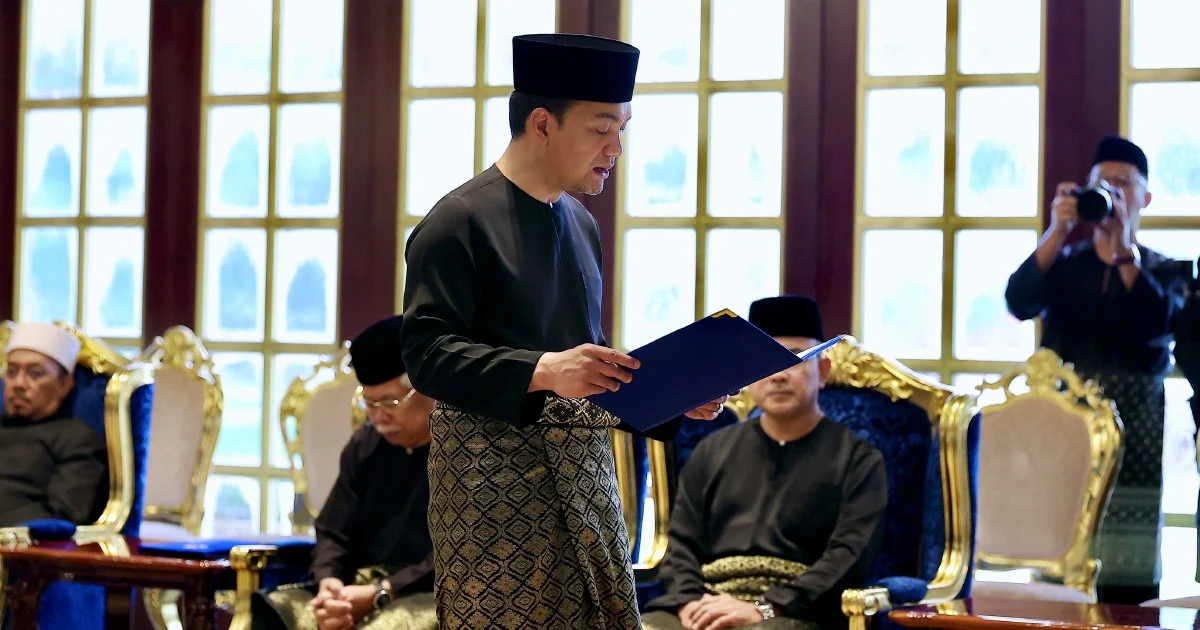
The leadership transition in Johor has crystallised with Deputy Prime Minister Datuk Seri Dr Ahmad Zahid Hamidi publicly endorsing Datuk Onn Hafiz Ghazi's confirmation as menteri besar, marking a significant moment in the state's political timeline as it consolidates executive continuity following recent elections.
Zahid's congratulatory gesture carries considerable symbolic weight within Malaysia's federal structure, representing not merely an administrative formality but a formal acknowledgment from the highest echelons of the national government that Onn Hafiz commands sufficient political legitimacy to steer the country's second-largest state by population. The endorsement arrives at a juncture when regional stability becomes increasingly important for implementing nationwide economic policies and developmental initiatives.
Onn Hafiz's return to the menteri besar position after electoral confirmation reflects the resilience of his political coalition in Johor, a state that has historically served as a barometer for broader trends across peninsular Malaysia. The reappointment suggests that despite the competitive dynamics characterising recent national elections, his administration has retained sufficient legislative support to maintain its mandate without confronting the fractious coalition negotiations that have complicated governance in other states.
For the business community and investors tracking political developments, this continuity provides measurable reassurance. State-level governance consistency, particularly in major economic hubs, encourages infrastructure planning and foreign direct investment decisions that typically require multi-year horizons. Johor's port facilities, manufacturing corridors, and proximity to Singapore make sustained administrative coherence exceptionally valuable for the region's development trajectory.
The timing of Zahid's public statement also underscores the Barisan Nasional coalition's commitment to stabilising its position in states where it maintains governing control. By immediately reinforcing Onn Hafiz's legitimacy at the federal level, the government signals to both party members and potential coalition partners that leadership transitions will proceed through orderly channels rather than descending into protracted factional disputes that could destabilise parliamentary arithmetic at the national level.
Onn Hafiz's tenure encompasses periods of considerable economic challenge for the state, from managing the disruptions of the pandemic to navigating fluctuations in regional trade patterns. His reappointment suggests that electors and legislators alike have assessed his administration's response to these pressures favourably enough to grant him renewed authority. The reappointment therefore represents not simply a continuation but a ratification of his policy direction and administrative approach.
From the perspective of Southeast Asian regional dynamics, maintaining stable governance in Malaysia's key states assumes broader significance as the region navigates geopolitical tensions and economic uncertainties. Johor's geographical position, straddling some of the world's busiest shipping lanes and maintaining intimate economic integration with Singapore, means that governance disruptions carry implications extending far beyond state boundaries into the calculus of trade, security, and diplomatic relations across the Strait of Malacca.
The federal government's visible backing also provides Onn Hafiz with enhanced negotiating capacity when engaging with federal agencies on resource allocation, infrastructure funding, and policy implementation. States where the menteri besar enjoys explicit support from the Prime Minister's office typically secure more advantageous outcomes in inter-governmental disputes over revenue-sharing and development projects, a dynamic that becomes particularly consequential in a state of Johor's economic significance.
Looking forward, the stability conveyed through this reappointment affords Onn Hafiz the political space to pursue longer-term developmental strategies without constant distraction from succession politics or factional maneuvering within his own government. This breathing room becomes essential for addressing chronic issues in state administration, from improving educational outcomes to enhancing municipal service delivery in rapidly urbanising centres like Johor Bahru.
The episode also illustrates how Malaysia's constitutional framework distributes governance responsibilities between federal and state levels, with deputy prime ministerial endorsements carrying weight as signals of coalition cohesion rather than direct instruments of control. This delicate balance between national coordination and state autonomy characterises Malaysian federalism, and clear signals of federal backing help reinforce the system's stability without compromising the constitutional independence of elected state administrations.
For observers monitoring Malaysian politics more broadly, Zahid's statement represents routine confirmation of expected outcomes, suggesting that notwithstanding electoral volatility at the national level, the fundamental structure of coalition governance and state-federal relations remains intact. The absence of surprising twists or controversial conditions attached to the reappointment reinforces perceptions that political institutions continue functioning according to established conventions, an important reassurance for both domestic and international stakeholders.

