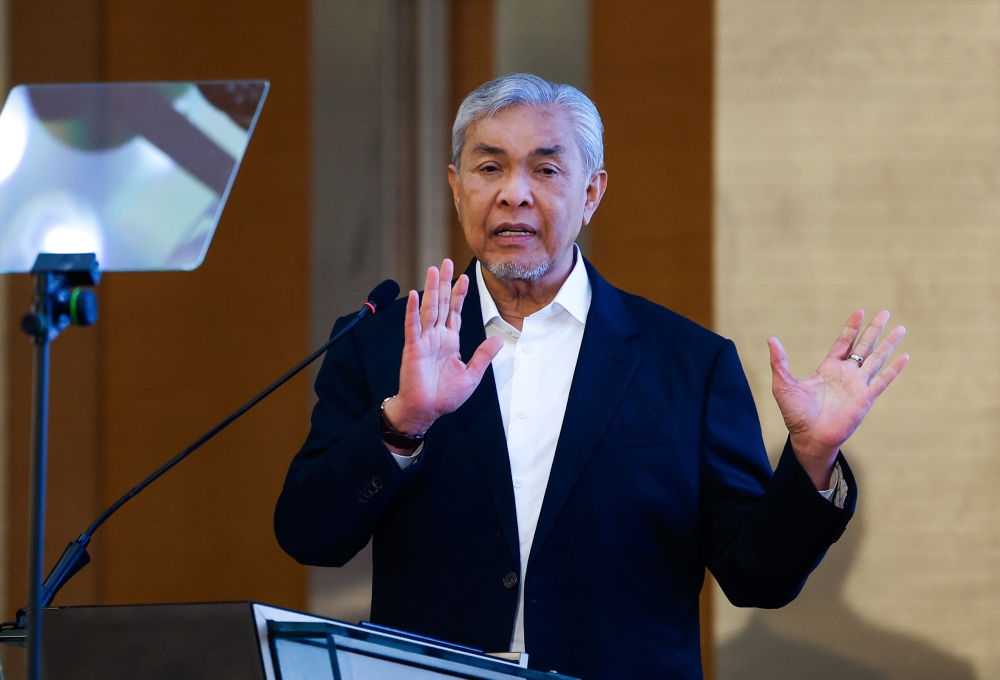
Deputy Prime Minister Zahid Hamidah has thrown his weight behind extending the scope of the Royal Commission of Inquiry investigating Tabung Haji beyond the conventional examination period, arguing that officials examining the pilgrimage fund's troubles should also assess how rehabilitation efforts have unfolded. Speaking in Seremban on July 30, Zahid contended that a comprehensive inquiry cannot restrict itself solely to the circumstances surrounding the fund's initial difficulties but must evaluate the subsequent recovery trajectory to provide a complete picture of institutional reform.
The Cabinet's proposition to expand the RCI's mandate reflects growing recognition within government circles that understanding what went wrong at Tabung Haji requires equally rigorous scrutiny of corrective measures undertaken afterward. This dual-lens approach signals an important shift in how Malaysia's leadership conceptualises institutional accountability, particularly for bodies managing resources entrusted by the Islamic pilgrimage community. By insisting the investigation should capture both the crisis period and its aftermath, Zahid underscores the importance of validating whether remedial steps have genuinely addressed systemic vulnerabilities or merely applied superficial fixes.
Tabung Haji's financial predicament has cast a lengthy shadow over Malaysia's management of hajj savings, with contributors and policymakers alike scrutinising how the fund deteriorated to a point requiring government intervention. The proposed RCI represents an opportunity to establish a definitive record of causation, accountability, and institutional failings. However, Zahid's advocacy for including the recovery phase suggests officials recognise that identifying problems means little without understanding whether subsequent administration has genuinely transformed the fund's operational culture and governance frameworks.
The scope of inquiry into large public institutions typically concludes once investigators establish facts surrounding a crisis. Yet expanding the timeframe to encompass recovery efforts introduces complexity that could either strengthen the RCI's utility or potentially obscure findings under the weight of examining too broad a period. For Malaysian readers and regional observers monitoring the fund's rehabilitation, this expansion could determine whether the commission becomes merely a historical accounting or a mechanism validating institutional renewal.
Tabung Haji's situation resonates across Southeast Asia, where several nations operate similar pilgrimage funds managing substantial savings from Muslim citizens. Malaysia's handling of this inquiry—and whether recovery efforts receive scrutiny—will influence perceptions of governance transparency in the region. Other countries facing analogous challenges may look to how Malaysia structures its investigation to gauge best practices for examining institutional crises and their remediation.
The proposal reflects broader conversations within Malaysia's government about accountability mechanisms and public confidence in state institutions. By incorporating the recovery phase, officials implicitly acknowledge that competence extends beyond crisis diagnosis to include proven capacity for institutional healing. This perspective aligns with contemporary governance thinking that emphasises continuous improvement and measurable outcomes rather than simply explaining historical failures.
Zahid's position gains additional weight given his portfolio encompassing security and internal administration, suggesting the Cabinet discussion involved deliberation at senior levels. His public advocacy indicates confidence that expanding the RCI's mandate would not undermine findings or delay conclusions but instead provide necessary context for understanding the fund's transformation. This confidence may reflect preliminary assessments suggesting recovery efforts have proceeded responsibly, warranting inclusion in the official record.
The inclusion of recovery assessment introduces practical questions about which officials, policies, and structural changes the RCI would examine. Investigators would need to evaluate whether those undertaking rehabilitation possessed sufficient independence, expertise, and resources to implement meaningful reform. They would assess whether new governance structures addressed vulnerabilities identified in earlier crises or whether superficial adjustments merely disguised persistent problems.
For Tabung Haji contributors—predominantly middle-income Malaysian Muslims saving methodically for the hajj pilgrimage—the expanded inquiry scope carries direct relevance. Understanding not only how their savings were compromised but also whether institutional transformation has genuinely protected subsequent deposits offers reassurance or raises continued concern. This constituency, whose trust and continued participation remain essential for the fund's viability, has legitimate interest in comprehensive investigation rather than incomplete accounting.
The timing of Zahid's proposal, articulated during mid-2024, suggests the Cabinet recognised that standard RCI procedures might miss crucial context about institutional capacity for genuine renewal. As the fund continues operating under enhanced supervision and new management frameworks, parallel investigation of these changes could either validate reform efforts or expose whether fundamental problems persist beneath administrative reshuffling.
Expanding the RCI's investigative lens represents a decision with implications extending beyond Tabung Haji. It signals Malaysian government thinking about institutional accountability, suggesting officials increasingly view comprehensive inquiry as encompassing both diagnostic and evaluative dimensions. Rather than investigating only what fractured, this expanded approach examines whether remediation has succeeded, setting potential precedents for future inquiries into public sector failures across diverse agencies and sectors.

