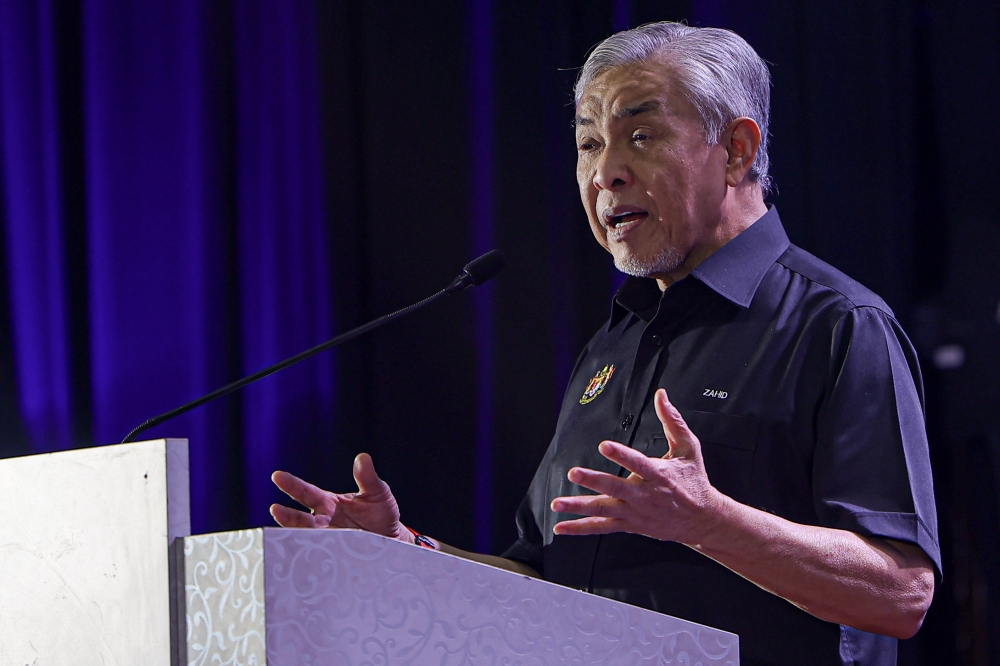
Deputy Prime Minister Datuk Seri Ahmad Zahid Hamidi has raised fresh concerns about the conduct of government ministries during recent state elections, claiming that civil servants faced pressure to participate in events organised by Barisan Nasional-linked organisations. Speaking in Putrajaya on August 6, Zahid suggested that such conduct undermines the principle of institutional neutrality that should govern the public service during electoral periods.
The allegation points to a broader tension in Malaysian politics regarding the appropriate boundaries between the civil service and political campaigns. Zahid's comments reflect growing scrutiny of how government resources and personnel may be mobilised during electoral contests, a practice that election observers and governance advocates have long flagged as a potential breach of fair electoral standards. The issue carries particular weight given Malaysia's constitutional framework, which emphasises the apolitical character of the public administration.
While Zahid did not specify which ministries were involved or provide detailed evidence of the alleged pressure, his public airing of the complaint suggests significant institutional friction had emerged. The claim gains context from Malaysia's history of debates over government machinery being deployed to support ruling coalition activities, a practice that opposition parties have repeatedly criticised as providing unfair electoral advantages. State elections provide a particularly sensitive testing ground for such disputes, as they often feature competitive races where institutional resources can materially affect outcomes.
The timing of Zahid's statement during an active electoral period underscores the political sensitivity surrounding civil service conduct. Government officers are ostensibly bound by codes of conduct that prohibit partisan activity and require them to serve all citizens impartially. However, enforcement of these standards has historically proven inconsistent, and allegations of pressure—whether explicit directives or implicit expectations—are difficult to document and prosecute. Zahid's willingness to publicly acknowledge such allegations suggests either genuine institutional concern or a strategic political move to distance the government from controversial practices.
For Malaysian voters and civil society observers, the deputy prime minister's remarks highlight ongoing questions about electoral integrity and the independence of public institutions. The state elections in question represent critical moments for both the ruling coalition and opposition parties to demonstrate their respective governing philosophies and policy priorities. When doubts emerge about the impartial operation of government machinery during such contests, public confidence in both the electoral process and the civil service itself may be eroded.
The allegation also carries implications for civil servants themselves, many of whom occupy positions requiring political sensitivity but demanding professional neutrality. Officers caught between institutional pressures and their professional obligations face genuine dilemmas, and without clear protective frameworks or robust oversight mechanisms, they remain vulnerable to both explicit coercion and more subtle forms of organisational pressure. Zahid's public acknowledgment of this problem, at least rhetorically, may provide some validation to officials who have experienced discomfort during electoral periods.
Regionally, Malaysia's approach to managing civil service neutrality during elections remains a reference point for other democracies in Southeast Asia. The country's experience demonstrates that formal institutional structures alone cannot guarantee impartial conduct if political leadership fails to enforce standards consistently or if organisational cultures tacitly condone partisan activity. Zahid's statement, whether intended as criticism of subordinate agencies or as a strategic political manoeuvre, contributes to an ongoing national conversation about institutional accountability.
The broader governance challenge illustrated by these allegations extends beyond the immediate electoral context. Government ministries oversee vast resources, employ hundreds of thousands of people, and maintain extensive networks reaching into communities across Malaysia. When these institutional capacities become entangled with partisan political activities, the distinction between state and party blurs, creating systemic vulnerabilities that can accumulate over time. Addressing such problems requires not only rhetorical acknowledgment from senior leaders but also concrete institutional reforms and credible enforcement mechanisms.
Moving forward, the specific allegations made by Zahid merit detailed investigation and public reporting. Citizens and observers should seek clarity regarding which ministries were involved, what forms of pressure officers experienced, what remedial actions have been taken, and what preventive measures are being implemented to avoid recurrence. Without such transparency and follow-through, public statements about civil service pressure risk becoming mere political theatre rather than genuine institutional reform.

