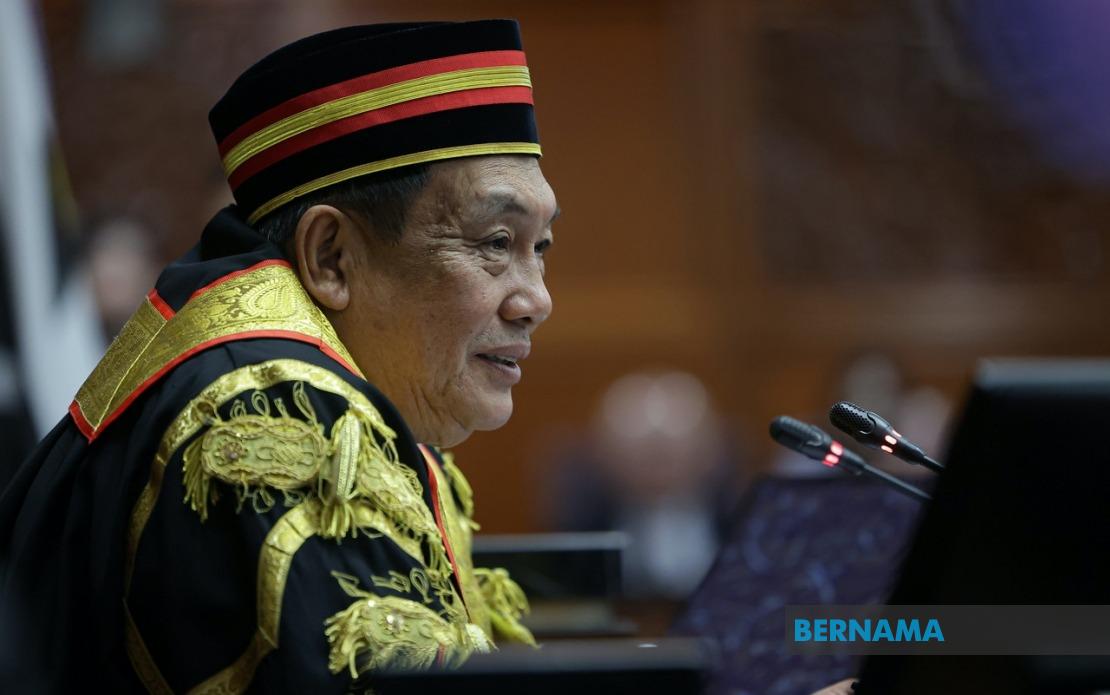
Dewan Negara President Datuk Awang Bemee Awang Ali Basah has characterised Malaysia's Youth Parliament (PBMy) as an indispensable institution for cultivating young citizens grounded in democratic principles, equipped to think independently and articulate their perspectives with integrity. Speaking at a parliamentary engagement programme at Universiti Malaysia Terengganu on August 27, Awang Bemee framed the Youth Parliament not merely as a tokenistic exercise in youth engagement, but as a foundational mechanism for instilling the attitudes and competencies essential to democratic governance. The initiative represents Parliament Malaysia's deliberate effort to narrow the distance between higher education and the legislative branch, creating pathways for students to directly influence national discourse.
The Senate President expanded on this characterisation by invoking the metaphor of a "school of democracy", arguing that the Youth Parliament furnishes participants with tangible exposure to the mechanics of democratic decision-making—including the articulation of positions, structured debate, receptiveness to opposing viewpoints, and ultimately, acceptance of collective determinations. Beyond procedural learning, Awang Bemee emphasised that engagement within this framework instils a critical understanding that every stance adopted carries attendant accountability. He contended that authentic leadership transcends the ability to command attention; it demands the capacity to absorb others' concerns, to diagnose underlying problems, and to engineer workable solutions. This philosophical grounding distinguishes leadership from mere position-holding, anchoring it instead in service and stewardship.
Within Malaysia's institutional architecture, Awang Bemee delineated a complementary division of labour between Parliament and the Youth Parliament. While Parliament functions as the primary locus of legislative decision-making, the Youth Parliament channels perspectives from younger demographics, thereby enriching the empirical foundation upon which democratic processes operate. This duality reflects recognition that younger citizens possess distinct vantage points on emerging challenges, and their inclusion strengthens the legitimacy and comprehensiveness of democratic deliberation. By positioning young people as essential contributors rather than passive observers, the framework aims to cultivate a generation invested in the nation's trajectory and capable of steering it through forthcoming complexities.
Awang Bemee articulated a tripartite framework for empowering Malaysian youth, beginning with the cultivation of inclusive, transparent democratic spaces. He argued that robust nations establish mechanisms enabling their constituents—particularly the young—to articulate concerns, access platforms for amplification, and experience their contributions valued through institutionalised openness and respect for ideological plurality. In the Malaysian context, where racial, religious and cultural diversity characterises the population, Awang Bemee proposed that this heterogeneity be reconceived as an asset rather than a liability. Strategic investment in mutual comprehension and reciprocal regard across communal lines can transform demographic diversity into a foundation for social cohesion and shared problem-solving.
The second pillar of Awang Bemee's framework redirects educational emphasis beyond conventional metrics of academic achievement. He advocated for deliberate cultivation of higher-order cognitive capacities—particularly critical analysis—alongside technological literacy encompassing digital competency and artificial intelligence literacy. The argument reflects concern that technological acceleration outpaces normative frameworks guiding responsible deployment. Accordingly, educators must simultaneously develop technical capability and ethical reasoning, ensuring young Malaysians harness technological tools for constructive rather than corrosive purposes. Additionally, Awang Bemee highlighted economic dimensions, directing attention toward emerging sectoral opportunities including the Blue Economy—spanning aquaculture, maritime tourism, offshore renewable energy infrastructure, and advanced shipping logistics—whilst safeguarding marine ecosystems and coastal development patterns.
The third pillar addresses the relationship between liberty and obligation within democratic societies. Awang Bemee acknowledged that democratic systems guarantee freedom of expression and conscience, yet cautioned against conflating liberty with licence. He articulated a vision wherein these freedoms operate within bounds established by responsibility, particularly regarding technology and digital communication platforms. Drawing an explicit distinction between legitimate speech and defamatory or fabricated utterances, he urged young citizens toward epistemic prudence: verification before dissemination, scrutiny before acceptance, comprehension before judgment, and consequence-consideration before action. This formulation navigates the tension between protecting expressive liberty and constraining its weaponisation for manipulation or harm.
The UMT engagement constituted part of a broader parliamentary roadshow strategically designed to deepen youth involvement in democratic institutions and bridge perceived distance between university campuses and legislative corridors. A centerpiece forum titled "Malaysian Youth: Drivers or Spectators?" featured Parliament Malaysia's chief administrator Datuk Dr Ahmad Husaini Abdul Rahman, offering students unmediated access to parliamentary leadership. Such direct engagement mechanisms attempt to demystify legislative processes and demonstrate institutional responsiveness to emerging generations' concerns. The programme simultaneously aims to cultivate leadership grounded in ethical principles whilst developing a cohort characterised by political awareness, accountability and readiness for substantive involvement in national governance and societal direction-setting.
For Malaysian observers, this initiative reflects evolving recognition that democratic sustainability depends upon continuous renewal through youth participation. The emphasis on critical thinking and responsible freedom particularly resonates given contemporary challenges surrounding digital misinformation and social polarisation. By positioning democratic participation as developmental rather than purely consultative, Parliament Malaysia signals commitment to treating young citizens as genuine stakeholders in collective governance rather than demographic constituents to be managed. The framework also acknowledges that technological capability without corresponding ethical grounding creates vulnerabilities; the integration of AI literacy with values-centred education attempts to address this lacuna. Furthermore, the inclusion of Blue Economy exposure reflects strategic awareness that younger generations will confront resource constraints and environmental pressures diverging from their predecessors' experience, necessitating economic imagination and conservation consciousness.
The Senate President's articulation of these pillars carries implicit significance for regional contexts similarly navigating democratisation, technological change, and generational transition. As Southeast Asian societies grapple with maintaining institutional legitimacy amid rapid transformation, Malaysia's deliberate investment in structured youth democratic engagement offers a model emphasising institutional accessibility and developmental framing. The approach acknowledges that young citizens' alienation from democratic processes represents both a governance failure and a sovereignty vulnerability; conversely, their meaningful incorporation strengthens institutional resilience and reduces susceptibility to populist or authoritarian appeals. Awang Bemee's framing of the Youth Parliament as foundational to democratic culture rather than peripheral outreach reflects this understanding.
Ultimately, the Senate President's vision positions Malaysian youth as potential architects of national unity and problem-resolution, capable of bridging communal divides through demonstrated commitment to inclusive democratic values. This characterisation transforms youth participation from a rhetorical gesture into a structural imperative, embedding generational renewal within democracy's operational framework. As Malaysia confronts challenges spanning technological disruption, environmental sustainability, and social cohesion, the cultivation of young leaders steeped in critical analysis, technological prudence, and civic responsibility represents not merely institutional maintenance but essential national investment.

