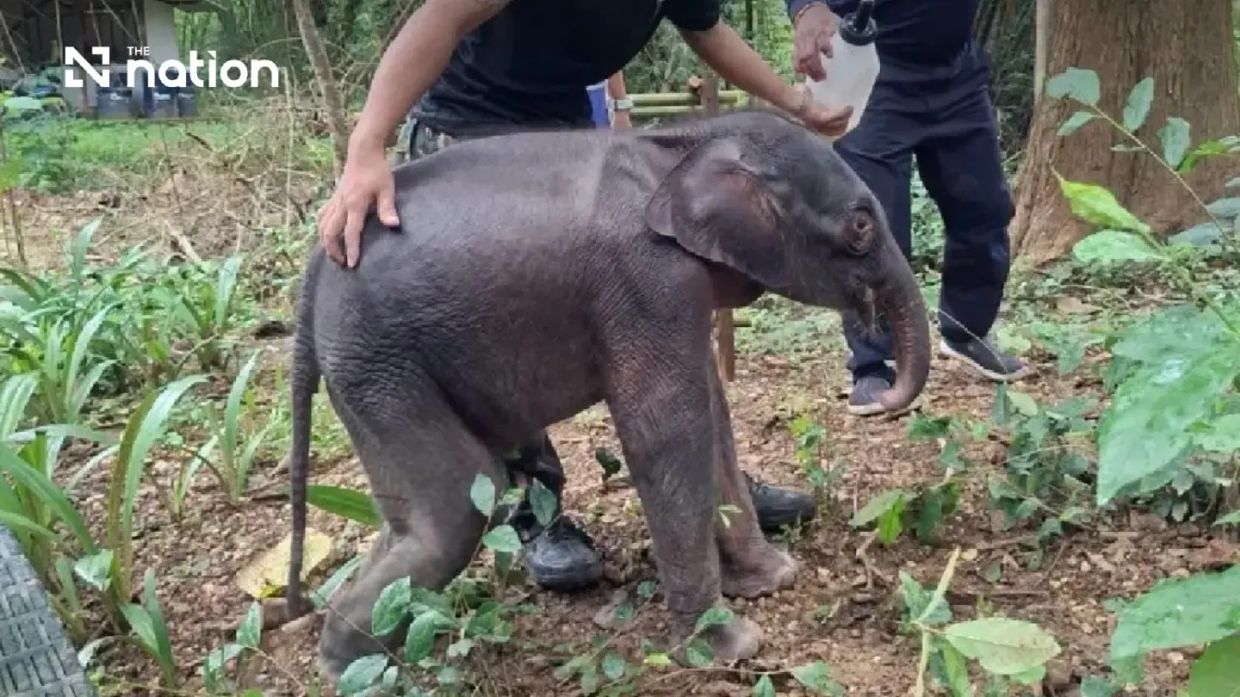
A severely weakened newborn wild elephant calf discovered alone on a riverbank in Sai Yok district, Kanchanaburi, has been moved to intensive care as veterinary teams work to stabilise the animal's life-threatening condition. Park rangers located the distressed male calf on the banks of Huai Mae Nam Noi after residents alerted authorities, with evidence suggesting the youngster had been stranded for approximately two days following separation from its family group.
The rescue operation presented formidable challenges for national park officers who needed to navigate treacherous terrain and hazardous river conditions exacerbated by heavy rainfall. Access to the remote location required a boat journey lasting one to two hours through difficult territory, with continuous downpours raising water levels and creating dangerous currents. Despite these obstacles, personnel from Sai Yok National Park Protection Unit No. 5 and veterinarians from Protected Areas Regional Office 3 reached the site and determined that immediate intervention was essential to save the animal's life.
Veterinary assessment revealed a dire medical picture for the approximately 40-kilogramme calf, estimated to be no more than two weeks old. The youngster presented with severe dehydration, a constellation of traumatic injuries, and signs of serious infection or systemic illness. Multiple lesions marked the elephant's body, including painful ulcerations in its mouth measuring approximately the size of a Thai 10-baht coin, a contaminated wound at the navel, and blistered areas with dead tissue across its trunk. The calf's refusal to consume adequate milk reflected the agony caused by oral wounds, further compromising its nutritional intake during this critical developmental period.
The calf's physical deterioration extended beyond visible injuries. Laboratory indicators suggested serious underlying complications, with dark yellowish-red urine pointing to potential infection or severe dehydration, whilst loose stools with a distinctive sour odour indicated gastrointestinal distress. Bee-like insects had established colonies around the elephant's eye region, causing conjunctivitis that threatened vision. These compounding health challenges classified the calf as critical and demanded specialist veterinary supervision unavailable in field conditions.
Theories about how the calf became separated from its herd centre on the theory that heavy rainfall swelling water levels may have swept the youngster downstream after its family attempted to cross the river. The surrounding topography severely restricted the calf's movement, offering only approximately 1.5 metres of usable space between steep terrain and the river itself, potentially trapping the animal as currents intensified. The calf's repeated calls throughout the night went unanswered, suggesting the herd had travelled considerable distance away or remained unable to locate their separated offspring.
Minister of Natural Resources and Environment Suchart Chomklin expressed deep concern about the calf's plight on Saturday, August 1, 2026, whilst commending the extraordinary efforts of rescue personnel who worked through dangerous weather and powerful river currents. The minister directed the Department of National Parks, Wildlife and Plant Conservation to mobilise specialist veterinary teams and maintain continuous oversight of treatment protocols. This high-level political engagement underscores Thailand's commitment to wildlife conservation and public concern regarding the survival prospects of wild elephant populations in Southeast Asia.
The transportation of the calf to Sai Yok National Park headquarters permitted establishment of controlled treatment conditions impossible to maintain on the riverbank. Intensive veterinary care now includes comprehensive disease screening protocols, particularly testing for elephant endotheliotropic herpesvirus (EEHV), a pathogen that frequently afflicts young elephants and carries significant mortality risk. Managing the calf's fluid and electrolyte balance represents an immediate priority given the severe dehydration noted during initial assessment, whilst addressing the painful mouth ulcerations that impede normal feeding and communication behaviours critical for a newborn's survival.
This incident highlights the escalating challenges wild elephants face across Southeast Asia as habitat fragmentation, climate change-induced weather volatility, and river infrastructure development complicate migration patterns and family group cohesion. Young calves depend entirely on maternal care and herd protection during their first years of life, and separation from family groups virtually guarantees death in natural circumstances. The rescue represents humanity's attempt to compensate for environmental pressures that disrupt ancient elephant social and migration systems, though outcomes for hand-reared elephants separated from their wild families remain uncertain.
The broader context for this rescue extends beyond Kanchanaburi's borders, resonating across Southeast Asia where Thailand maintains significant wild elephant populations alongside rapid economic development. Regional readers should understand that such incidents increasingly characterise human-wildlife interface zones where Asian elephants inhabit protected areas surrounded by agricultural development and human settlements. The calf's survival would constitute a conservation success story, though questions persist regarding ultimate outcomes for orphaned elephants raised in captivity or under intensive human supervision rather than within their natural family structures and herds.
As veterinary teams implement treatment protocols and monitor the calf's progress, the case exemplifies both the dedication of conservation professionals and the fragility of wild elephant survival in contemporary Southeast Asia. The youngster's recovery remains far from assured despite intensive care, with the psychological trauma of maternal separation compounding physical health challenges. Regional conservation authorities and wildlife managers will be closely monitoring this rescue's outcome, as it carries implications for protocols governing elephant rescue operations and rehabilitation strategies throughout Thailand and neighbouring countries where similar incidents occur with troubling frequency.

