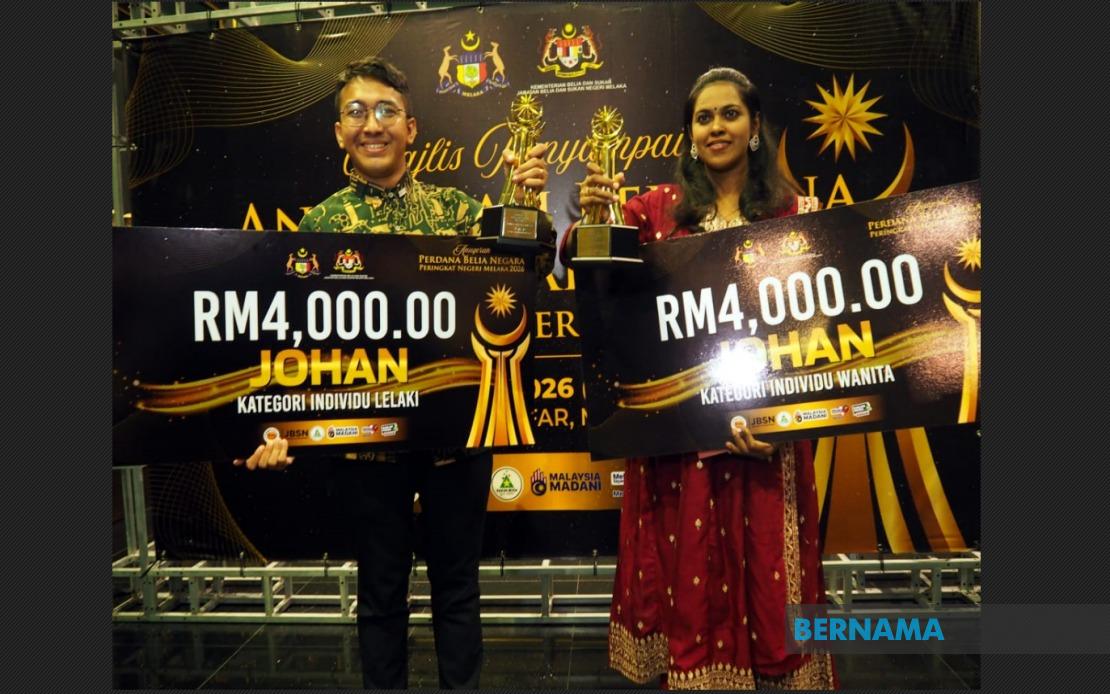
Harris Daniel Hermee, a 28-year-old syariah lawyer, has claimed the top male honour at the 2026 Melaka State-level National Youth Awards, recognising his sustained commitment to developing young people across his home state. The accolade marks a significant personal achievement for the Universiti Sultan Zainal Abidin graduate, who has channelled his legal expertise and passion into grassroots youth initiatives since returning to Melaka following his studies in Islamic law.
Speaking at the presentation ceremony in Ayer Keroh, overseen by Melaka Chief Minister Datuk Seri Ab Rauf Yusoh, Hermee reflected on the milestone as validation of his community-focused work. He attributed part of his drive to improvement through a third-place finish in the previous year's competition, which he described as motivational rather than discouraging. His participation has expanded beyond local district efforts to encompass state, national, and international platforms, demonstrating the widening scope of his influence within youth development networks.
Hermee's entry point into organised youth work came through Gerakan Belia 4B Hang Tuah Jaya, where he developed programming centred on empowerment, athletics, and volunteer engagement. His collaborative approach with government bodies and youth-focused organisations has created measurable pathways for young people to participate in structured development activities. Beyond these roles, he serves as the Youth State Assembly Member representing Pengkalan Batu, a position that extends his advocacy into formal governance channels and provides institutional weight to youth-centred policy discussions.
The recognition of Hermee's work underscores a broader trend across Malaysia whereby young professionals in specialised fields—in this case, syariah law—are increasingly channelling their expertise toward community benefit. For a lawyer in his twenties to garner state-level recognition reflects both personal initiative and systemic openness to youth participation in professional circles typically dominated by older practitioners. This shift carries implications for how legal expertise flows into grassroots communities, particularly in matters touching Islamic law and governance.
On the female side, SS Mayuri, a 30-year-old primary school educator from Alor Gajah, received the top award in her category. Her accolade highlights the critical role that teachers play in youth development beyond classroom instruction. Mayuri's engagement through the Melaka and Malaysia Tamil Youth Club Council demonstrates how educators can leverage community platforms to amplify their impact on emerging generations. Her focus on preparing secondary school students for the Sijil Pelajaran Malaysia examination through mentorship and motivational programming addresses a genuine gap in transitional support for adolescents navigating critical educational milestones.
Mayuri's portfolio extends to community mobilisation through blood donation initiatives, showing integration of youth empowerment with practical civic participation. This approach normalises young people's involvement in healthcare and public welfare concerns, building habits of social responsibility early. For Tamil-speaking communities in Melaka, her work through the youth council provides culturally anchored spaces where language preservation and contemporary development priorities can coexist.
The award ceremony, attended by state Youth, Sports and NGO Committee chairman Datuk VP Shanmugam, reflects official state commitment to identifying and celebrating exemplary youth development practitioners. By formally honouring individuals working across different professional fields—law and education—the recognition programme signals that youth empowerment transcends sectoral boundaries. Both winners represent entry-level career practitioners whose energy and idealism remain intact, positioning them to influence peer cohorts and establish mentorship patterns for those following similar paths.
For Malaysian readers, the awards carry instructive value about career trajectories available to young professionals seeking purpose beyond personal advancement. Both Hermee and Mayuri have structured their professional lives to intersect with community need, demonstrating that meaningful work and formal recognition need not be mutually exclusive. Their prominence in state-level awards ceremonies may inspire peer-aged professionals to consider similar integration of community service into their primary vocations.
The emphasis on volunteerism and organised youth group participation in both winners' biographies reflects systemic priorities within Malaysia's youth policy framework. Government recognition of civil society engagement through formal awards reinforces the importance of non-governmental spaces where young people organise, learn leadership, and practice civic skills. Hermee's pathway through Gerakan Belia and Mayuri's through the Tamil Youth Club Council illustrate how structured youth organisations remain vital infrastructure for capability building.
Looking forward, the visibility of these award recipients may influence youth policy conversations in Melaka and neighbouring states. Recognition of syariah law expertise applied to youth contexts could prompt similar initiatives elsewhere, particularly in states with large Muslim-majority populations seeking culturally rooted development approaches. Similarly, Mayuri's success in community mobilisation through educational pathways may encourage other state governments to formalize mentorship programmes linking teachers directly to youth development frameworks.
The awards also underscore emerging patterns of youth agency within Malaysia's professional landscape. Both recipients have moved beyond passive membership in youth organisations to active leadership roles shaping programming and strategy. This transition from participation to leadership, recognised through formal state honours, validates the maturation of youth cohorts willing to invest time in peer development. As Malaysia grapples with questions about youth unemployment and social integration, models like those represented by Hermee and Mayuri demonstrate how structured opportunities and institutional recognition can channel youthful energy productively.

