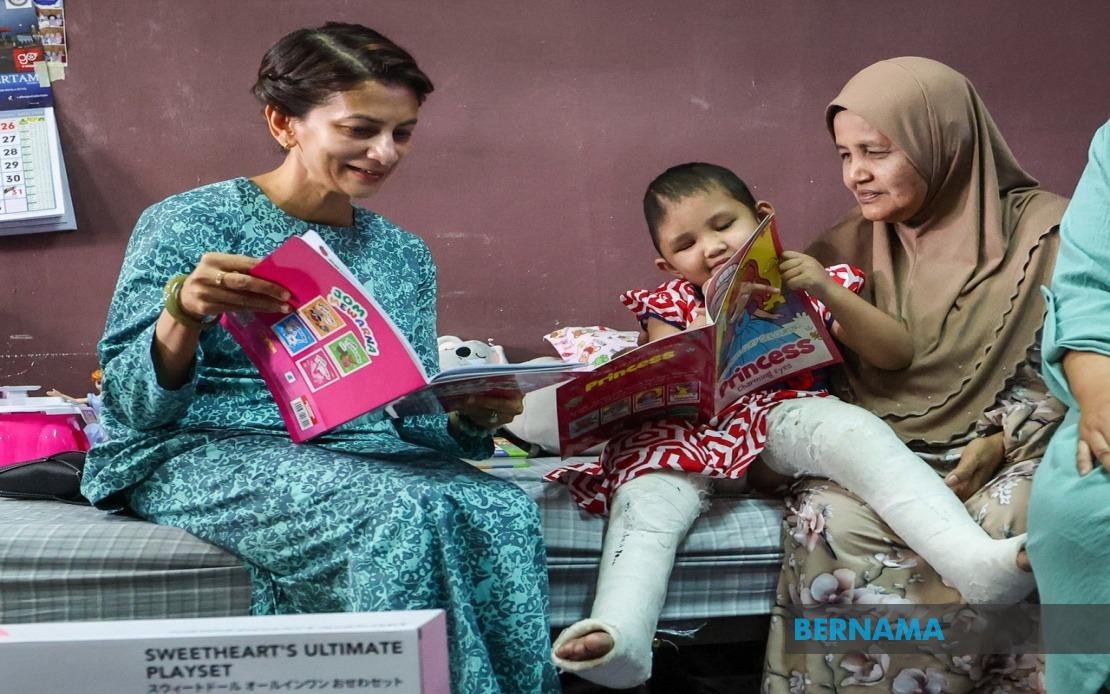
In a poignant display of resilience, three-year-old Aulia Sofia Ahmad Shafiq continues her recovery from a catastrophic road accident that claimed the lives of six relatives in Sungai Petani last month. Now in the care of her paternal aunt in Bertam, the young girl has defied medical expectations with her rapid improvement since her discharge from Sultanah Bahiyah Hospital in Alor Setar on July 2, following nearly a month of intensive treatment.
The child's journey towards recovery represents one of the few glimmers of hope emerging from the tragedy that unfolded on June 7, when a newly purchased Proton X50 sport utility vehicle collided with a lorry while travelling from Penang to Merbok. The impact proved catastrophic for the family aboard, resulting in the deaths of Aulia Sofia's parents Ahmad Shafiq Ahmad Shukri, 27, and Jamaliah Sannusi, 29, along with her two-month-old brother Ahmad Mikail, grandmother Nora Mhd Husin, 55, uncle Ahmad Fahim Ahmad Shukri, 27, and cousin Iskandar Affan Ibrahim, seven.
According to Siti Nor Atikah Ahmad Syukri, 32, Aulia Sofia's aunt who has assumed her primary care, the child's survival was nothing short of miraculous given the severity of injuries sustained. Medical staff had initially assessed survival prospects as extremely limited, yet the young patient has demonstrated a remarkable will to recover. Her aunt describes her as increasingly active and spirited, displaying the vitality characteristic of healthy children her age, though significant physical challenges remain on her path to complete recovery.
The most visible impediment to normal childhood activities is Aulia Sofia's inability to walk, a consequence of bilateral leg fractures sustained in the crash. Siti Nor Atikah explained that the child maintains a scheduled follow-up appointment with an orthopaedic specialist set for July 26, signalling ongoing medical monitoring and rehabilitation efforts aimed at restoring mobility. The trajectory of her physical therapy will likely determine the timeframe for her return to typical play and movement patterns that three-year-olds would normally experience.
Beyond the fractures, Aulia Sofia sustained severe injuries to her head and left eye, including rupture of the eyeball itself. Surgeons successfully intervened to preserve the anatomical structure of the eye, yet uncertainty shrouds her visual prognosis. Medical teams have indicated that recovery of sight is possible, though the extent remains indeterminate pending further ophthalmological assessments. The eye injury adds profound complexity to her recovery journey, as vision impairment would substantially alter her developmental trajectory and future quality of life.
The timing of Aulia Sofia's awakening from unconsciousness, occurring approximately two weeks following the accident, coincided with the emotionally fraught necessity of informing the child of her parents' deaths. The psychological impact of such tragic knowledge upon a three-year-old represents a dimension of trauma that extends far beyond her physical injuries. Siti Nor Atikah has become not merely a caregiver but a guardian responsible for navigating the complex emotional terrain of grief and loss with an extraordinarily young child.
Recognition of the family's extraordinary circumstances reached the state's highest levels when the Raja Muda of Kedah, Tengku Sarafudin Badlishah ibni Al Aminul Karim Sultan Sallehuddin, visited alongside the Raja Puan Muda of Kedah, Che Puan Muda Zaheeda Mohamad Ariff, and their daughter, Tunku Zara Bahiyah. The royal delegation's visit conveyed more than ceremonial acknowledgment; it represented tangible commitment to supporting the child's future. The visitors presented essential aid to assist those caring for Aulia Sofia and established a National Education Savings Scheme account to secure funds for her future educational pursuits.
The establishment of the SSPN account carries particular significance, as it signals a forward-looking perspective on Aulia Sofia's long-term wellbeing despite her current medical challenges. Education funding provision reflects confidence in her survival and recovery prospects, offering a symbolic anchor to normalcy and opportunity amidst tragedy. Such initiatives demonstrate how institutional structures can provide practical support to vulnerable children rebuilding lives after catastrophic family loss.
Siti Nor Atikah's husband, Ibrahim Ghazali, 39, a lorry driver, has committed to raising Aulia Sofia as his own daughter, with the family currently navigating legal guardianship procedures to formalize this arrangement. The familial integration appears organic, as the child shares existing bonds of affection with her cousins through prior family proximity. Ibrahim noted that Aulia Sofia has adapted well to her new domestic environment, finding comfort in the companionship of young relatives who remain her constant companions.
The tragedy itself extracts an additional layer of sorrow within Siti Nor Atikah's immediate family, as her own seven-year-old son, Iskandar Affan Ibrahim, perished in the same collision. This circumstance transforms Siti Nor Atikah's role caring for Aulia Sofia into something transcending ordinary guardianship. In accepting responsibility for her niece, she navigates her own profound grief while simultaneously providing maternal care to another child scarred by identical trauma. Such resilience within the extended family structure demonstrates how Malaysian families frequently absorb and support one another through catastrophe.
The road accident that devastated this Kedah family reflects broader patterns of vehicular trauma affecting Malaysian society. The circumstances—a family journey between towns in a newly acquired vehicle meeting collision with commercial transport—represent scenarios that repeat with tragic frequency across Malaysian highways. The case of Aulia Sofia underscores both the devastating human costs of such incidents and the remarkable capacity for survival and recovery that occasionally emerges from such devastation.
Looking forward, Aulia Sofia's recovery will unfold across multiple dimensions: the gradual restoration of physical mobility through physiotherapy, the clarification of her visual capacity through continued medical evaluation, and the profound psychological processing of loss and trauma that will shape her emotional development. Her resilience thus far suggests that support from loving family members, medical professionals, and recognition from community leadership may collectively facilitate her path toward as full a recovery as circumstances permit. The young child's journey embodies both the fragility of human life and the strength found in familial bonds.

