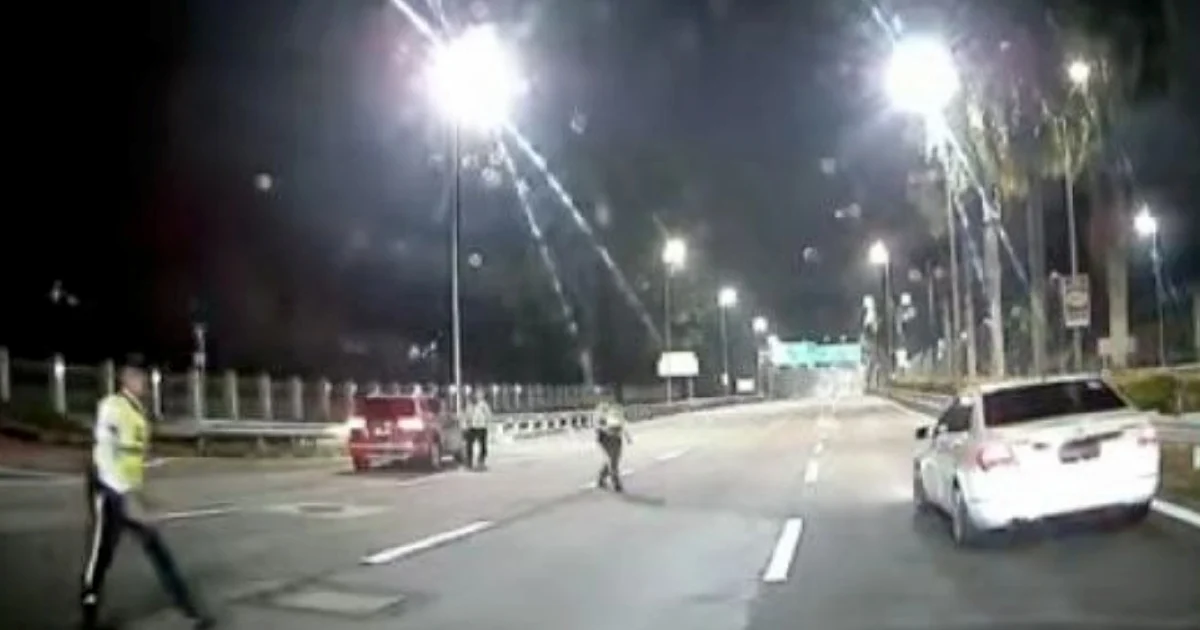
Authorities in Kuala Lumpur have taken a 20-year-old man into custody following a dramatic incident in which he crashed his white Mercedes through a police roadblock and subsequently sped away along the Sprint Expressway corridor. The collision, which occurred near the National Institute of Public Administration (Intan), drew significant public attention after details of the incident circulated widely on social media platforms.
The arrest marks an escalation in enforcement efforts around roadblocks, which remain a critical component of Malaysia's traffic and crime management operations. Roadblocks serve multiple purposes within the local policing framework, from detecting traffic violations and vehicle compliance issues to identifying individuals wanted in connection with more serious offences. When drivers breach these checkpoints rather than complying with police instructions, it typically triggers immediate pursuit protocols and subsequent investigation procedures.
The particular location near Intan on the Sprint Expressway is a high-traffic corridor that connects key areas within the Klang Valley metropolitan region. This expressway carries substantial daily traffic volumes, making any incident that involves dangerous driving manoeuvres particularly concerning from a public safety perspective. The fact that the driver allegedly accelerated away following the collision rather than stopping compounds the seriousness of the incident and suggests intentional evasion of law enforcement.
While the exact circumstances leading to the driver's decision to breach the roadblock remain under investigation, such incidents typically involve either panicked reactions from inexperienced drivers or deliberate attempts to evade apprehension. At just 20 years old, the suspect falls within the younger demographic of Malaysian road users, a group that statistical data consistently shows has higher accident and violation rates. Whether this was a case of inexperience combined with panic or a calculated effort to flee remains a key question investigators are pursuing.
The detention of the driver enables police to conduct thorough questioning regarding his actions and motivations. Investigators will likely examine whether the vehicle was legally registered, properly insured, and roadworthy. They will also determine if there were any outstanding warrants or other factors that might have motivated the driver to flee. Toxicology tests may be conducted to rule out substance impairment, which could have affected judgment and driving ability at the moment of the roadblock encounter.
The incident has reignited public discussion about road safety and driver behaviour on Malaysia's expressway network. While most drivers cooperate with roadblocks as routine enforcement measures, breaching a checkpoint remains a serious traffic offence with potential criminal ramifications. The spectacle of a vehicle crashing through a roadblock and fleeing serves as a reminder that some drivers treat traffic laws with insufficient seriousness, particularly younger motorists who may underestimate consequences or overestimate their driving abilities.
For the police personnel at the roadblock, such incidents present genuine occupational hazards. Officers conducting roadside stops are exposed to unpredictable situations, and a vehicle being used as a weapon—whether intentionally or through reckless driving—poses real danger to law enforcement. This case underscores why police safety protocols at roadblocks are continuously evaluated and refined to protect officers while they perform their duties.
The viral nature of this incident, spreading rapidly through social media, reflects broader public interest in dramatic traffic events. While such visibility can sometimes help identify witnesses or gather additional information from the public, it also creates pressure on authorities to demonstrate swift and decisive action. The rapid detention of the suspect sends a message about law enforcement's commitment to holding drivers accountable for dangerous behaviour on public roads.
The investigation into this case will likely examine multiple dimensions: the mechanical and electrical condition of the Mercedes, whether it had been involved in other incidents, the driver's ownership history, and whether any passengers were present in the vehicle at the time. Police will cross-reference the vehicle's details with their databases to determine if it had been flagged for any previous reasons or if the driver had any prior traffic or criminal history.
From a broader context, Malaysia's expressway system handles millions of journeys annually, and the vast majority proceed without incident. However, instances where drivers deliberately or recklessly breach police enforcement measures remain concerning because they potentially endanger not only the officers conducting the roadblock but also other motorists sharing the expressway. A vehicle travelling at high speed is a potential hazard to anyone on the roadway.
The outcome of this investigation will carry implications for how similar cases are handled going forward. If the driver was fleeing for reasons unrelated to traffic violations—such as involvement in a more serious matter—the case becomes more significant from a law enforcement perspective. Conversely, if it was merely a panicked young driver making a catastrophic judgement error, it serves as a cautionary tale about the consequences of not complying with police instructions.
Moving ahead, this incident will likely feature in discussions about road safety education, particularly targeting younger drivers. Defensive driving courses and awareness campaigns could emphasise the importance of remaining calm during police stops and complying with lawful instructions. For authorities, the case demonstrates ongoing challenges in managing unpredictable traffic situations and the continuing necessity of robust roadblock operations despite the occasional dramatic confrontation.

