Malaysia's younger generation has been given a significant voice in shaping the nation's energy future. The inaugural Minister's Cup debate competition, staged alongside the 7th International Sustainable Energy Summit (ISES) 2026 in Kuala Lumpur, proved to be a crucial platform for university students to engage with one of the country's most pressing policy questions: whether Malaysia should expand exports of renewable electricity to neighbouring nations while ensuring its own domestic energy security.
Twenty student debaters from Malaysian universities participated in the competition, which centred on a contentious motion spanning both environmental sustainability and economic opportunity. The question itself—posed in both English and Malay—reflects the complexity facing policymakers in Southeast Asia's largest economy. As Malaysia positions itself as a potential clean energy exporter, balancing regional ambitions against domestic consumption demands has become an urgent matter requiring informed public discourse. The debate format allowed participants to develop arguments from multiple angles, ensuring that future leaders and informed citizens understand the trade-offs inherent in such major policy decisions.
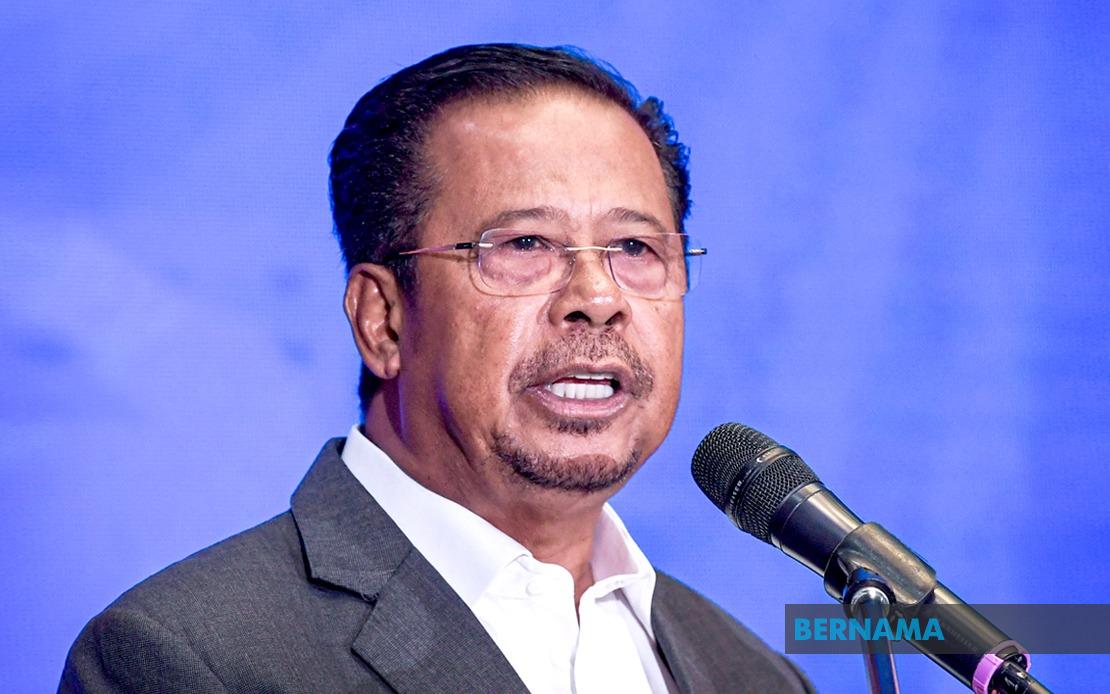
Deputy Minister of Energy Transition and Water Transformation Datuk Seri Abdul Rahman Mohamad oversaw the awards ceremony, presenting the championship trophy to the Government team and recognising the best individual performer. His presence, alongside Chief Secretary to the Government Tan Sri Dr Wan Ahmad Dahlan Abdul Aziz and Sustainable Energy Development Authority Malaysia (SEDA) chairman, underscored official commitment to youth engagement on energy matters. This high-level participation signals that the government views student debate not merely as an educational exercise but as a legitimate mechanism for policy discussion and public consultation.
The Minister's Cup Debate serves as the centrepiece initiative of the Malaysia Energy Literacy Programme (MELP) 2026, a nationwide effort administered by SEDA to deepen Malaysians' understanding of energy systems. MELP itself represents a broader recognition that informed citizens make better energy choices—whether in household consumption, investment decisions, or support for government initiatives. By targeting university students specifically, the programme seeks to build a cohort of young professionals, policymakers, and opinion leaders who grasp how energy is produced, distributed, managed and consumed across the nation.
According to Izzad Zalman Abdul Kader, Strategic Communications director at SEDA, structured debate platforms serve multiple purposes beyond simple information transfer. Such competitions, he explained, strengthen energy literacy while cultivating the kind of critical thinking and evidence-based reasoning that mature policy discourse demands. More importantly, debates empower young people not merely to understand government positions but to challenge them constructively, articulate alternative viewpoints, and participate as active citizens in democratic deliberation rather than passive recipients of official messaging.
Muhammad Uwais Mohd Hazril Munir @ Umar, the 20-year-old law student from Universiti Malaya who won the Best Debater award, articulated a key insight: debates make complex technical subjects such as renewable energy transitions accessible to ordinary audiences. By presenting competing arguments in comprehensible language, debate formats demystify policy issues that might otherwise seem the exclusive domain of engineers and technocrats. Uwais noted that hearing both sides of an argument simultaneously offers audiences a rare opportunity to weigh evidence and reasoning in real time, building their own informed positions rather than accepting pre-digested conclusions.
The collaboration between government ministries, state agencies, and media organisations in staging such competitions reflects a strategic shift in how Malaysia approaches energy policy communication. Afiq Athmar Mohamed, a business and economics student from UM who also participated, highlighted how these initiatives inject new energy into educational and public discourse around energy transitions. Rather than treating energy policy as a top-down governmental function, the Minister's Cup model treats it as a subject suitable for transparent, open-ended debate involving the country's future leaders.
For Southeast Asia broadly, Malaysia's emphasis on energy literacy among youth carries particular significance. The region faces mounting pressure to transition away from fossil fuels while meeting surging electricity demand from economic growth and urbanisation. Countries across ASEAN are exploring renewable energy export possibilities, grid interconnections, and cross-border electricity trading arrangements. Malaysian students engaging rigorously with these questions today will shape regional energy cooperation frameworks tomorrow. Their understanding of both technical constraints and policy trade-offs will prove invaluable as ASEAN nations negotiate increasingly complex energy partnerships.
The specific motion debated—concerning renewable energy exports—touches on issues with profound implications for Malaysia's position in the region. With substantial solar and hydroelectric potential, Malaysia could theoretically become a significant clean energy exporter to neighbours facing energy shortages. Yet such expansion requires substantial infrastructure investment, regulatory frameworks, and assurances of domestic supply reliability. Student debaters grappling with these tensions help surface arguments that policymakers must ultimately confront: Can export revenues justify infrastructure costs? What guarantees protect domestic consumers if exports surge? How do cross-border electricity sales interact with regional geopolitics?
The awards ceremony itself carried symbolic weight. By recognising excellence in debate about energy policy, the government signals that articulate, evidence-based argumentation carries value in public discourse. Rather than dismissing student voices as uninformed or idealistic, officials engaged with the debate competition seriously, treating student analysis as worthy of evaluation and praise. This validation matters enormously for cultivating informed citizenship and persuading talented young people that policy influence remains accessible through rigorous thinking and clear communication.
Looking ahead, the success of the inaugural Minister's Cup suggests that energy literacy initiatives targeting youth audiences merit expansion. Universities represent concentrated populations of future professionals, opinion leaders, and informed citizens. By embedding energy policy discussions within debate competitions—formats that naturally encourage multiple perspectives and evidence-based reasoning—Malaysia creates space for genuine civic engagement on technical matters. The students who participated emerge not as passive learners but as debate competitors who have struggled to articulate, defend, and critique positions on matters affecting the nation's future.
As Malaysia navigates its energy transition and considers its role in regional electricity markets, the perspectives developed through initiatives like the Minister's Cup will prove increasingly valuable. Young people equipped with substantive understanding of energy trade-offs, technical constraints, and policy options will contribute more effectively to democratic deliberation on these crucial issues. The 2026 competition thus represents not merely an isolated event but an investment in the quality of public discourse surrounding energy policy for years to come.

