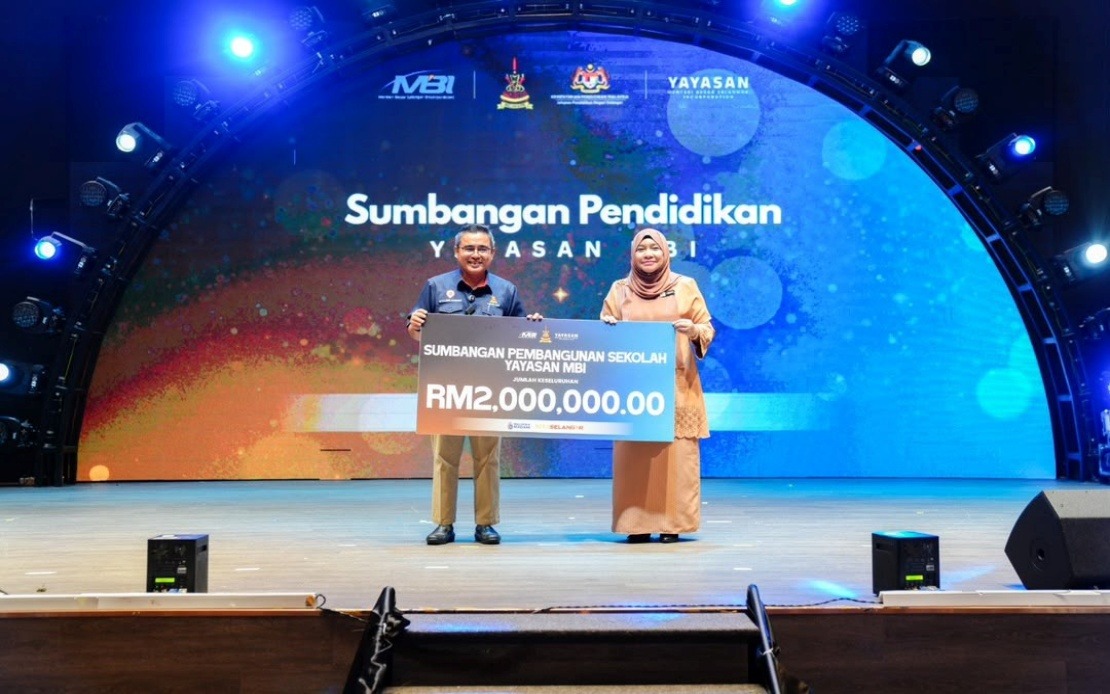
Selangor's premier philanthropic foundation has injected RM2 million into its School Development Contribution programme, signalling a renewed push to enhance educational facilities and support systems throughout the state. The disbursement, announced at the Yayasan MBI Education Aspiration 2026 event, underscores the foundation's conviction that quality education serves as a cornerstone for regional development and human resource creation.
Ahmad Azri Zainal Nor, leading Yayasan MBI, framed the allocation as more than charitable spending, characterising it instead as strategic investment in Selangor's future workforce. With approximately two-thirds of the foundation's portfolio directed towards education-related initiatives, this focus reflects deliberate prioritisation within resource-constrained philanthropic environments. The approach signals recognition that sustainable economic growth depends fundamentally on accessible, quality learning opportunities at the foundational level.
The funds are earmarked to upgrade learning facilities and school infrastructure while simultaneously improving the working and studying environment for both educators and students. Beyond physical improvements, the allocation demonstrates commitment to addressing systemic gaps in resource availability that often disadvantage schools in lower-income districts. For Malaysia's education sector, where infrastructure disparities between urban and rural institutions remain pronounced, such targeted investment helps level the playing field.
Yayasan MBI operates multiple complementary programmes designed to extend educational reach beyond conventional classroom settings. The Back to School Tour Programme directly engages students during critical transition periods, while collaboration with Parent-Teacher Associations strengthens community involvement in school governance. The Selangor People's Tuition Programme delivers free supplementary instruction to students struggling academically, addressing a critical need in a landscape where private tuition costs often exclude vulnerable populations from remedial support.
The Didik Kasih Programme represents another pillar of this integrated approach, providing comprehensive educational assistance to students facing socioeconomic barriers. Collectively, these initiatives demonstrate understanding that educational success requires multi-dimensional support extending beyond curricular content. By combining infrastructure investment with tutoring, parental engagement, and community partnership, Yayasan MBI adopts a holistic model increasingly recognised as essential for educational equity.
Coordination with the Selangor State Education Department ensures that Yayasan MBI's initiatives respond to documented institutional needs rather than pursuing well-intentioned but misaligned interventions. This collaborative framework represents best practice in philanthropic engagement, subordinating organisational autonomy to educational system requirements. For Malaysian policymakers observing these dynamics, the partnership model offers lessons about scaling impact through structural integration rather than parallel programme delivery.
The emphasis on partnership extends beyond state government channels. Yayasan MBI actively engages multiple stakeholders including educational institutions, community organisations, and parent groups, recognising that sustainable education improvement requires distributed responsibility and shared ownership. This ecosystem approach contrasts with top-down models that historically characterised educational development in the region, reflecting evolving understanding of what drives lasting institutional transformation.
For Selangor specifically, the RM2 million allocation addresses immediate infrastructure and support needs while establishing foundation for longer-term capacity building. The state's rapidly urbanising demographics, coupled with persistent pockets of educational disadvantage, create complex demand pressures that government resources alone cannot fully satisfy. Private philanthropic contributions, when strategically directed, fill critical gaps while catalysing additional resources through demonstration effects and partnership leveraging.
The Education Aspiration 2026 event framing—recognising educator contributions while announcing resource commitment—carries important symbolic weight. Teachers across Southeast Asia frequently report feeling undervalued despite bearing primary responsibility for educational delivery. Public recognition coupled with concrete support serves dual purposes: validating professional contributions while signalling that education quality improvement requires investing in human capital, not merely infrastructure.
For Malaysian readers, particularly those in Selangor, this initiative illustrates how philanthropic foundations can complement government education provision when aligned with public system priorities. The model's emphasis on free learning support addresses a growing concern about educational inequality driven by private tuition markets increasingly stratifying access to quality instruction. By providing accessible alternatives to commercial tutoring services, Yayasan MBI reduces dependence on private expenditure for academic advancement.
Looking forward, the sustained focus on educational investment reflects confidence in Selangor's development trajectory alongside commitment to ensuring that economic growth benefits reach all populations. As Malaysia navigates ongoing labour market transformation and growing skill demands, foundational education quality becomes increasingly critical. Philanthropic contributions supporting infrastructure, tutoring, and systemic partnerships contribute meaningfully to national competitiveness, particularly when concentrated in economically vital regions like Selangor.
The RM2 million commitment also signals that Malaysian foundation leadership views education as intrinsically tied to broader social cohesion objectives. By reducing educational barriers, supporting teachers, and investing in school environments, Yayasan MBI addresses root causes of social inequality rather than managing symptoms through welfare provision alone. This preventive approach, though requiring sustained commitment and patient capital, offers more durable solutions to entrenched disadvantage than reactive interventions.

