The government's initiative to establish a credentialing system for religious speakers operating on digital platforms has gained backing from Malaysia's premier Islamic dakwah agency, signalling broad consensus on tackling the proliferation of unvetted religious content online. Yayasan Dakwah Islamiah Malaysia (YADIM) has thrown its weight behind the proposal announced by Minister in the Prime Minister's Department (Religious Affairs) Dr Zulkifli Hasan, recognising the urgent need to safeguard the integrity of Islamic teachings as social media becomes the dominant medium through which Malaysians—particularly youth—receive religious instruction and guidance.
The digital revolution has democratised access to religious knowledge, yet this openness comes with significant risks that authorities and religious institutions have long struggled to address. In the absence of formal vetting mechanisms, anyone with a social media following can present themselves as an authority on Islamic matters, regardless of their actual qualifications or depth of understanding. This proliferation of self-styled preachers has created a crowded online marketplace where legitimate scholarship competes with incomplete or distorted interpretations, often presented with equal confidence to audiences lacking the background to distinguish between them.
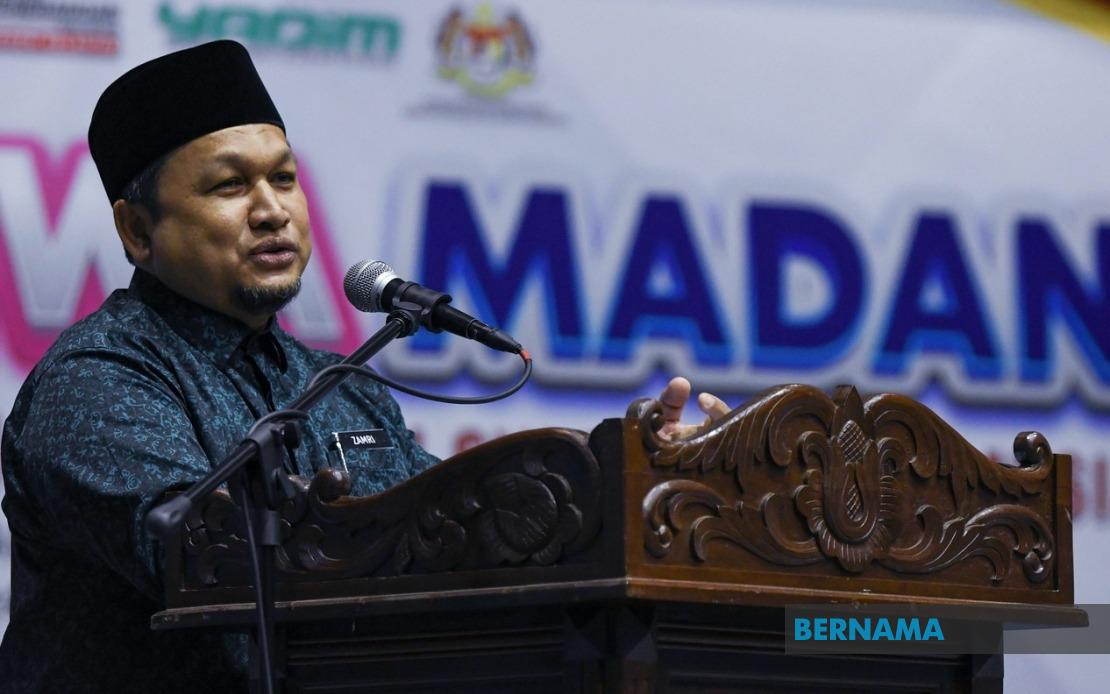
Zamri Zainal Abidin, YADIM's chief executive officer, articulated the foundation's position clearly: the proposed accreditation framework is not intended as a constraint on legitimate dakwah activities or an obstacle for those genuinely seeking to share Islamic knowledge. Rather, it represents a necessary quality-control mechanism designed to protect both the credibility of Islamic institutions and the vulnerability of believers themselves. The framework would establish minimum standards that preachers must meet before they can claim authority in religious matters, ensuring that those with substantial online followings have demonstrable scholarly grounding in Islamic teachings and proper understanding of authentic religious references.
The risks of allowing unaccredited religious discourse to proliferate unchecked are substantial and multifaceted. Young Malaysians increasingly turn to social media for answers to religious questions, often trusting personalities they encounter there with the same deference traditionally accorded to established scholars and mosque leaders. When such influencers lack proper training in Islamic jurisprudence, the potential for distortion becomes acute. Misinterpretations can spread rapidly through network effects, reaching thousands before any correction can be mounted. More troublingly, this environment creates opportunities for bad-faith actors to exploit public trust for personal gain or to advance sectarian agendas that contradict mainstream Islamic teaching or national religious policy.
YADIM itself has long practiced the very accreditation approach the government now proposes to implement more broadly. The foundation's own network of trained preachers, including participants in its Daie Muda programme, undergo formal credentialing through the Federal Territories Mufti Department. This hands-on experience gives YADIM institutional credibility when advocating for similar systems across the wider landscape. By endorsing the government's proposal, the foundation is essentially validating a model it has successfully operated for years, suggesting that implementing such frameworks at a national level is both administratively feasible and practically beneficial.
The timing of this initiative reflects growing recognition among Malaysian policymakers that religious discourse in the digital age requires fresh regulatory approaches. Traditional gatekeepers—chief among them state muftis and religious authorities—have found their influence diluted by the sheer volume of competing voices online. Social media platforms themselves have proven reluctant or incapable of moderating religious content according to Islamic scholarly standards, focusing instead on generic rules against hate speech or violence. This regulatory gap has left a space where misinformation, heterodox interpretations, and outright fraud can flourish under the guise of pious education.
From a Southeast Asian perspective, Malaysia's consideration of accreditation standards for online preachers carries implications beyond its borders. The region has witnessed concerning instances where inflammatory religious content originating from unvetted sources has contributed to communal tensions and even violence. Several countries in Southeast Asia have struggled to balance religious freedom with the need to prevent dangerous misinformation. Malaysia's approach—establishing credibility standards rather than censoring content outright—offers a model that respects the fundamental right to religious expression while protecting against the specific harms created by fraudulent or incompetent preachers.
Implementation of such a system will face practical challenges that policymakers must navigate carefully. Determining which authority or authorities should oversee accreditation remains an open question, as does the question of whether accreditation should be mandatory or voluntary. The government must also consider how to grandfather existing popular preachers into the system without creating backlash from those who might perceive the new standards as unfairly targeting them. YADIM's offer to serve as a strategic partner suggests the government intends to leverage the foundation's existing infrastructure and expertise rather than building an entirely parallel bureaucratic apparatus.
The proposal also raises questions about the scope of content that would fall under accreditation requirements. Would preachers offering general Islamic motivation need accreditation, or only those issuing religious rulings on complex matters? How would the system handle preachers who operate across multiple jurisdictions or platform borders? These definitional challenges will require careful deliberation to ensure the framework captures genuine credibility concerns without becoming so expansive that it effectively restricts legitimate religious speech. YADIM's careful wording—emphasising that the initiative is not intended to create unnecessary hurdles—suggests the government is aware of these sensitivities.
YADIM's endorsement carries weight because the foundation operates at the intersection of religious authority and government policy, enjoying legitimacy with both constituencies. As a dakwah agency under the Prime Minister's Department, YADIM bridges the gap between official policy and grassroots Islamic practice. Its support signals that this is not merely a government-imposed measure but reflects genuine concern from within Malaysia's Islamic institutional establishment about the state of online religious discourse. This consensus building will be crucial if the accreditation framework is to gain acceptance among preachers, religious authorities, and the public.
Looking ahead, the success of any accreditation system will depend on its perceived fairness, transparency, and genuine commitment to maintaining standards rather than suppressing particular viewpoints. Zamri Zainal Abidin's statement that YADIM-trained preachers receive credentials from the Federal Territories Mufti Department demonstrates that accreditation need not be onerous or centralised to be effective. By building on existing successful models and partnering with established institutions like YADIM, the government has an opportunity to implement a system that meaningfully improves the quality of online Islamic discourse without crossing into problematic content restriction. The coming months will reveal whether the government can translate this emerging consensus into a workable framework that wins acceptance across Malaysia's diverse religious landscape.

