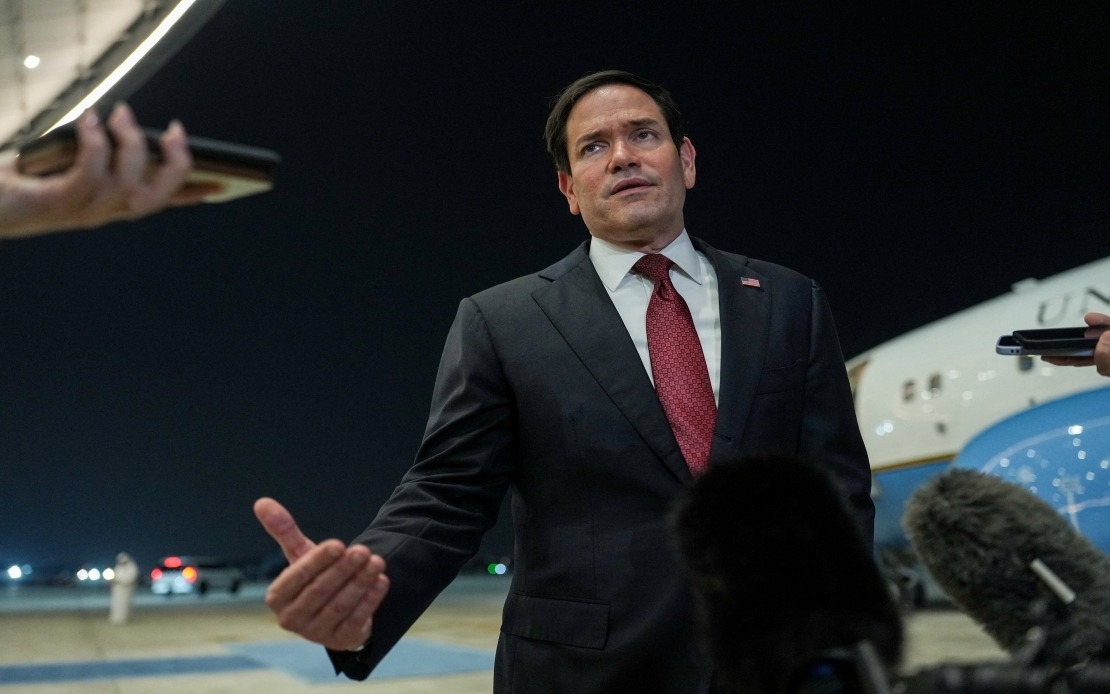
Diplomatic preparations for Chinese President Xi Jinping's high-profile visit to the United States are moving forward on schedule, according to US Secretary of State Marco Rubio, despite escalating tensions that have recently strained relations between Washington and Beijing. Speaking to reporters at Joint Base Andrews on Sunday, Rubio indicated that the Chinese leadership remains committed to the planned September trip, with no signs of cancellation or postponement on the horizon. The confirmation comes at a delicate moment in US-China relations, underlining the commitment both superpowers maintain toward sustained dialogue even as disagreements multiply across multiple strategic domains.
Rubio stated that preparations were tracking toward a September timeframe, with Chinese delegations continuing to dispatch advance teams to the United States to coordinate logistics and substantive arrangements for the presidential visit. The Chinese Foreign Ministry subsequently corroborated this position, confirming that both capitals were engaged in active consultations regarding the upcoming state visit later in the year. This behind-the-scenes coordination suggests that despite public disagreements, institutional channels remain open and functioning effectively between the two governments.
The planned visit represents a reciprocal engagement, following US President Donald Trump's May journey to Beijing, during which he extended a formal invitation to Xi for a return visit to the White House. Trump subsequently set September 24 as the target date for the Chinese leader's American sojourn, a meaningful gesture aimed at consolidating the relationship between the world's largest economies. For Southeast Asian observers, such high-level engagement carries significant implications, as American-Chinese relations directly influence the regional balance of power and economic stability throughout the Indo-Pacific.
Recent friction between Washington and Beijing, however, has tested diplomatic resolve. Trump leveled accusations on Thursday that China had interfered in the 2020 US presidential election, which he lost to Joe Biden. Beijing categorically rejected these allegations, characterizing them as baseless and counterproductive to constructive bilateral engagement. Such exchanges demonstrate the persistent differences in perspective that complicate the relationship, even as both sides recognize the necessity of maintaining official dialogue and high-level contacts.
Rubio's remarks reflected a pragmatic acknowledgment that disagreements between major powers are inevitable and, indeed, structurally inherent to great power competition. Rather than viewing tensions as obstacles to engagement, the Secretary of State framed dialogue as essential precisely because of these fundamental differences. He emphasized that both the United States and China bore responsibility for preserving constructive relations not merely for their own populations, but for the stability and prosperity of the broader international community. This framing resonates with Southeast Asian nations, which depend on stable US-China relations to maintain the rules-based international order upon which regional commerce and security architectures depend.
For the Southeast Asian region, the continuation of US-China diplomatic engagement at the highest levels offers potential opportunities for dialogue on pressing regional issues. An immediate occasion for such discussions is expected to arise at the Association of Southeast Asian Nations foreign ministers meeting scheduled for Tuesday in Manila. Beijing confirmed that Chinese Foreign Minister Wang Yi will attend this gathering, creating an opportunity for multilateral discussions that might address shared concerns ranging from maritime security to economic cooperation and regional stability. ASEAN nations have consistently advocated for both Washington and Beijing to engage constructively through regional mechanisms, and this ministerial meeting provides a concrete platform for such engagement.
The resilience of the scheduled visit despite current frictions underscores a fundamental recognition within both governments that sustained high-level dialogue serves national interests far better than escalating rhetoric or diplomatic isolation. Trump's May Beijing visit had been constructed as a confidence-building measure aimed at stabilizing the relationship after periods of significant tension, and the reciprocal invitation to Xi demonstrates a mutual commitment to that stabilization agenda. The September visit, if it proceeds, would mark a significant moment in US-China relations, providing an opportunity for the two leaders to address substantive issues directly and seek common ground on matters of mutual concern.
The timing of Rubio's confirmation is noteworthy, coming shortly before the ASEAN ministerial meeting and reflecting an effort to signal continuity and stability in the crucial bilateral relationship. By publicly reaffirming the visit's status, Washington sends a message to regional partners and the broader international community that despite disagreements, the fundamental architecture of US-China engagement remains intact. For Malaysia and other ASEAN members, such clarity is valuable for policy planning and investment decisions, as regional stability depends significantly on the capacity of the two superpowers to manage their competition within bounds that preserve the functioning of international institutions and economic systems.
The advance teams that Chinese officials continue to dispatch to the United States represent practical manifestations of this commitment, as logistical and diplomatic preparations are complex undertakings requiring sustained coordination across multiple agencies and levels of government. Such preparations typically include security arrangements, scheduling negotiations, agenda-setting discussions, and venue coordination, all of which demand substantial institutional investment and reflect genuine commitment to making the visit successful. The continuation of these preparations despite public disagreements suggests that both governments maintain sufficient confidence in the relationship to invest resources and diplomatic capital in advancing the visit.
Looking ahead, the September meeting between Trump and Xi could prove consequential for shaping the trajectory of US-China relations throughout the latter half of the year and beyond. Whether the two leaders can identify areas of cooperation or at least establish clearer boundaries for competition remains to be seen, but the willingness to proceed with high-level engagement despite current tensions offers a glimmer of hope that both capitals recognize the dangers of uncontrolled escalation. For Southeast Asian policymakers and business leaders, the confirmation of the visit's continuation is a positive signal, suggesting that the bilateral relationship, while strained, has not fundamentally broken down into isolation or confrontation.

