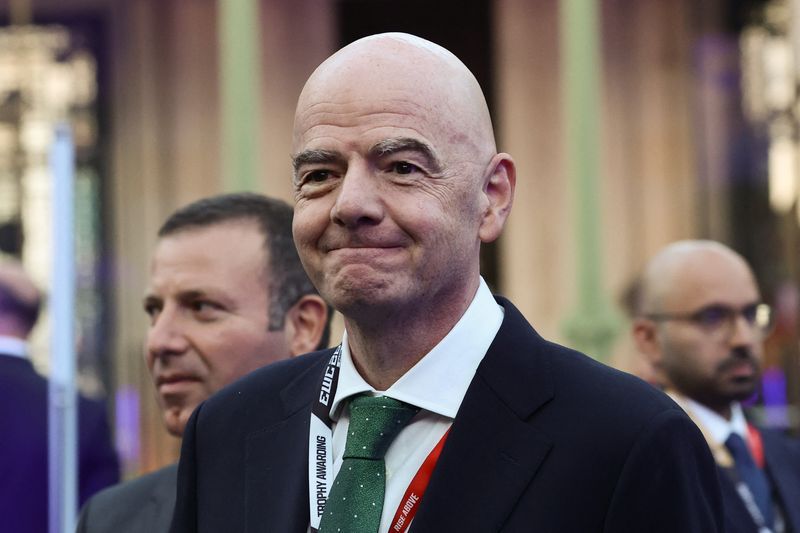
A distinguished group of retired footballers, encompassing World Cup champions and players recognised as FIFA legends, launched a coordinated appeal on Monday for fundamental restructuring within world football's governing body, asserting that the present administration under President Gianni Infantino has prioritised institutional self-interest over the game's foundational principles. The intervention represents a significant moment of public dissent from football's historical elite, lending considerable weight to mounting criticism of Infantino's stewardship.
Infantino's position has grown increasingly precarious following his controversial initiative to establish a commercial subsidiary that would have monetised FIFA's tournament broadcasting rights by selling a 20 percent stake to private investors. The Swiss administrator subsequently abandoned this proposal, yet the episode exposed the depth of internal and external scepticism regarding his leadership direction and decision-making priorities. The backlash underscores broader concerns about how FIFA's commercial ambitions may be reshaping the sport's governance framework in ways that benefit institutional investors rather than football communities themselves.
Despite escalating calls for his departure, Infantino has maintained his position as FIFA president since 2016 without indicating any willingness to step aside. His defiance occurs against openly articulated opposition from several major continental confederations, including Europe's UEFA, Asia's AFC, and the North American CONCACAF, all of which have signalled readiness to pursue extraordinary measures such as orchestrating a no-confidence vote. This level of institutional resistance from football's geographic power centres suggests the crisis extends beyond isolated voices of dissent.
The player delegation demanding change encompasses luminaries from multiple generations and continents. France's 1998 World Cup victors Emmanuel Petit, Bixente Lizarazu, and Robert Pires brought their storied accomplishment as testimony. Briana Scurry represented American women's football excellence, having won the World Cup, whilst Lucy Bronze and Didier Drogba lent their contemporary prominence to the statement. Additional signatories included Peru's Claudio Pizarro, Argentina's Juan Sebastian Veron, Togo's Emmanuel Adebayor, and former goalkeeper David James, creating geographic diversity and historical continuity in their protest.
The group's central accusation addressed what they characterised as FIFA leadership's fundamental misalignment with football's essential purpose and values. Their statement articulated how institutional power appears to have distorted administrators' capacity to distinguish between safeguarding FIFA's institutional interests and advancing football's authentic collective good. This cognitive warping, they suggested, has caused the sport itself to drift from its moorings, alienating the global fanbase whose attachment to football transcends commercial considerations.
The players emphasised that their concerns mirrored sentiments held by millions of supporters worldwide who have observed governance decisions that seemingly prioritise revenue generation and institutional aggrandisement over competitive integrity and fan experience. By framing their position as representative of broader constituencies—both current athletes and spectating publics—the group attempted to position their intervention as voicing suppressed concerns rather than mounting a self-interested power play.
Crucially, the delegation called for structural institutional reform rather than merely personnel change. They demanded meaningful involvement for both players and fans in decision-making processes governing football's direction and operations. This articulation moves beyond personal criticism of Infantino toward systemic critique, suggesting that individual leadership replacement might prove insufficient without recalibrating how power distributes across FIFA's institutional architecture. Such structural arguments potentially carry greater persuasive weight with stakeholder constituencies than personalised attacks on administrators.
Infantino faces re-election in 2024, providing a formal deadline for accountability mechanisms. However, the confederations' consideration of accelerating a no-confidence vote beforehand indicates impatience with waiting for scheduled electoral processes. Moving such a vote ahead of the timetable would constitute extraordinary action, suggesting that FIFA's regional governance blocs view the current situation as requiring urgent remedial intervention rather than accepting ordinary procedural delays.
For Malaysian readers and Southeast Asian football communities more broadly, this institutional crisis carries significant implications. FIFA's governance quality directly affects how the confederation operates in their region and how international tournaments are administered. Decisions made by FIFA leadership influence everything from World Cup qualification procedures to broadcasting arrangements affecting domestic football industries. A governing body perceived as suffering from institutional capture or leadership indifference to core stakeholder interests inevitably diminishes confidence in international football administration and the fairness of its decisions.
The intervention by such prominent retired players also signals that football's global elite recognise their obligation to defend the sport's integrity against what they perceive as institutional drift. By publicly committing to continued advocacy, the group indicated that their statement represents a beginning rather than a conclusion to their efforts to effect change. Their accumulated credibility within football communities—earned through achievement and service—positions them as potentially influential voices in persuading stakeholder organisations to pursue remedial action.
The timing of this public statement, occurring months before Infantino's scheduled re-election, suggests a coordinated effort to build momentum for either preventing his re-election or forcing earlier departure. Whether FIFA's confederations ultimately proceed with accelerated no-confidence procedures remains uncertain, but the players' public endorsement of reform removes any ambiguity about whether challenges to current leadership originate from marginal critics or represent serious institutional perspectives.

