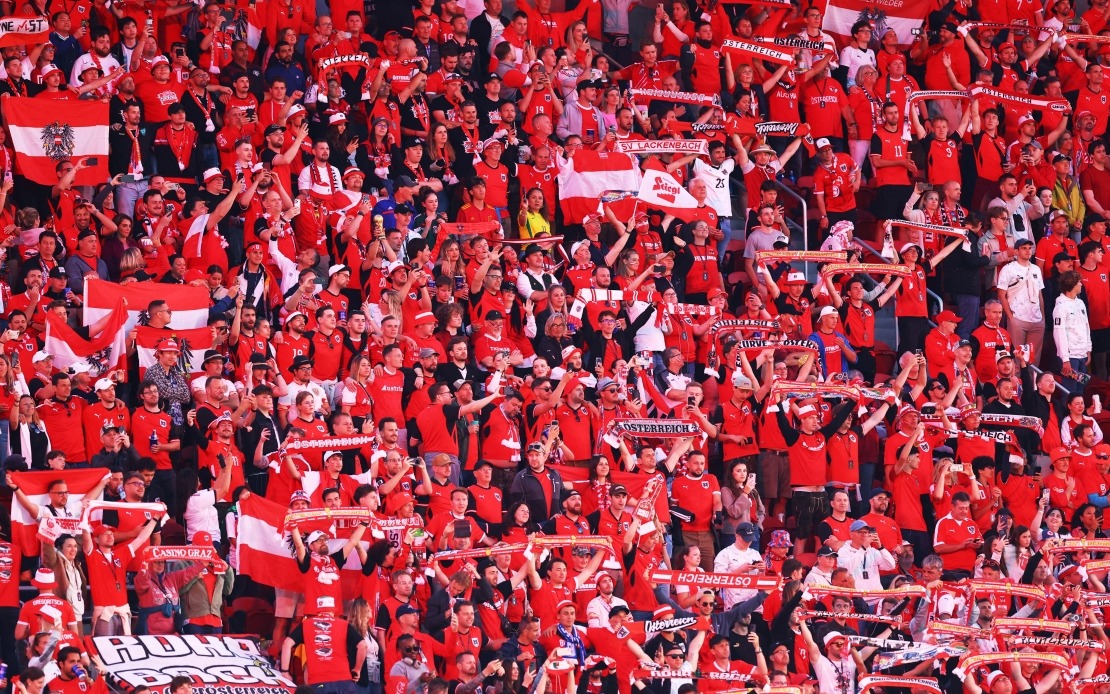
The World Cup's expanded format has proven a commercial and entertainment triumph, with FIFA confirming that the tournament has shattered multiple attendance records during its group stage across the United States, Canada, and Mexico. The governing body announced on late Sunday that all 72 group matches were watched by 4,644,549 fans in total—a stunning increase of more than a million spectators compared to the 1994 World Cup held in the United States, which drew 3,587,538 attendees across its entire tournament run.
The significance of this achievement becomes clearer when examining the structural differences between the two tournaments. The 1994 edition featured only 24 teams competing across 52 matches total, making it substantially smaller in scope than this expanded iteration. By doubling the number of participating nations and significantly increasing the number of group stage fixtures, FIFA created greater opportunities for fans to attend matches, a strategic decision that has demonstrably paid off in terms of engagement.
However, the expansion has come with a tradeoff in terms of average attendance per match. While the total figure is impressively higher, the average attendance per game currently stands at 64,508 spectators, slightly below the 1994 tournament's average of 68,991. This suggests that while the broader expansion has attracted significantly more cumulative attendance, individual matches are drawing marginally smaller crowds relative to that previous tournament. The difference reflects both the increased total number of fixtures spread across three countries and varying levels of local interest in different matchups.
Offensively, the tournament has also set records that underscore an entertaining brand of football. A total of 215 goals have been scored across the group stage matches, translating to an average of three goals per game. This contrasts with the 2022 World Cup in Qatar, which featured 32 teams playing 64 matches and producing 179 goals at an average of 2.8 per game. The higher-scoring nature of the current tournament may reflect the broader competitive balance created by including more nations, as well as stylistic differences in how teams approach group stage football.
The reach of the tournament extends beyond those physically attending matches. FIFA noted that Alphonso Davies, the Canada captain, became the 1,000th player to appear in the tournament when he entered play during Canada's final group match against South Africa, a symbolic milestone reflecting the scale of an expanded competition. Across all 48 teams, 999 players have featured in the group stage, illustrating the substantial roster depth required for a tournament of this magnitude.
The economic activity generated by the tournament has been equally remarkable. Stadium concession sales reveal unprecedented demand, with vendors selling 2.8 million beers, approximately one million bottles of water, and 300,000 hot dogs across all venues. These figures reflect not only the volume of fans attending but also their engagement and willingness to spend on the match-day experience, suggesting high levels of satisfaction and comfort during matches.
Beyond the stadiums themselves, FIFA's official fanfests established across the three host nations have emerged as major attractions in their own right. These fan zones have drawn over 5.5 million visitors throughout the group stage period. Within these spaces, attendees have consumed more than 2 million alcoholic beverages and nearly 2 million soft drinks, indicating that the tournament's appeal extends well beyond ticketed match attendance and creates broader economic and social impact throughout host communities.
For Malaysian and Southeast Asian observers, this tournament demonstrates the substantial economic and social value that hosting major sporting events can generate. The figures suggest that expanded tournament formats—while potentially affecting per-game averages—can significantly increase total engagement and spending. As Malaysia and other regional nations consider bids for future major sporting events, these metrics provide compelling evidence of the potential returns from investing in venue infrastructure and tournament hosting capabilities.
The success of the expanded format also carries implications for the future direction of international football. FIFA's decision to increase the tournament from 32 to 48 teams was controversial in some quarters, with critics arguing it would dilute competitive quality and create unbalanced group dynamics. These attendance and engagement figures, however, suggest that from a commercial and entertainment perspective, the expansion has succeeded in broadening the tournament's appeal and accessibility to fans across three nations simultaneously. Whether this translates to sustained interest in future tournaments remains to be seen, but the group stage performance indicates that the structural changes have resonated positively with audiences and demonstrate FIFA's ability to evolve the competition while maintaining its status as global sport's premier event.

